
Why Every Busy Family Needs a Meal Plan and Shopping List
A family meal plan and shopping list is a weekly schedule of planned meals paired with a matching grocery list — and it’s one of the simplest tools a busy household can use to eat better, spend less, and stress less.
Here’s a quick overview of how to get started:
- Pick 5-7 dinners for the week (don’t overthink it — 4 meals with overlapping ingredients works great)
- Add simple breakfasts and lunches — keep these consistent and low-effort
- Build your shopping list from those meals, plus pantry staples you’re running low on
- Check what you already have before you shop
- Shop once — use pickup or delivery to avoid impulse buys
- Prep what you can on the weekend or a slower weekday
- Rotate your plan every few weeks to keep things fresh
The payoff is real. Families who plan their meals can save up to $1,500 per year on groceries by cutting impulse buys and reducing food waste. A typical family of four can keep their weekly grocery bill around $85–$125 with a solid plan in place.
And it’s not just about money. When dinner is already decided at 5pm, you skip the mental drain of figuring out what to cook — what researchers call decision fatigue. That’s time and energy back in your day.
Still, most families feel overwhelmed before they even start. The key is to keep it simple, repeat what works, and build from there.
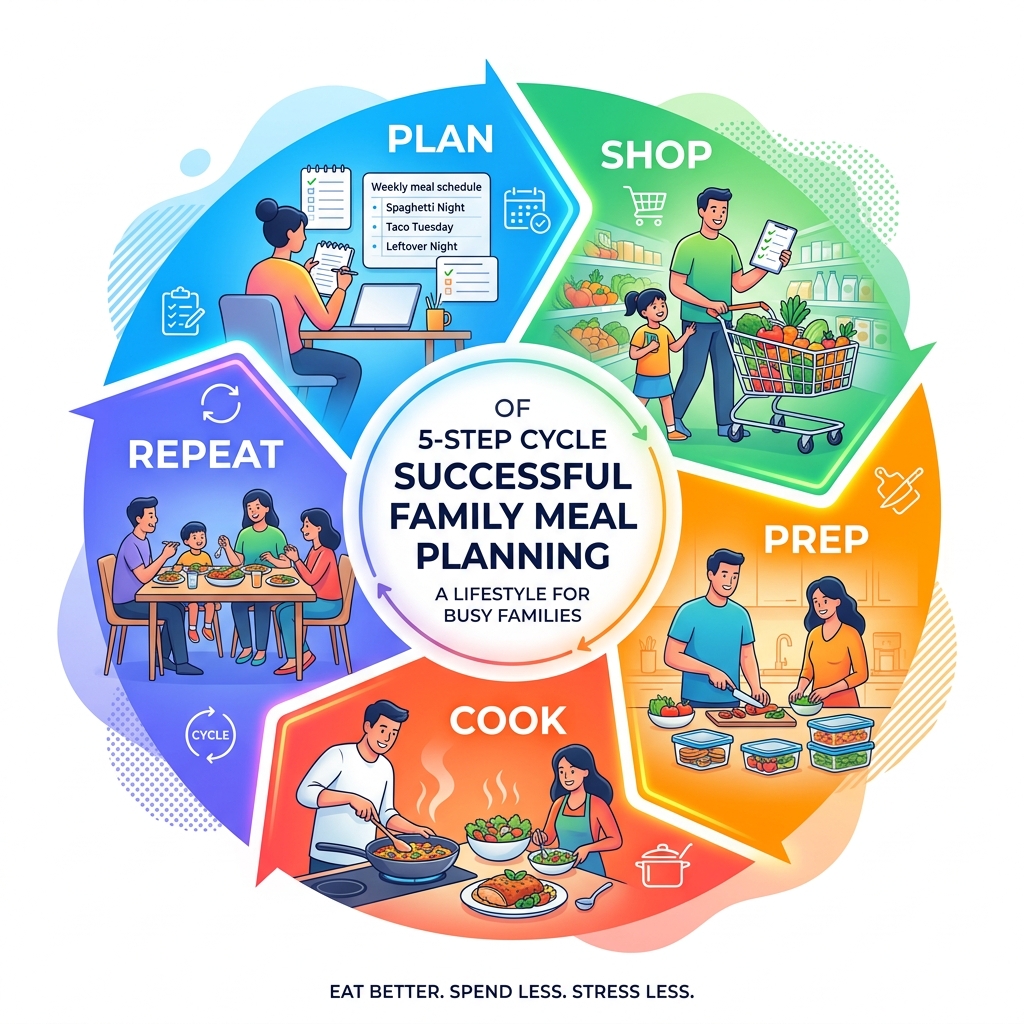
The Science-Backed Benefits of a Family Meal Plan and Shopping List
At Quintal Florido, we believe that health begins in the kitchen, but we also know that the kitchen can be a source of major stress. Implementing a family meal plan and shopping list isn’t just a “life hack”; it’s a lifestyle change backed by real-world benefits.
The most immediate impact is on your wallet. Research shows that meal planning can save families up to $1,500 annually. This happens because a plan acts as a shield against the “grocery store trap”—those end-caps and eye-level displays designed to trigger impulse buys. By sticking to a list, you only buy what you’ll actually eat.
Furthermore, we can significantly reduce food waste. The average American family wastes 30-40% of the food they buy, according to the USDA, which is essentially throwing $150 a month directly into the trash. A plan ensures that the spinach you bought for Tuesday’s salad doesn’t become a science project in the crisper drawer by Friday.
Beyond the numbers, there’s the mental health aspect. Decision fatigue is real. By the time 5:00 PM rolls around, our “mental battery” for making choices is often drained. Having a pre-set menu eliminates that frantic “what’s for dinner?” conversation. This consistency is a cornerstone of healthy-eating-for-families, as it prevents the late-night “emergency” pizza order that is usually high in sodium and low in nutrients.
How to Build Your Personalized Weekly Menu
Building a menu doesn’t mean you need to be a Five-Star chef. In fact, most families naturally rotate only about 10 dinner meals regularly. The goal is to create a framework that works for your specific household.
We recommend starting with “Themed Nights.” This narrows your choices and makes planning fun. Think:
- Meatless Monday: Lentil soup or veggie pasta.
- Taco Tuesday: Ground turkey or black bean tacos.
- Pasta Thursday: Whole wheat spaghetti with hidden veggie sauce.
- Pizza Friday: Homemade dough or whole-wheat pita pizzas.
When you map out balanced meal plan ideas like a pro, you should also look at ingredient overlap. If you’re buying a large bag of spinach, use half for a sautéed side dish on Monday and the other half in a smoothie or omelet on Wednesday.
Batch Cooking vs. Daily Preparation
Deciding how much to prep upfront is a game-changer. Here is a quick comparison to help you decide which style fits your week:
| Feature | Batch Cooking | Daily Preparation |
|---|---|---|
| Time Investment | 2-3 hours on Sunday | 30-45 minutes every evening |
| Stress Level | High on prep day, zero during the week | Moderate every day |
| Flexibility | Lower (meals are pre-set) | Higher (can change your mind) |
| Best For | Busy sports nights / Late work shifts | Those who enjoy the process of cooking |
Balancing Nutrition in Your Family Meal Plan and Shopping List
A successful family meal plan and shopping list should prioritize long-term health. We suggest following a Mediterranean-style pattern, which emphasizes healthy fats (like olive oil and avocado), lean proteins, and plenty of fiber.
Don’t forget the “hidden nutrients” trick. If you have kids who are wary of vegetables, try blending carrots or bell peppers into your pasta sauce. You can also mix cooked red lentils into ground beef; they take on the flavor of the meat while adding a massive boost of fiber and protein. For more on this, check our guide on meal-planning for nutrition.
7-Day Sample Menu: Quick and Wholesome Ideas
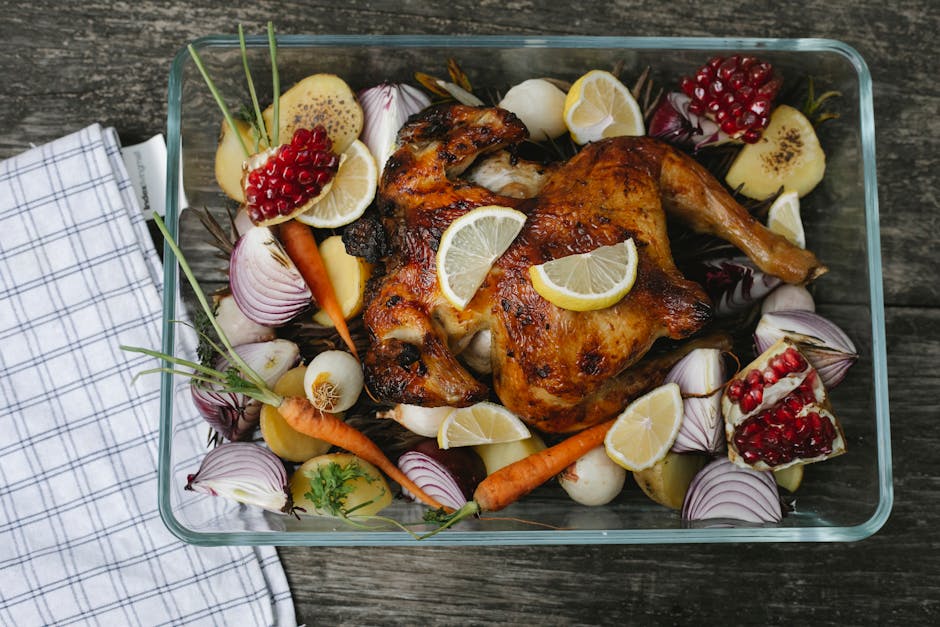
To get you started, here is a realistic 7-day plan that balances nutrition with the “I’m too tired to cook” reality of modern life.
- Monday: Sheet Pan Roasted Chicken and Veggies. Use bell peppers, broccoli, and sweet potatoes.
- Tuesday: Taco Night. Use ground turkey or lean beef. Pro tip: Add black beans to the meat to stretch the protein further.
- Wednesday: Leftover Transformation. Turn Tuesday’s taco meat into a “Taco Salad” or “Taco Grain Bowl” with brown rice and avocado.
- Thursday: Breakfast for Dinner. A veggie-packed frittata or whole-grain pancakes with fruit. This is a huge hit for kid-friendly meal prep.
- Friday: Homemade Pizza Night. Use whole-wheat crust and let everyone choose their own veggie toppings.
- Saturday: Slow Cooker Chili. Set it in the morning and forget it. Serve with a side of cornbread.
- Sunday: The “Everything” Roast. Roast a whole chicken. Use the meat for dinner and save the bones to make a nutritious stock for next week.
For more inspiration, see our quick meal ideas for families.
Creating an Efficient Family Meal Plan and Shopping List for Busy Weeks
Efficiency is the secret sauce. Before you write a single item down, do an “Inventory Check.” Look in your pantry and freezer. Do you already have three boxes of pasta? Don’t buy a fourth.
We also highly recommend using online grocery services. Whether it’s pickup or delivery, shopping via an app allows you to see your total in real-time. This prevents the “sticker shock” at the register and makes it much easier to stay under a $100 budget. You can even save a “Standard Cart” of pantry staples—milk, eggs, oats, frozen peas—to add with one click every week. This is one of our favorite budget-friendly meal prep ideas.
Smart Shopping Strategies to Slash Your Grocery Bill
The grocery store layout is a masterpiece of psychological engineering. To fight back, you need a strategy:
- Shop the Perimeter: Fresh produce, meat, and dairy are usually on the outside. The middle aisles are where the processed, high-margin items live.
- Check Unit Pricing: Look at the small text on the shelf tag that tells you the price “per ounce.” Often, the larger “value size” isn’t actually the best deal.
- Embrace Generic Brands: For staples like canned beans, salt, or frozen fruit, the store brand is often identical in quality to the name brand but 30% cheaper.
- Buy Frozen: Frozen vegetables are picked at peak ripeness and frozen immediately, locking in nutrients. They are often cheaper than fresh and won’t spoil if you don’t get to them right away.
- Smart Snacking: Instead of pre-packaged “kid snacks,” buy bulk apples, cheese blocks to slice yourself, and large tubs of Greek yogurt. Check out these easy snack ideas for kids for more budget-friendly swaps.
Frequently Asked Questions about Family Meal Planning
How can I prevent food waste with a weekly list?
The best way to prevent waste is through “proper storage” and “inventory tracking.” Use clear bins in your refrigerator so you can actually see what you have. If you notice spinach is starting to wilt, don’t wait—toss it in the freezer to use for a future smoothie. You can also repurpose scraps; keep a “stock bag” in your freezer for onion skins, celery ends, and carrot peels. Once the bag is full, boil it with water for a free, delicious vegetable broth.
What are the best “emergency” meals for overwhelmed nights?
We all have those nights where the plan falls apart. Instead of calling for takeout, keep these “emergency” staples on hand:
- Pantry Pasta: Whole wheat pasta with olive oil, garlic, and a can of chickpeas.
- Turkey Sandwiches: High-quality deli turkey on sprouted grain bread with an apple on the side.
- Quesadillas: Corn tortillas with cheese and canned black beans.
- Five-Ingredient Tacos: Rotisserie chicken, salsa, tortillas, avocado, and lime.
These quick meal ideas take less time than waiting for a delivery driver.
How do I handle picky eaters without cooking two separate meals?
The “Short-Order Cook” trap is exhausting and expensive. Instead, try “Deconstructed Plates” or “Build-Your-Own Bars.” If you’re making tacos, put all the ingredients in separate bowls on the table. The picky eater can choose just the meat, cheese, and tortillas, while you load yours with peppers and salsa.
Always include at least one “safe food” (like fruit or plain rice) on the plate so they have something they are comfortable eating. Research shows children may need 10–15 exposures to a new food before they accept it. Stay patient! For more tips, visit our guide on kid-friendly meal prep recipes.
Conclusion
Consistency is the bridge between goals and accomplishment. While a family meal plan and shopping list might take an hour of your weekend to organize, it pays back in hours of peace during the week. By focusing on whole, “real food” and smart shopping strategies, you aren’t just saving money—you are investing in your family’s long-term health.
At Quintal Florido, we are dedicated to helping you build these wholesome habits one meal at a time. Start small, be flexible, and enjoy the deliciousness of a well-planned week! For more resources on nourishing your household, explore our guide on healthy-eating-for-families.
