
Why Traditional Pasta Makes Weight Loss Harder (And What to Eat Instead)
Low calorie pasta substitutes are vegetable- or plant-based alternatives that replace traditional wheat pasta with far fewer calories and carbohydrates.
Here are the best options at a glance:
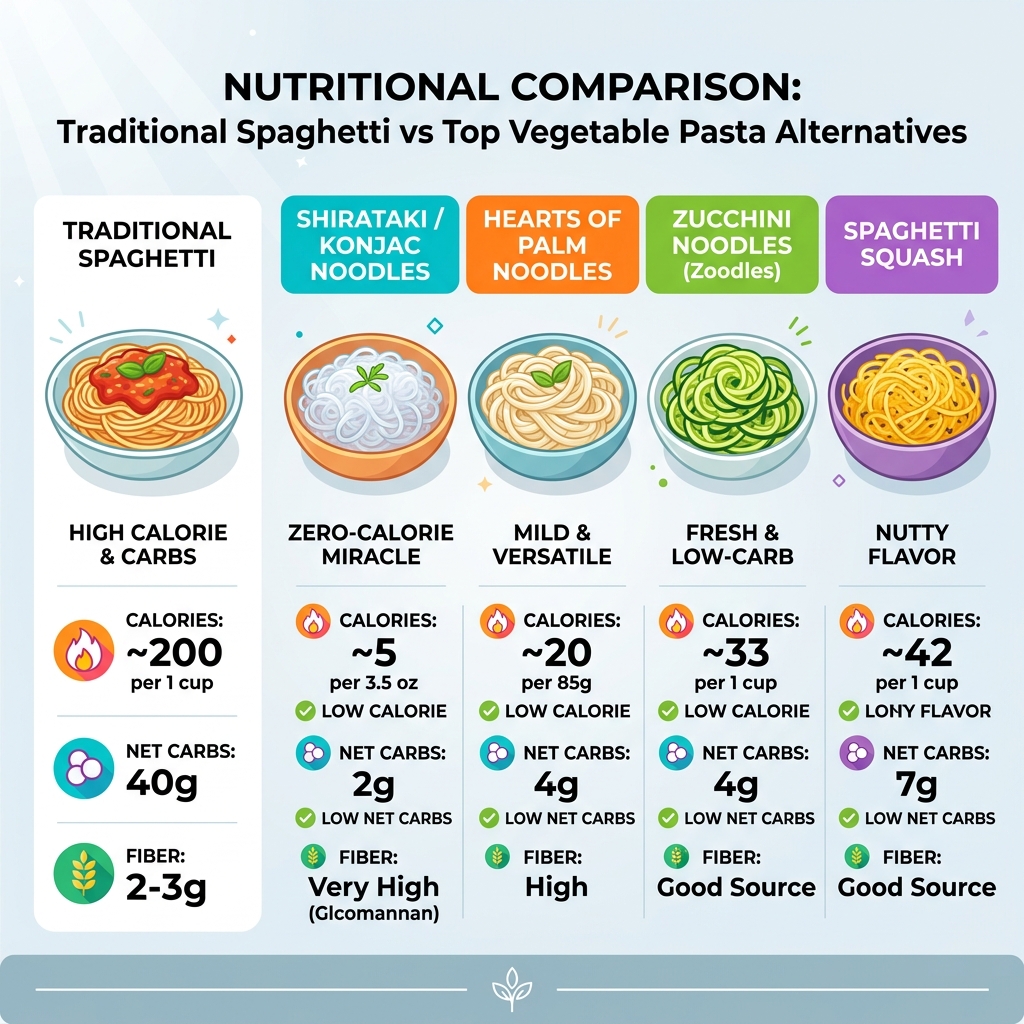
| Substitute | Calories per serving | Net Carbs per serving |
|---|---|---|
| Shirataki/Konjac noodles | ~5 cal / 3.5 oz | 2g |
| Hearts of palm noodles | ~20 cal / 85g | 4g |
| Zucchini noodles | ~33 cal / 1 cup | 4g |
| Spaghetti squash | ~42 cal / 1 cup | 7g |
| Cauliflower rice | ~25 cal / 1 cup | 2g |
| Cabbage noodles | ~22 cal / 1 cup | 5g |
Traditional wheat pasta packs around 200 calories and 40g of carbs per cup — with only 2–3g of fiber. That’s a lot of calories for very little nutritional payoff.
If you’re a busy parent or professional trying to eat better without spending hours in the kitchen, this is a real problem. Pasta is quick and easy. But eating it regularly can quietly work against your health goals.
The good news? There are simple, tasty swaps that let you keep the comfort of a noodle dish — without the calorie load.
Why Switch to Low Calorie Pasta Substitutes?
At Quintal Florido, we believe that achieving a balanced, wholesome diet shouldn’t feel like a punishment. Switching to low calorie pasta substitutes isn’t just about cutting numbers; it’s about optimizing how your body processes energy. When we consume traditional wheat pasta, we are essentially eating a bowl of concentrated starch. For many of us, especially those with carbohydrate sensitivity, this leads to a rapid spike in blood glucose followed by an insulin surge.
By choosing vegetable-based swaps, we prioritize satiety and insulin management. These alternatives are naturally high in fiber, which slows down the release of glucose into the bloodstream. This means you feel fuller for longer and avoid the “energy crash” that often follows a heavy Italian dinner. Furthermore, these swaps are among the best foods for healthy weight loss because they allow you to eat a much larger volume of food for a fraction of the calories.
Beyond weight management, there are significant digestive health and nutrient density benefits. Most vegetable noodles are packed with vitamins A, C, and K, as well as minerals like potassium and magnesium. They are also naturally gluten-free, making them an excellent choice for those with celiac disease or gluten intolerance. By lowering the glycemic index of your meals, you reduce systemic inflammation and support long-term metabolic health.
Top 7 Low Calorie Pasta Substitutes for Weight Loss
Navigating pasta alternatives can be overwhelming. To help you choose, we’ve put together a comparison of the most effective options available today.
| Alternative | Calories (approx.) | Net Carbs | Fiber | Best Use Case |
|---|---|---|---|---|
| Zucchini (Zoodles) | 33 per cup | 4g | 2g | Pesto, Stir-fry, Marinara |
| Spaghetti Squash | 42 per cup | 7g | 2g | Hearty meat sauces, Casseroles |
| Shirataki (Konjac) | 5 per 3.5 oz | 2g | 2g | Ramen, Pad Thai, Soups |
| Hearts of Palm | 20 per 3 oz | 4g | 2g | Seafood pasta, Salads |
| Kelp Noodles | 6 per 4 oz | 1g | 1g | Cold salads, Asian stir-fry |
| Cabbage | 22 per cup | 5g | 2g | Lo mein, Haluski, Lasagna |
| Cauliflower Rice | 25 per cup | 2g | 2g | Risotto, Couscous swap |
Zucchini Noodles: The Most Versatile Low Calorie Pasta Substitutes

Zucchini noodles, affectionately known as “zoodles,” are perhaps the most popular entry point into low calorie pasta substitutes. They offer a mild, neutral flavor that absorbs whatever sauce you pair them with. Nutritionally, zucchini is a powerhouse, providing significant amounts of Vitamin C and manganese, which are essential for immune function and bone health.
One of our favorite pasta recipes that are both quick and healthy involves simply tossing fresh zoodles with a homemade walnut pesto. To achieve the perfect “al dente” texture, we recommend a few specific techniques. First, use a spiralizer or a julienne peeler to create your strands. To prevent sogginess—the most common complaint with zoodles—avoid overcooking them. In fact, you don’t even need to boil them! Simply sauté them in a pan with a little olive oil for 2–3 minutes, or pour hot sauce over raw noodles and let the residual heat soften them.
Shirataki and Konjac: The Zero-Calorie Miracle
If you are looking for the ultimate calorie-cutter, look no further than shirataki noodles. Made from the konjac root, these translucent noodles consist primarily of glucomannan fiber, a highly soluble fiber that can absorb up to 50 times its weight in water. This unique property makes them incredibly effective for blood sugar regulation and promoting a deep sense of fullness.
Preparation is key for shirataki. Out of the bag, they often have a faint “ocean” smell due to the alkaline water they are packed in. Don’t let this deter you! Simply rinse them thoroughly under cold running water for a minute, boil them for two minutes, and then—this is the secret step—dry-fry them in a pan without any oil or liquid. This removes excess moisture and gives them a more noodle-like “snap.” They are perfect for Asian-style cuisines like Ramen, Pad Thai, or even a low-carb “mac and cheese.”
Hearts of Palm: A Pre-Made Low Calorie Pasta Substitutes Option
For those who want convenience without the hassle of spiralizing, hearts of palm noodles are a game-changer. Harvested from the inner core of certain palm trees, these noodles come pre-cut in cans or shelf-stable pouches. They have a slightly tangy, artichoke-like flavor profile that works beautifully in Mediterranean-style dishes.
Because they are shelf-stable, they are ideal for simple and delicious low calorie dinners when you’re short on time. To prepare them, we suggest rinsing them well to remove any canning brine or citric acid. You can eat them cold in a “pasta” salad or heat them briefly in a pan with lemon, garlic, and shrimp. They hold their texture remarkably well and don’t get mushy, making them one of the most reliable low calorie pasta substitutes for meal prepping.
How to Prepare Your Swaps for Maximum Appeal
The secret to enjoying low calorie pasta substitutes lies in how you build the rest of your plate. Because most of these vegetable noodles are very low in protein and fat, eating them alone might leave you feeling hungry later. To trigger your satiety hormones, always pair your “pasta” with high-quality protein and healthy fats.
- Protein Pairing: Add grilled chicken, grass-fed beef meatballs, or chickpeas to your dish.
- Healthy Fats: Don’t be afraid of olive oil, avocado, or a sprinkle of toasted pine nuts. These fats are essential for the absorption of fat-soluble vitamins found in the vegetables.
- Flavor Absorption: Vegetable noodles have a high water content. To ensure your sauce sticks, always pat your noodles dry with a paper towel after cooking.
- Texture Optimization: If you miss the “bite” of wheat pasta, try roasting your spaghetti squash instead of steaming it.
If you find yourself craving a snack while you cook, check out our low calorie snack recipes to keep your energy levels stable. The goal isn’t to perfectly replicate wheat pasta, but to create a delicious, nutrient-dense meal that aligns with your wellness journey.
Frequently Asked Questions about Pasta Alternatives
Do low calorie pasta substitutes actually taste like real pasta?
Let’s be honest: a zucchini is not a grain. While the texture is different—vegetable noodles tend to be crunchier or more tender—the flavor is usually very neutral. This makes them excellent “vessels” for your favorite sauces. If you go in expecting a doughy, chewy experience, you might be disappointed. However, if you appreciate the fresh, light taste of vegetables combined with a rich marinara or creamy alfredo, you will find these swaps incredibly satisfying.
Are store-bought keto pastas always low in calories?
This is a common trap! Many “keto” pastas found in stores are made from almond flour, lupin flour, or egg yolks. While these are low in carbohydrates, they are often very high in calories—sometimes even higher than traditional wheat pasta. Always read the nutrition label rather than just the marketing on the front. If your goal is weight loss through calorie reduction, stick to the vegetable-based options like hearts of palm or konjac rather than processed flour replacements.
How do I stop vegetable noodles from getting watery?
Watery sauce is the enemy of a good zoodle dish. To combat this, try the salting technique: place your raw zucchini noodles in a colander, sprinkle them with salt, and let them sit for 10 minutes. The salt will draw out excess moisture. Rinse them quickly and pat them very dry before a brief sauté. Also, vegetable noodles continue to release water as they sit in sauce, so it’s best to serve them immediately or keep the sauce extra thick.
Conclusion
Making the switch to low calorie pasta substitutes is one of the most effective ways to transform your health without giving up the meals you love. At Quintal Florido, we are dedicated to providing evidence-based nutrition advice that supports a balanced and sustainable lifestyle. Whether you are spiralizing fresh zucchini or opening a bag of shirataki noodles, you are taking a proactive step toward long-term wellness.
If you’re looking for more ways to keep your diet on track, explore our low calorie snack recipes 2 for more inspiration. Ready to dive deeper into your health transformation? Start your healthy journey today with our comprehensive guides and meal plans. We are here to help you every step of the way!
