
The Real-World Benefits: Is Meal Prep Worth It for Your Health?
When we look at the data, the question of whether is meal prep worth it moves from a matter of opinion to a matter of scientific record. According to established nutritional research, the advantages extend far beyond just having a neat refrigerator.
For many of us, the most immediate “win” is the gift of time. Research shows that consistent meal preppers save an average of 6 to 8 hours every single week. Think about what you could do with an extra workday’s worth of time: exercise, sleep, or finally reading that book on your nightstand. By utilizing batch cooking—preparing large quantities of specific components at once—you can reduce your total weekly cooking time by a staggering 62%. Instead of cleaning pots and pans seven nights a week, you do it once or twice.
But the benefits aren’t just logistical; they are biological. When we are tired and “hangry,” our brains crave high-calorie, highly processed convenience foods. Meal prepping shifts the decision-making process from your exhausted 6 PM self to your rational Sunday morning self. This shift leads to significantly better nutrient density. Studies indicate that those who prep consume 23% more vegetables and 18% less processed food than those who don’t.
This improved diet quality translates directly to the scale and long-term wellness. One study found that meal preppers lost an average of 6.2 pounds over 12 weeks without following a restrictive “diet”—simply by having healthy options ready. Furthermore, a pilot program showed participants lost over 3 pounds in just six weeks by prepping balanced lunches and dinners. Beyond weight, home cooking is a powerful medical intervention; frequent home-cooked meals are linked to a lower risk of type 2 diabetes and a longer life expectancy compared to those who eat takeout daily.

Breaking Down the Costs: Takeout vs. Home Cooking
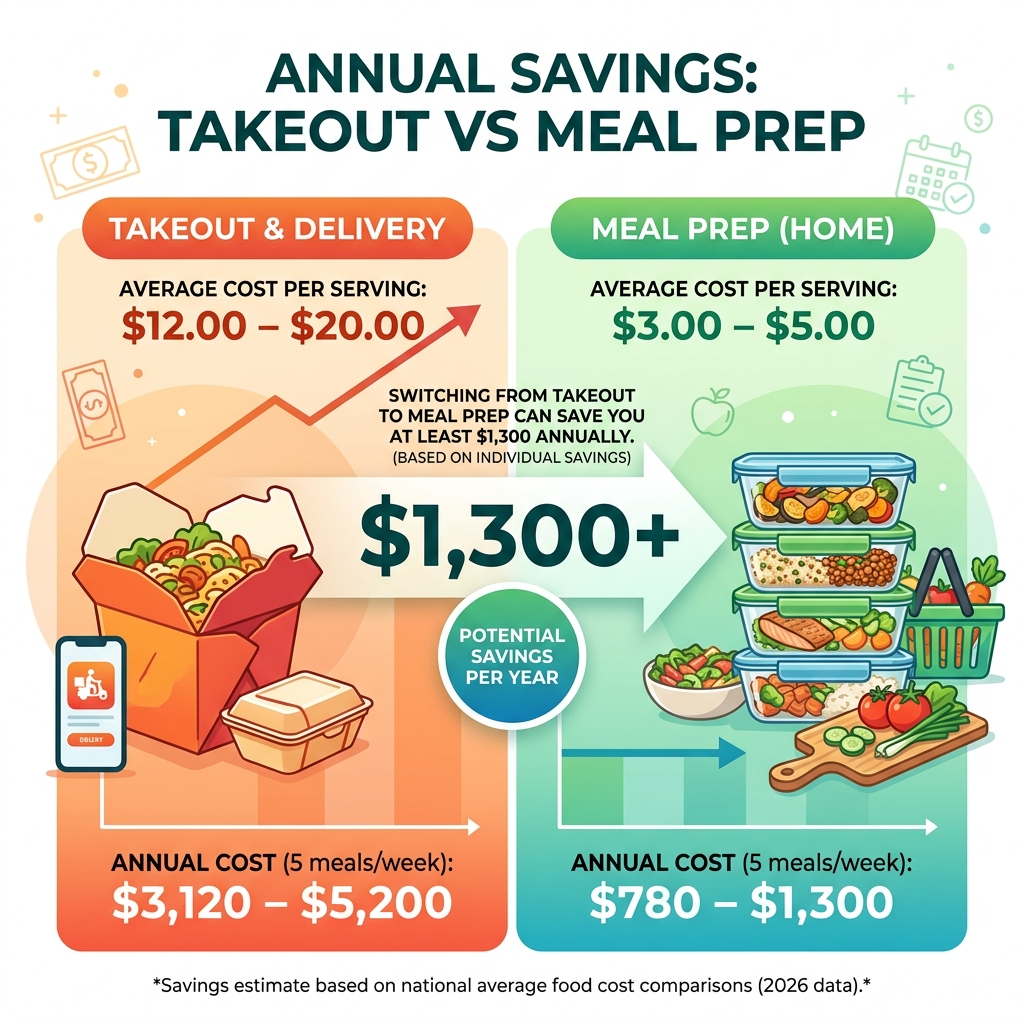
If the health benefits don’t convince you, the financial data likely will. We often view meal prepping as a “health hack,” but it is arguably the ultimate financial hack. Recent financial data suggests that the average American spends $3,526 annually on food away from home.
By switching to meal prepping, the average person saves at least $112 monthly—that’s over $1,300 a year. For a family of four, converting just half of their usual takeout meals into prepped home meals can result in a massive $5,800 in annual savings.
| Meal Type | Average Cost Per Serving | Annual Cost (5 meals/week) |
|---|---|---|
| Takeout / Delivery | $12.00 – $20.00 | $3,120 – $5,200 |
| Meal Prep (Home) | $3.00 – $5.00 | $780 – $1,300 |
| Potential Savings | $9.00 – $15.00 | $2,340 – $3,900 |
One of the biggest drivers of these savings is the reduction of food waste. Currently, about one-third of all food in the United States is thrown out. Household food waste averages nearly 32%, but with a plan, that number can drop below 5%. When we buy with a specific purpose, we stop throwing away that “aspirational” bag of spinach that usually turns into green slime in the crisper drawer.
By buying staple ingredients like rice, beans, and frozen vegetables in bulk and planning meals around sales, we can reduce grocery costs by 30-40%. For example, a whole chicken can be roasted for Sunday dinner, and the leftovers can be transformed into salads, tacos, and soup stock, providing five distinct meals for the price of one bird.
Overcoming the Boredom Barrier and Common Pitfalls
We have all been there: it’s Wednesday, and the thought of eating that same chicken and broccoli for the third day in a row makes you want to order a pizza. This “monotony trap” is the number one reason people quit.
To keep things fresh, we recommend focusing on “component prepping” rather than “full meal assembly.” Instead of making five identical containers, roast three different vegetables and two proteins. This allows you to mix and match flavors throughout the week.
Food safety is another critical factor. According to FDA guidelines, most cooked meals stay fresh and safe in the fridge for 3 to 4 days. If you prep on Sunday, your Thursday and Friday meals should be stored in the freezer from the start.
Texture is often a deterrent, too. Steamed vegetables tend to get mushy when reheated, whereas roasted vegetables hold their texture ten times better. Another pro tip: always store your sauces and dressings separately. Keeping your vinaigrette in a small mason jar until the moment you eat prevents your greens from wilting and your grains from becoming soggy.

Why some people think is meal prep worth it is a myth
Despite the data, there is a vocal group of people who find the practice stifling. Some critics argue that rigid prepping leads to more waste when spontaneous social plans arise. If you prep a week of chili but then get invited to dinner by a friend on Tuesday, that prepped meal often ends up in the trash.
There is also the “weekend chore” factor. Spending five hours on a Sunday in a hot kitchen can feel like a “Monday morning dread” occurring a day early. For those who value culinary creativity and intuitive eating—listening to what your body craves in the moment—the rigidity of a pre-portioned container can feel like a prison.
The secret to making is meal prep worth it for these individuals is flexibility. You don’t have to prep every morsel. Even just having a well-stocked pantry of “ten-minute staples” (like organic soups, pasta, and frozen veggies) can provide the benefits of meal prep without the rigid schedule.
A Beginner’s Roadmap to Sustainable Success
If you’re ready to start, don’t try to prep 21 meals on your first go. That is a recipe for burnout. Experts suggest that the best way to start is small—perhaps just prepping your lunches for the work week.
Quintal Florido’s Step-by-Step Guide for Success:
- Invest in Quality Tools: Transition from mismatched plastic tubs to glass Pyrex containers. They are microwave-safe, don’t leach chemicals, and allow you to see exactly what’s inside.
- The 2-Hour Power Session: Set a timer. Clear your counters, preheat the oven to 400°F, and get your grains boiling. Most people can prep 10-15 meals in just two hours with a bit of focus.
- Use a Shopping List: This simple step reduces impulse buys by 73%. If it’s not on the list, it doesn’t go in the cart.
- Cool Before You Close: Always let your food cool on sheet pans before portioning them into containers. Closing a lid on hot food creates condensation, which leads to soggy textures and faster spoilage.
How to decide if is meal prep worth it for your lifestyle
Meal prepping is a tool, not a religion. It is exceptionally well-suited for:
- Busy Professionals: Who want to avoid the “decision fatigue” of a long workday.
- Families: Who need to ensure kids have nutritious options between school and extracurriculars.
- Fitness Enthusiasts: Who need to hit specific protein or calorie targets.
However, if you are a “picky eater” who loathes leftovers, a full-week prep won’t work for you. Instead, try a hybrid approach. Prep the “hard parts”—like chopping onions, roasting a tray of veggies, or boiling a pot of quinoa—but cook your protein fresh each night. This gives you the speed of meal prep with the “just cooked” taste you crave.
Consistency will always beat perfection. When meal prepping becomes a habit, the efficiency truly kicks in.
Frequently Asked Questions about Meal Prepping
How long do prepped meals stay fresh and safe?
The general rule of thumb is the “4-Day Rule.” Most cooked proteins, grains, and vegetables are at their peak quality for 3 to 4 days in a refrigerator set to 40°F or colder. For anything intended for later in the week, use your freezer. Most meals will stay safe indefinitely at 0°F, though for best nutrient retention and flavor, we recommend eating them within 3 months. Always label your containers with the date they were prepped!
What types of foods work best for batch cooking?
Not all foods are created equal in the microwave.
- The Winners: Proteins like chicken thighs (which stay juicier than breasts), hard-boiled eggs, and legumes (beans and lentils). Grains like quinoa, farro, and brown rice reheat beautifully. Hearty greens like kale and spinach hold up well, as do roasted root vegetables.
- The Losers: Fried foods (they get soggy), delicate seafood (it gets rubbery), and dressed salads (they wilt). If you want a salad, keep the dressing at the bottom of a mason jar and the greens at the top.
Does meal prepping actually help with weight loss?
Yes, and the reason is psychological as much as it is nutritional. Meal prepping enables “rational decision-making.” When you plan your meals on Sunday, you choose portions based on your health goals. When you choose your meal at 6 PM on Tuesday while hungry, you are making an emotional decision. Studies show that people who cook at home consume fewer calories and experience less weight gain over time.
Conclusion
At the end of the day, is meal prep worth it? The evidence suggests that for the vast majority of people, the answer is a resounding yes. It is one of the few habits that simultaneously improves your physical health, your mental well-being, and your bank account.
By reducing the burden of choice, you save your mental energy for the things that truly matter. At Quintal Florido, we believe that health shouldn’t be a source of stress. Whether you choose to go “all-in” with a full Sunday batch cook or simply start by prepping your breakfast parfaits, every step toward a more organized kitchen is a step toward a more wholesome, balanced life.
Ready to reclaim your time and nourish your body? Start your journey to better health at Quintal Florido and discover more evidence-based guides to living well.
