
From Ancient Kitchens to Modern Wellness: The Real Story on Bone Broth Health Benefits
The bone broth health benefits that people talk about today are not new — anthropologists believe humans have been simmering bones for nourishment since prehistoric times. What is new is the science now backing up those ancient instincts.
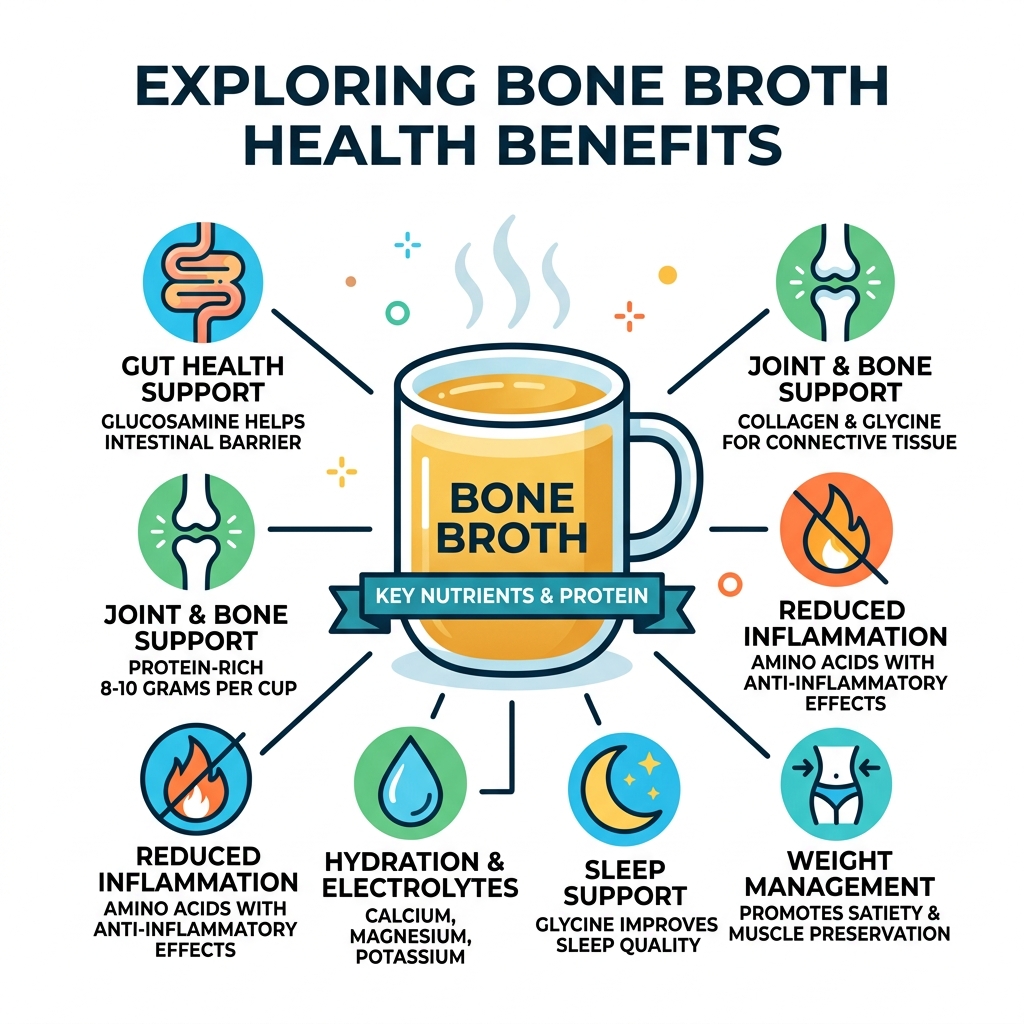
Here is a quick summary of the key benefits:
- Protein-rich — around 8–10 grams per cup, more than regular broth or stock
- Gut health support — amino acids like glutamine help strengthen the intestinal barrier
- Joint and bone support — collagen and glycine support connective tissue health
- Reduced inflammation — specific amino acids have shown anti-inflammatory effects in studies
- Hydration and electrolytes — contains calcium, magnesium, potassium, and phosphorus
- Sleep support — glycine has been shown to improve sleep quality
- Weight management — high protein content promotes satiety and muscle preservation
Today, bone broth is everywhere — supermarket shelves, paleo meal plans, keto diets, even race finish lines. But with all the buzz, it can be hard to separate real benefits from marketing hype.
This guide cuts through the noise. You will get a clear, evidence-based look at what bone broth actually does for your body, what claims are overstated, and how to make or choose a quality broth without spending hours in the kitchen.
The Science-Backed Bone Broth Health Benefits You Need to Know
While bone broth has been a culinary staple for centuries—think of the Japanese tonkotsu (pork bone broth) or classic French stocks—modern interest has shifted toward its therapeutic potential. Scientific research is beginning to catch up with traditional wisdom, particularly regarding how this liquid gold interacts with our internal systems.
One of the most compelling areas of study involves Bone Broth Benefits: How Its Nutrients Fortify Gut Barrier in Health and Disease. Researchers have found that the specific combination of amino acids and minerals released during the long simmering process can help reinforce the delicate lining of our digestive tract. This is a prime example of how simple diet changes for better health can yield significant long-term results.
Beyond the gut, bone broth serves as a powerful tool for systemic inflammation reduction. It contains amino acids like arginine and glycine, which have well-documented anti-inflammatory properties. For those of us looking to stay hydrated, bone broth offers a savory alternative to plain water, providing essential electrolytes like potassium and magnesium that help maintain fluid balance.
Bone Broth Health Benefits for Digestive Wellness
If you have ever heard the term “leaky gut,” you know how uncomfortable digestive issues can be. Technically known as increased intestinal permeability, this condition occurs when the tight junctions in your intestinal lining loosen, allowing substances to pass into the bloodstream that shouldn’t be there.
This is where the bone broth health benefits for the gut truly shine. Bone broth is rich in glutamine, an amino acid that serves as a primary fuel source for the cells lining the small intestine. According to research on bone broth nutrients and gut barrier health, glutamine helps maintain the integrity of the intestinal wall.
Furthermore, the gelatin found in well-made bone broth—which is simply cooked collagen—attracts and holds liquids, including digestive juices. This helps food move more smoothly through the gut. For individuals managing Inflammatory Bowel Disease (IBD), some studies suggest that the amino acids in bone broth may help maintain remission by soothing the intestinal lining and reducing localized inflammation.
Bone Broth Health Benefits for Joint and Bone Integrity
As we age, our connective tissues naturally begin to wear down. This can lead to joint stiffness or more serious conditions like osteoarthritis. Bone broth provides a natural source of Type 2 collagen, the specific type of collagen found in human cartilage.
While your body doesn’t “transport” the collagen you drink directly to your knee joint (it breaks it down into amino acids first), providing the building blocks—specifically glycine and proline—gives your body the raw materials it needs to repair its own connective tissues. We often discuss these high protein diet tips because getting enough high-quality protein is essential for maintaining muscle mass and joint health as we get older.
Some clinical trials have shown that collagen derived from chicken cartilage can improve pain and stiffness in patients with osteoarthritis. While bone broth shouldn’t replace medical treatment, it can be a soothing, nutrient-dense addition to a joint-friendly lifestyle.
Understanding the Nutritional Profile of Bone Broth
To truly understand the search intent behind the nutritional value of bone broth, we have to look at the numbers. Bone broth is significantly more nutrient-dense than the standard broth or stock you might find in a cardboard carton.
The secret lies in the “low and slow” cooking method. By simmering bones for 12 to 24 hours, you extract the marrow and break down the connective tissue. This results in a liquid that is surprisingly high in protein. While a standard cup of chicken broth might only have 2 grams of protein, a high-quality bone broth typically packs 8 to 10 grams of protein per cup.

| Feature | Regular Broth | Standard Stock | Bone Broth |
|---|---|---|---|
| Primary Ingredient | Meat/Vegetables | Bones/Aromatics | Bones/Connective Tissue |
| Simmer Time | 45 mins – 2 hours | 3 – 4 hours | 12 – 24+ hours |
| Protein (per cup) | 2 – 5 grams | 4 – 6 grams | 8 – 10 grams |
| Texture | Thin/Liquid | Slightly viscous | Gel-like when cold |
| Key Nutrients | Flavor/Vitamins | Minerals/Gelatin | High Collagen/Amino Acids |
In addition to protein, bone broth provides a variety of vitamins and minerals. Bone marrow is a rich source of vitamins A and K, as well as trace minerals like zinc, iron, and selenium. Because these nutrients are suspended in a liquid, they are often easier for the body to absorb, making bone broth a great addition to meal planning for nutrition.
How to Make and Select the Best Bone Broth
Making your own bone broth is one of the most rewarding (and delicious) kitchen projects you can undertake. It is also a great way to reduce food waste by using carcasses from Sunday roasts.
To get the most bone broth health benefits, you need to follow a few specific steps:
- Roast the Bones: Before simmering, roast your beef or marrow bones at 400°F (200°C) for about 30 minutes. This creates a deeper, richer flavor and a darker color.
- Use an Acid: This is a crucial step! Adding 1–2 tablespoons of apple cider vinegar or lemon juice to your pot helps pull the minerals and collagen out of the bones and into the water.
- The Long Simmer: Use a slow cooker or a heavy stockpot. For chicken bones, aim for 12–15 hours. For thicker beef bones, 24 hours is ideal.
- Add Aromatics: In the last few hours of cooking, add carrots, celery, onions, garlic, and herbs like parsley or thyme. This is one of our favorite nutrition tips for busy people because you can set it and forget it.
- Strain and Store: Once finished, strain the solids through a fine-mesh sieve. Let it cool, then refrigerate. A layer of fat will form on top—you can scrape this off or leave it for extra flavor.
Choosing High-Quality Store-Bought Options
We know that not everyone has 24 hours to spare for a simmering pot. If you are buying bone broth at the store, you need to be a bit of a detective.
- Check the Sodium: Some commercial brands contain over 450mg of sodium per cup—that is 20% of your daily limit! Look for “reduced-sodium” or “low-sodium” versions.
- The Gel Test: High-quality bone broth should turn into a “meat jello” or gel-like texture when refrigerated. This is a sign of high gelatin and collagen content. If it stays completely liquid when cold, it likely hasn’t been simmered long enough.
- Frozen vs. Shelf-Stable: You will often find the highest quality broths in the freezer section. These are usually made in smaller batches without the heavy preservatives found in some shelf-stable cartons.
- Ingredient Transparency: The label should list bones, water, and vegetables. Avoid brands with “natural flavors,” yeast extract, or excessive sugar.
Potential Risks and Frequently Asked Questions
While bone broth is generally very safe, there are a few things to keep in mind. Some experts have raised concerns about heavy metals, specifically lead. Because bones can store small amounts of lead from the environment, long simmering times might release it into the broth. However, most studies show that lead levels in bone broth are well below safety thresholds, especially if you use bones from organic, grass-fed animals.
There are also specific health conditions where caution is needed. People with histamine intolerance may react to the high histamine levels in long-simmered foods. Additionally, those with Small Intestinal Bacterial Overgrowth (SIBO) might find that certain amino acids in the broth cause bloating. As noted in the MD Anderson guide on bone broth safety, patients with kidney disease should also consult their doctor, as the high protein and potassium content can be hard on the kidneys.
What is the difference between bone broth and stock?
The main difference is time. While both use bones, stock is usually simmered for 3–4 hours. Bone broth goes the distance—12 to 24 hours. That extra time is what breaks down the collagen into gelatin, giving bone broth its signature thick mouthfeel and higher protein density. Think of bone broth as “super-powered stock.”
Can bone broth help with weight loss?
Absolutely. Bone broth is naturally low in calories but high in protein. Drinking a warm mug of broth between meals can increase satiety (the feeling of fullness), which helps prevent mindless snacking. It is a fantastic low-calorie snack that supports muscle preservation while you are in a calorie deficit.
How much bone broth should I drink daily?
Most health experts recommend a serving size of 8 ounces (one cup) per day. You don’t need to overdo it to see the bone broth health benefits. We like to think of it as a “nutritional insurance policy” that you can rotate into your diet a few times a week.
Conclusion
At Quintal Florido, we believe that the best path to wellness is through evidence-based nutrition and a balanced, wholesome lifestyle. Bone broth isn’t a “miracle cure,” but it is a nutrient-dense, traditional food that offers genuine support for your gut, joints, and overall protein intake.
Whether you are sipping it from a mug on a cold morning or using it as a base for a vibrant vegetable soup, bone broth is a simple way to nourish your body from the inside out. By choosing high-quality ingredients and understanding the science behind the simmer, you can truly feel the benefits “to the bone.”
Start your journey to better health today by exploring more of our guides on wholesome eating and simple lifestyle changes.
