
Why Beetroot Juice Health Benefits Are Worth Your Attention
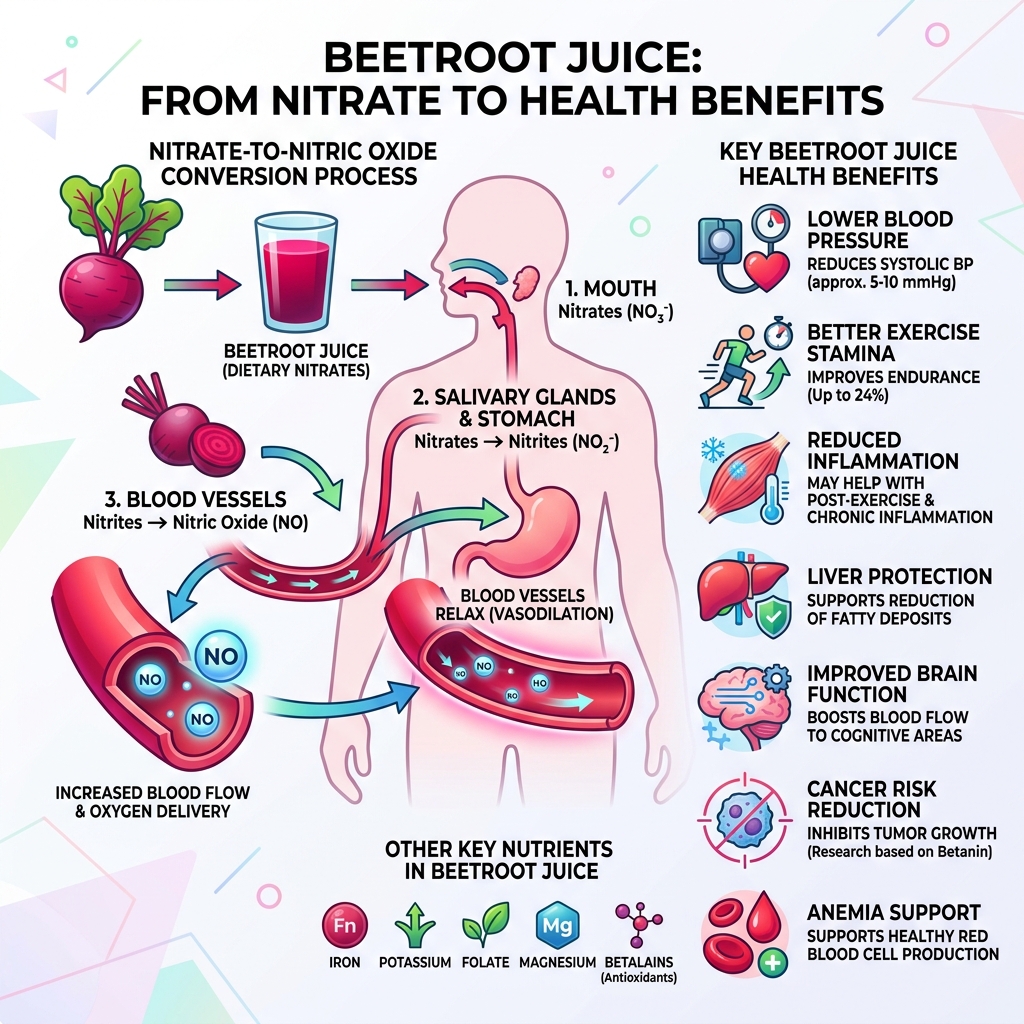
Beetroot juice health benefits include lower blood pressure, better exercise stamina, reduced inflammation, improved liver health, and stronger brain function — all backed by peer-reviewed research.
Here’s a quick overview:
| Benefit | Key Compound | What the Research Shows |
|---|---|---|
| Lower blood pressure | Dietary nitrates | Reduces systolic BP by ~5-10 mmHg |
| Better exercise stamina | Nitrates + betalains | Up to 24% improvement in endurance |
| Reduced inflammation | Betalains | May help with post-exercise and chronic inflammation |
| Liver protection | Betaine | Supports reduction of fatty deposits in the liver |
| Brain function | Nitrates | Improves blood flow to cognitive areas of the brain |
| Cancer risk reduction | Betanin | Inhibited lung tumors by up to 60% in animal models |
| Anemia support | Iron + folate | Supports healthy red blood cell production |
One cup of beetroot juice gives you iron, potassium, folate, magnesium, and a class of antioxidants called betalains — the pigments responsible for that deep red color.
The science behind most of these benefits comes down to one key process: nitrates in beets convert to nitric oxide in your body, which relaxes and widens blood vessels. More on that below.
Beets have quietly risen to superfood status over the last decade — and for good reason. Whether you’re short on time, trying to eat better, or just looking for one simple habit that pays off in multiple ways, a small daily serving of beetroot juice is hard to beat.
The Nutritional Profile of a Superfood
When we talk about beetroot juice health benefits, we are really talking about a complex cocktail of bioactive compounds. Beets (scientific name Beta vulgaris) are not just sugar and water; they are dense repositories of minerals and unique plant pigments.
The most famous of these are betalains. These are water-soluble antioxidants responsible for the beet’s deep crimson hue. Specifically, betanin is the primary betacyanin found in red beets. Research suggests that betanin is a powerhouse at scavenging free radicals—nearly twice as effective as some common anthocyanins found in other “super-fruits.”
Beyond the pigments, a single cup (approximately 248g) of beetroot juice is a nutritional goldmine. It typically contains:
- Folate (Vitamin B9): Essential for DNA synthesis and repair. A cup provides about 65 mcg (16% of the Daily Value).
- Potassium: Crucial for heart function and nerve signaling, offering around 317 mg (7% DV).
- Iron: Vital for carrying oxygen in the blood, providing 1.4 mg (8% DV).
- Magnesium and Manganese: Important for bone health and enzyme function.
- Vitamin C: A well-known immune supporter and antioxidant.
Raw Juice vs. Cooked Beets: Which is Better?
While we love a good roasted beet salad, the processing method matters. Heat can degrade some of the sensitive phytonutrients and nitrates.
| Nutrient/Compound | Raw Beetroot Juice | Cooked/Boiled Beets |
|---|---|---|
| Nitrate Content | Very High (Preserved) | Lower (Leaches into water) |
| Betalain Stability | High | Reduced by heat |
| Vitamin C | 100% Retained | Partially lost during boiling |
| Fiber | Low (if strained) | High (Whole vegetable) |
| Antioxidant Capacity | Maximum | Moderate |
For those specifically targeting beetroot juice health benefits related to blood pressure or athletic performance, raw juice is often the superior choice because it keeps the inorganic nitrates intact.
Heart Health and Beetroot Juice Health Benefits
Perhaps the most well-documented of all beetroot juice health benefits is its impact on the cardiovascular system. If you are looking for simple diet changes for better health, adding a glass of beet juice is a great place to start.
The magic happens through the “nitrate-nitrite-nitric oxide” pathway. When we drink beet juice, the inorganic nitrates are converted by bacteria on our tongues into nitrites, and eventually into nitric oxide (NO) in the stomach and blood vessels. Nitric oxide is a vasodilator—it tells the muscles in your blood vessels to relax and widen.
What the statistics say:
- A 2022 meta-analysis confirmed that nitrate from beetroot juice significantly lowered systolic blood pressure in adults with hypertension.
- In a 2019 study, just 70 ml of nitrate-rich juice decreased blood pressure by 5.2 mm Hg more than a placebo in just 30 minutes.
- Long-term consumption (over 5-6 days) helps maintain more stable systemic hemodynamics, meaning your heart doesn’t have to work as hard to pump blood.
By improving endothelial function (the health of the lining of your blood vessels), beetroot juice acts as a natural support system for your arteries. While it shouldn’t replace prescribed medication, it is a powerful tool for cardiovascular wellness.
Maximizing Beetroot Juice Health Benefits for Athletes

If you’ve noticed athletes sipping a dark red drink before a race, they aren’t just following a trend. They are leveraging the science found in the Beetroot Juice and Exercise for Clinical Health and Athletic Performance: A Narrative Review.
Beet juice improves exercise economy, which is a fancy way of saying it helps your body use oxygen more efficiently. When your muscles need less oxygen to perform the same amount of work, your stamina increases.
- Endurance: A 2016 study showed that 70 mL of juice daily for one week improved aerobic exercise endurance by 24% in older adults with heart failure.
- Muscle Power: Nitrates help with muscle contraction speed and explosive power. One study on cyclists found that acute supplementation improved 4 km and 16.1 km time-trial performance by nearly 3%.
- Recovery: The anti-inflammatory betalains help reduce muscle soreness after a grueling workout, making it easier to get back to the gym the next day.
For those of us with hectic schedules, using these nutrition tips for busy people can help you integrate beet juice into a pre-workout routine without needing hours of meal prep.
Liver Protection and Disease Prevention
Our livers are the unsung heroes of our metabolism, and they face constant stress from modern diets. One of the more surprising beetroot juice health benefits is its potential to protect against Nonalcoholic Fatty Liver Disease (NAFLD).
Beets contain betaine, an amino acid that may help prevent or reduce fatty deposits in the liver. A study involving patients with NAFLD found that drinking 250 ml of beet juice daily for 12 weeks significantly improved liver health markers. This effect is even more pronounced when paired with a Mediterranean-style diet. We recommend meal planning for nutrition to ensure your beet juice is part of a broader, liver-friendly eating pattern.
Chemoprotective Properties and Cancer Research
While we must be clear that beet juice is not a cure for cancer, researchers are very interested in its chemoprotective properties. According to The Potential Benefits of Red Beetroot Supplementation in Health …, the betalains in beets can disrupt cancerous mutations in cells and inhibit tumor growth in animal models.
- In lung tumor models, beetroot reduced tumor “multiplicity” (the number of tumors) by 20-46%.
- Betanin has been shown to inhibit lung tumors by 60% in specific mouse models.
- For those undergoing chemotherapy, beet juice may help reduce side effects like fatigue and inflammation, though you should always consult your oncologist before starting any new supplement during treatment.
How to Safely Enjoy Beetroot Juice Health Benefits Daily
Ready to start juicing? Before you dive in, there are a few practical things to keep in mind. We want you to enjoy the benefits without any “red alerts.”
1. Beeturia: Don’t panic! About 10-15% of people experience “beeturia,” where their urine or stools turn pink or red after eating beets. It is completely harmless, though it can be a bit of a shock if you aren’t expecting it!
2. Oxalates and Kidney Stones: Beets are high in oxalates, which can contribute to the formation of kidney stones in susceptible individuals. If you have a history of calcium oxalate stones, we suggest enjoying beet juice in moderation and speaking with your doctor.
3. Blood Pressure Monitoring: Because beet juice is so effective at lowering blood pressure, people already taking medication for hypertension or those with naturally low blood pressure (hypotension) should monitor their levels closely to ensure they don’t drop too low.
What is a healthy daily dosage? While there is no official “RDA” for beet juice, research studies typically use between 200 ml and 500 ml (about 1 to 2 cups) per day. If you are new to it, start with half a small beet’s worth of juice to see how your digestion handles it.
For those focusing on weight, check out our nutrition guide for weight management to see how to fit this nutrient-dense drink into your calorie goals.
Frequently Asked Questions about Beet Juice
Does beet juice lower blood pressure immediately?
Yes and no. Research shows that the nitrate conversion process begins quickly, with blood pressure often dropping within 30 to 60 minutes of ingestion. However, the peak effect usually occurs around 2 to 3 hours after drinking. While the immediate effect is real, the most significant beetroot juice health benefits for heart health come from consistent, daily consumption over several weeks.
Is it safe to drink beet juice every day?
For most people, yes! Drinking it daily can help maintain consistent nitric oxide levels in the blood. However, we always advocate for a balanced diet. Relying solely on one “superfood” isn’t as effective as a varied intake of fruits and vegetables. If you’re just starting out, these easy diet tips for beginners can help you build a sustainable routine.
Can beet juice help with weight management?
Beet juice is relatively low in calories (about 60-70 per cup) but very high in nutrients. While the juice lacks the fiber of a whole beet, it can still support weight goals by improving exercise stamina—allowing you to work out longer and harder. Its metabolic support and ability to improve insulin sensitivity make it a great addition to diet tips for busy professionals who need high-impact nutrition on the go.
Conclusion
At Quintal Florido, we believe that “beeting” the odds of chronic disease starts with what you put in your glass. The beetroot juice health benefits we’ve explored—from cardiovascular support and athletic endurance to liver protection—are more than just marketing hype; they are grounded in rigorous scientific study.
By integrating evidence-based nutrition into your daily life, you can make significant strides toward long-term wellness. Whether you’re blending it into a morning smoothie or taking a concentrated shot before a run, beetroot juice is a simple, whole-food way to invest in your health.
For more guides on wholesome living and evidence-based nutrition, visit us at https://www.quintalflorido.com/.
