
Tired of Store-Bought Fruit Snacks Full of Junk?
Candy fruit leather ideas are exactly what busy parents and health-conscious snackers need — a simple, real-food alternative to the sugary, dye-filled rolls lining grocery store shelves.
Here are the best ways to make fruit leather taste like candy at home:
- Sour candy style — coat strips in citric acid and sugar after drying
- Tropical twist — blend mango and dragonfruit for a vibrant, sweet roll
- Apple cinnamon — warm spice flavors that taste like a treat
- Chocolate-dipped lollipops — roll dried fruit leather around a stick and dip in dark chocolate
- Blueberry banana — naturally sweet and chewy, no added sugar needed
- Strawberry lemonade — bright and tangy with a candy-like punch
- Peach raspberry — fruity, bold, and kid-approved
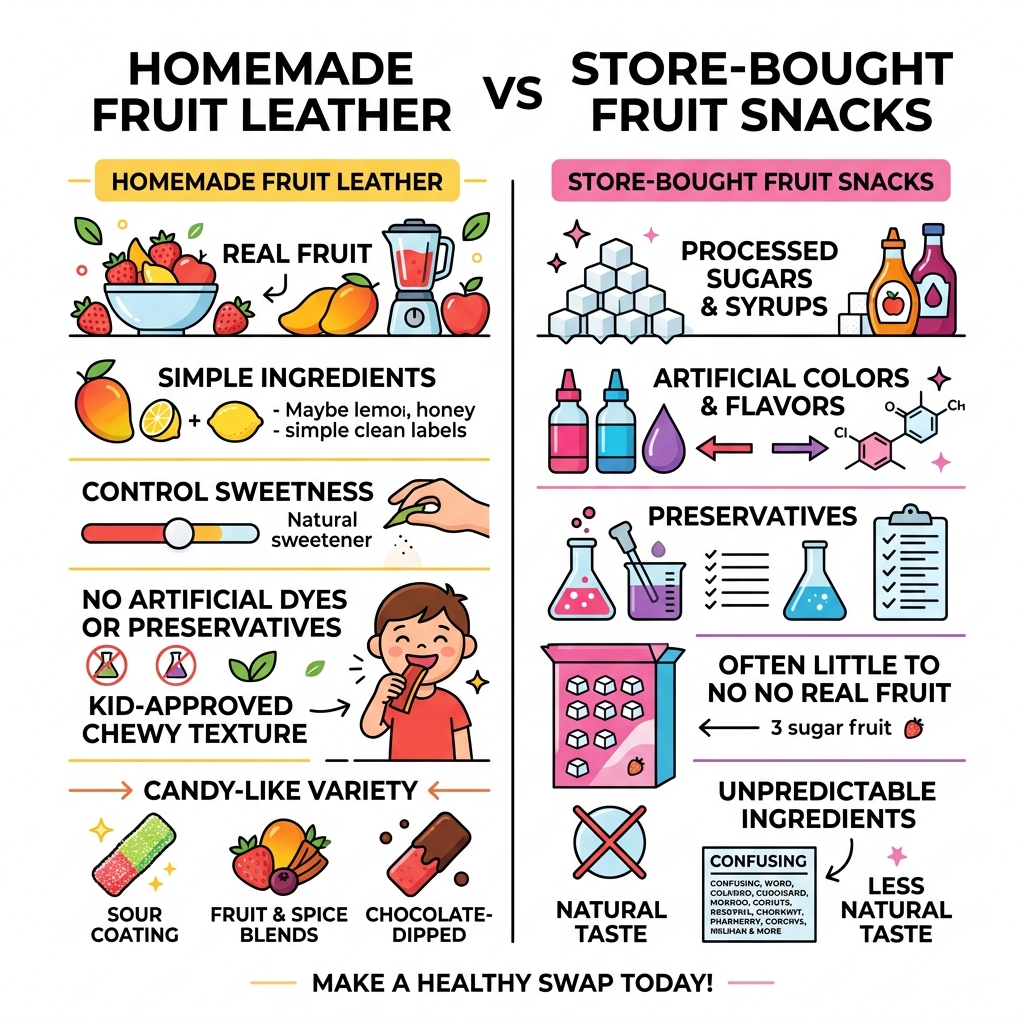
Most store-bought fruit snacks contain corn syrup, artificial colors, and a long list of preservatives. In fact, some popular brands contain almost no real fruit at all. Homemade fruit leather flips the script — you control every single ingredient.
The best part? You only need a blender, an oven or dehydrator, and ripe fruit. That’s it.
Whether you’re packing lunchboxes, looking for a guilt-free sweet fix, or trying to use up overripe fruit before it goes bad, homemade fruit leather is one of the easiest healthy candy swaps you can make.
Candy fruit leather ideas terminology:
Why Homemade Fruit Leather is the Ultimate Healthy Candy Swap
If you’ve ever looked at the back of a commercial fruit snack box, you might have been shocked. Many of these products are basically “candy” in disguise, often listing corn syrup and sugar as the first two ingredients before any mention of actual fruit. By embracing candy fruit leather ideas at home, we are choosing a path that prioritizes whole fruit and fiber.

When we make our own fruit rolls, we retain the natural nutrients found in the fruit. Unlike store-bought versions that are often stripped of fiber, homemade leather uses the entire fruit puree. This means you’re getting vitamins, minerals, and the fiber necessary to help prevent a massive sugar spike. It’s the ultimate way to satisfy a sweet tooth without the subsequent “sugar crash.”
One of our favorite aspects of making fruit leather is waste reduction. Have you ever looked at a bowl of overripe, mushy strawberries or spotted bananas and felt the urge to toss them? Don’t! These are actually the best candidates for fruit leather because their sugar content is at its peak, making the final product naturally sweeter. If you’re new to working with fruit purees, checking out a guide to fruit smoothie recipes for beginners can help you get comfortable with blending different textures.
By making it ourselves, we avoid:
- Artificial Dyes: No Red 40 or Yellow 5 here.
- Preservatives: We don’t need chemicals when we have the natural preservation power of dehydration.
- Excessive Sweeteners: Most fruits are sweet enough on their own!
Essential Equipment and Step-by-Step Candy Fruit Leather Ideas
You don’t need a professional kitchen to whip up these treats. While a dedicated dehydrator is a fantastic investment for the frequent “leather-maker,” a standard kitchen oven works just as well.
The Equipment List
To get started with your candy fruit leather ideas, gather these essentials:
- High-Speed Blender or Food Processor: This ensures your puree is silky smooth. Clumps can lead to uneven drying.
- Rimmed Baking Sheets or Dehydrator Trays: These hold the puree in place.
- Parchment Paper or Silicone Mats: Never use wax paper or aluminum foil, as the leather will stick. Silicone mats are particularly great because they are reusable and often have slightly raised edges to prevent spills.
- Offset Spatula: This is the secret weapon for achieving that perfect, even 1/8-inch thickness.
Step-by-Step Instructions
- Prepare the Fruit: Wash, peel (if necessary), and pit your fruit. For fruits like berries, you might want to strain the seeds after blending if you prefer a smoother “candy” texture.
- Blend to Perfection: Puree the fruit until completely smooth. At this stage, you can add a squeeze of lemon juice to help preserve the vibrant color.
- Spread it Out: Pour the puree onto your lined tray. Use your spatula to spread it evenly. A pro tip from the experts: spread it slightly thicker at the edges (about 1/4 inch) and thinner in the center (1/8 inch). The edges tend to dry faster, so this prevents them from becoming brittle while the center is still wet.
- The Drying Process:
- Dehydrator: Set to 135°F–145°F. This usually takes 6 to 8 hours.
- Conventional Oven: Set to your lowest possible setting, usually around 170°F. If your oven doesn’t go that low, you can prop the door open slightly with a wooden spoon to allow moisture to escape and keep the temperature down. This usually takes 4 to 6 hours.
- The Doneness Test: Your fruit leather is ready when it is no longer tacky to the touch and has a slightly shiny appearance. It should peel away from the parchment easily without leaving bits behind.
Transforming Smoothies into Candy Fruit Leather Ideas
If you already enjoy making smoothies, you’re halfway to a great batch of fruit leather! Many of the same principles apply. For instance, whipping up vegan smoothie recipes at home teaches you how to balance flavors, which is essential for a “candy” experience.
However, fruit leather requires a specific consistency. If your puree is too watery (common with melons or citrus), it will take forever to dry and may become brittle. To fix this, use thickeners. Ground chia seeds or flax seeds are excellent options; not only do they provide a “gel” consistency that makes the leather more pliable, but they also add a boost of Omega-3s.
If your fruit is a bit tart, you can nudge it toward a candy flavor using natural sweeteners like honey, maple syrup, or even a few soaked and blended Medjool dates.
7 Creative Flavor Combinations for Your Fruit Rolls
This is where the fun begins! To truly capture the “candy” vibe, you want to move beyond plain applesauce.
- Mango Dragonfruit: This creates a stunning pink-and-orange swirl. Use frozen dragonfruit for an even more intense color. It’s sweet, exotic, and looks exactly like something you’d find in a gourmet candy shop.
- Strawberry Rhubarb: A classic pie flavor that translates beautifully to leather. You’ll need to simmer the rhubarb with a little water until soft before blending it with the strawberries.
- Apple Cinnamon: This tastes like autumn in a roll. Use a variety of apples for a complex flavor profile and add a generous dash of cinnamon.
- Blueberry Banana: This is a powerhouse of nutrition. The banana provides a creamy, chewy texture that mimics taffy. For a nutritional boost, you could even pull inspiration from green smoothie recipes for a natural detox by adding a tiny bit of spinach—we promise you won’t taste it!
- Peach Raspberry: The tartness of the raspberries perfectly balances the honeyed sweetness of ripe peaches.
- Starfruit Kiwi: A tropical explosion! The acidity of the kiwi gives it a natural “zing” that kids love.
- Tropical Pineapple Mango: Using a tropical fruit leather recipe as a base, you can create a snack that feels like a vacation.
Sour and Chewy Candy Fruit Leather Ideas
Do you miss those sour straws from the movie theater? You can recreate that experience at home. To achieve a “sour candy” punch, we recommend adding a little extra lemon juice or a pinch of citric acid to your puree.
For the ultimate sour experience, once the leather is dried and cut into strips, lightly mist them with water and toss them in a mixture of organic sugar and citric acid. This creates that authentic “sour coating” that makes your tongue tingle.
If you want a more pliable, commercial-style texture that doesn’t crack, consider adding a small amount of gelatin (or agar-agar for a vegan version). This gives the leather a “bouncy” chew that is very reminiscent of gummy candies.
For a truly “gourmet” treat, try the Chocolate-Dipped Chewy Fruit Leather Lollipops method. Roll your finished strips tightly, insert a lollipop stick, and dip half of it into melted dark chocolate. It’s a sophisticated way to serve fruit to guests or as a special holiday gift.
Pro Tips for Perfect Texture and Troubleshooting
Making fruit leather is an art, and like any art, it takes a little practice. Here are our top tips for ensuring your candy fruit leather ideas come out perfectly every time:
- The “Tackiness” Factor: If the leather is still sticky in the center but dry on the edges, you might have spread it unevenly. You can try flipping the leather over and drying it for another hour to even things out.
- Preventing Brittleness: If your leather cracks like a cracker, it’s over-dried. Next time, check it earlier. You can sometimes “rescue” brittle leather by lightly misting it with water and letting it sit for a few minutes to rehydrate.
- Greasing the Sheets: Even with parchment, some very sugary fruits (like peaches) can stick. A tiny bit of coconut oil rubbed onto the parchment can act as a safety net.
- Color Preservation: Nobody wants brown fruit leather. Always include a teaspoon of lemon or lime juice in your puree to keep those reds, pinks, and yellows popping.
- Blending Skins: Whenever possible, keep the skins on (especially for apples, pears, and peaches). The skin contains a lot of the pectin that helps the leather set, and it’s where most of the nutrients live. Just make sure you blend it very well!
- Consistency is Key: If you’re using very watery fruits like watermelon or oranges, blend them with a “fleshy” fruit like banana or mango to give the leather some body. For more tips on achieving the right blend, see our guide on whipping up vegan smoothie recipes at home.
How to Store Your Homemade Fruit Candy
One of the best things about fruit leather is its shelf life. Because the moisture has been removed, it is naturally resistant to spoiling.
- Room Temperature: Store your leather rolls in an airtight container in a cool, dark place. According to the National Center for Home Preservation, it can last up to one month at room temperature.
- Refrigeration: For longer-lasting snacks, keep them in the fridge. They will stay fresh and chewy for up to six months.
- Freezing: If you’ve made a massive batch, you can freeze fruit leather for up to one year. Just make sure to thaw it in the fridge overnight before eating.
To prevent sticking: Always roll your leather with a strip of parchment paper inside the roll. This prevents the fruit from touching itself and becoming one giant, inseparable lump. If you are stacking flat pieces, place a small square of parchment between each layer.
Frequently Asked Questions about Candy Fruit Leather Ideas
Can I use frozen fruit to make fruit leather?
Absolutely! In fact, frozen fruit is often picked at peak ripeness, which can result in a more intense flavor and more vibrant colors. Just be sure to thaw the fruit completely and drain any excess liquid before blending, otherwise, your drying time will double.
How do I know when the fruit leather is finished drying?
The “touch test” is the most reliable method. Touch the center of the tray; it should feel firm and smooth, not sticky or indentable. When you look at it, it should be slightly translucent. If you can peel a corner up cleanly without it stretching or tearing, you’re good to go.
Is homemade fruit leather vegan and gluten-free?
Yes! Naturally, fruit leather is both vegan and gluten-free. If you are using thickeners or “candy” additives, just double-check your ingredients. For a vegan-friendly pliable texture, use agar-agar instead of gelatin. For more dietary-specific fruit ideas, a-guide-to-fruit-smoothie-recipes-for-beginners-2 offers great insights into plant-based fruit preparation.
Conclusion
At Quintal Florido, we believe that a balanced, wholesome lifestyle doesn’t have to mean giving up the treats you love. By using these candy fruit leather ideas, you’re not just making a snack; you’re taking control of your family’s nutrition. You’re swapping processed chemicals for evidence-based, whole-food goodness that tastes just as good (if not better!) than the store-bought stuff.
We hope these recipes inspire you to get creative in the kitchen and turn your fruit bowl into a healthy candy shop. For more tips on improving your long-term health through simple, delicious food swaps, visit us at Quintal Florido. Happy dehydrating!
