
Why a Balanced Meal for Breakfast, Lunch, and Dinner Changes Everything
A balanced meal for breakfast, lunch, and dinner means combining lean protein, whole grains, vegetables, and healthy fats at every meal — and doing it consistently is one of the most powerful things you can do for your health.
Here’s a quick snapshot of what a balanced plate looks like at each meal:
| Meal | Protein | Whole Grain/Carb | Vegetables/Fruit | Healthy Fat |
|---|---|---|---|---|
| Breakfast | Eggs or Greek yogurt | Oats or whole grain toast | Berries or spinach | Nuts or avocado |
| Lunch | Chicken, tuna, or beans | Brown rice or quinoa | Mixed salad or roasted veg | Olive oil dressing |
| Dinner | Salmon, tofu, or turkey | Sweet potato or farro | Broccoli, kale, or peppers | Olive oil or avocado |
The core rule is simple: fill half your plate with vegetables and fruit, one quarter with lean protein, and one quarter with whole grains — then add a small amount of healthy fat.
Most of us know we should eat better. But between work, family, and the daily rush, it’s easy to end up grabbing whatever is fastest — not whatever is healthiest.
The good news? Building balanced meals doesn’t require a nutrition degree or hours in the kitchen. It just takes a simple framework and a few go-to ideas for each part of the day.
And the stakes are real. Research tracking thousands of people found that those who followed a high-quality, balanced diet had up to a 25% lower risk of dying from any cause and a 42% lower risk of dying from heart disease compared to those who didn’t.
That’s not a small difference.
This guide will walk you through exactly how to build balanced meals at every meal of the day — with practical ideas, not perfection.
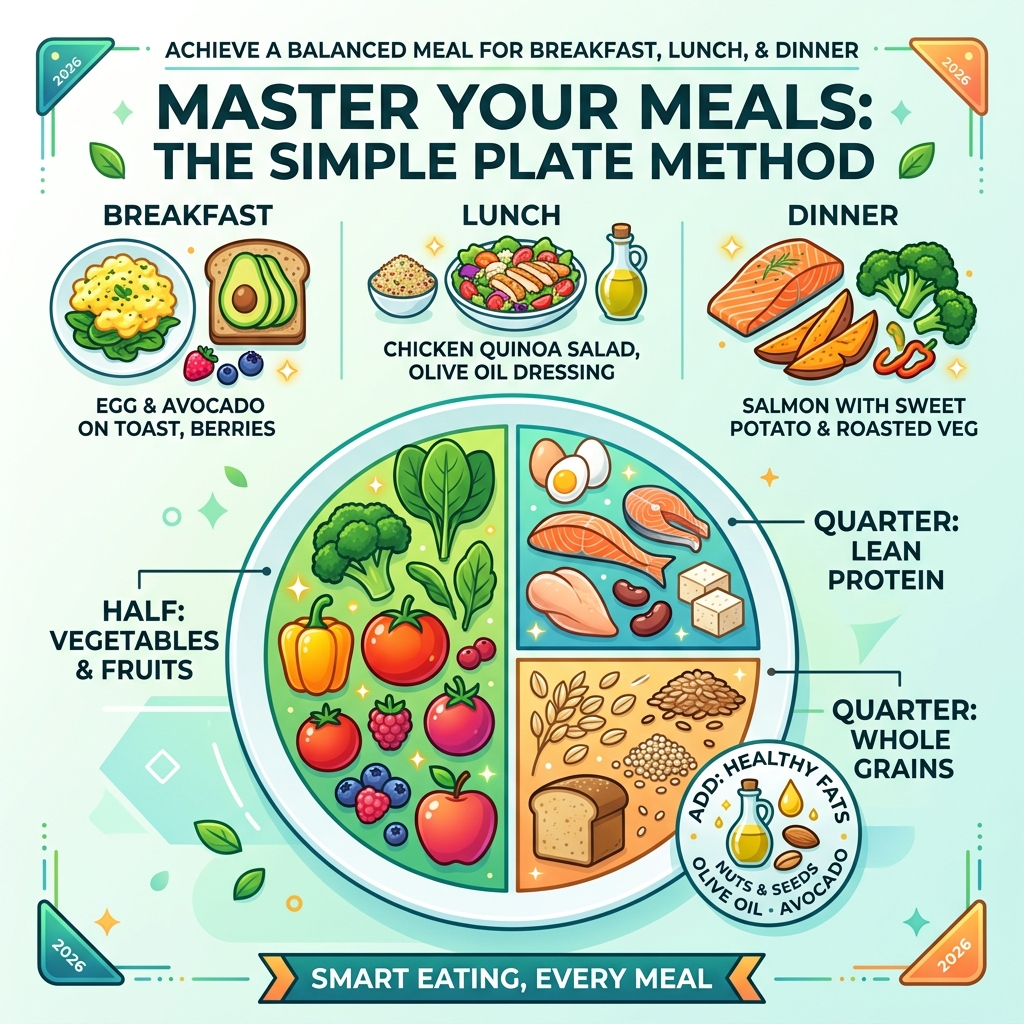
The Science of a Balanced Meal for Breakfast Lunch and Dinner
When we talk about a balanced meal for breakfast lunch and dinner, we aren’t just using a buzzword. We are talking about a biological necessity. Our bodies function best when they receive a steady supply of different nutrients that work together.
The gold standard for this is the Healthy Eating Plate guidelines developed by experts at Harvard. Unlike older models, this method emphasizes the quality of what we eat. For example, it’s not just about “carbs”; it’s about choosing whole grains over refined ones. This is because whole grains like quinoa, barley, and brown rice have a much milder effect on our blood sugar and insulin levels.
Why does this matter for your Tuesday afternoon? Because blood sugar stability is the secret to avoiding that 3:00 PM “zombie mode” where you feel like you need a nap and a bag of cookies. By following a balanced diet plan for beginners, you ensure your body gets fiber and protein, which slow down the absorption of sugar into your bloodstream.
The long-term benefits are even more impressive. Research on diet quality and heart disease shows that men who closely followed healthy eating guidelines lowered their risk of cardiovascular disease by nearly 40%. Women saw a reduction of almost 30%. This isn’t just about weight management; it’s about chronic disease prevention.
Meal Prepping a Balanced Meal for Breakfast Lunch and Dinner
If the idea of cooking three balanced meals every single day makes you want to order takeout immediately, take a deep breath. We are big fans of “autopilot” nutrition. Meal prepping is the bridge between wanting to eat healthy and actually doing it.
We don’t mean you have to spend your entire Sunday in the kitchen. Effective meal prepping can be done in 30-minute blocks. The goal is to prepare “components” rather than finished dishes.
Our Meal Prep Essentials List:
- The Grain Base: Cook a large batch of brown rice or farro.
- The Protein Power: Roast two trays of chicken breasts or bake a block of tofu.
- The Veggie Volume: Wash and chop peppers, broccoli, and kale so they are ready to toss into a pan.
- The “Safety” Sauce: Whisk together a simple dressing of olive oil, lemon juice, and garlic.
One of our favorite hacks is using “hand portions” to build your plate quickly. Your palm is roughly one serving of protein. A cupped hand is a serving of carbohydrates. Your thumb is a serving of healthy fats. And two open hands? That’s how many vegetables you should aim for.
Don’t forget the power of leftovers! A balanced meal for breakfast lunch and dinner becomes much easier when dinner tonight becomes lunch tomorrow. If you’re making a crockpot lentil soup, make a double batch. Lentils are a powerhouse of plant-based protein and fiber, and they often taste better the next day.
Customizing a Balanced Meal for Breakfast Lunch and Dinner for Dietary Needs
One size rarely fits all in nutrition. Whether you are plant-based, gluten-free, or cooking for a picky family, the Plate Method is incredibly flexible.
- Vegetarian and Vegan Swaps: Instead of chicken or fish, lean into chickpeas, lentils, or tempeh. Quinoa is a fantastic choice because it contains all nine essential amino acids, making it a complete protein.
- Gluten-Free Grains: Stick to naturally gluten-free options like sweet potatoes, brown rice, or buckwheat.
- Family-Friendly Tweaks: If you’re focusing on healthy eating for families, try a “Build Your Own” bar. Whether it’s a healthy baked potato bar or a taco night, let everyone choose their toppings while ensuring the “half-plate veg” rule is encouraged.
Seasonal variety is also key. Not only does eating seasonally often save money, but it also ensures a wider range of micronutrients. Think squash and kale in the winter, and berries and zucchini in the summer.
Morning and Midday: Strategies for Breakfast and Lunch

Breakfast sets the metabolic tone for the day. If you start with a sugary pastry, you’re on a blood sugar roller coaster before you’ve even checked your email. Instead, aim for complex carbs and lean protein.
Easy breakfast ideas for busy mornings include things like basic banana overnight oats. Oats contain beta-glucan fiber, which has been shown to lower cholesterol and reduce heart disease risk. If you prefer something savory, an easy broccoli and cheese egg bake can be made on Sunday and sliced for the whole week.
When it comes to lunch, the goal is sustained energy. We want to avoid the “carb coma.” This is where the choice of grains becomes critical.
Table: Why Whole Grains Win
| Feature | Refined Grains (White Bread/Pasta) | Whole Grains (Oats/Quinoa/Brown Rice) |
|---|---|---|
| Fiber Content | Low (stripped during processing) | High (supports digestion) |
| Energy Release | Fast (leads to crashes) | Slow (sustained energy) |
| Nutrients | Minimal | High in B vitamins and minerals |
| Satiety | Feeling hungry soon after | Keeps you full for hours |
For easy lunch recipes for work, consider a Mediterranean tuna salad. Tuna is a lean protein, and when mixed with Greek yogurt instead of heavy mayo, it provides extra calcium and protein. Pair it with 100% whole wheat pasta or serve it in bell pepper halves for an extra crunch.
Did you know that a shrimp and broccoli recipe can provide 132% of your daily Vitamin C? Adding these nutrient-dense components to your midday meal ensures you aren’t just filling your stomach, but actually fueling your cells.
Evening Restoration: Satisfying Dinner Blueprints
Dinner should be satisfying but not so heavy that it disrupts your sleep. This is the perfect time to incorporate healthy fats and lean proteins that help your body repair itself overnight.
One of our favorite simple healthy dinner ideas is a sheet pan meal. You can toss pork chops and sweet potatoes with apples and onions for a balanced meal with minimal cleanup. The healthy fats in the meal (like a drizzle of olive oil or a side of avocado) actually help you absorb more fat-soluble nutrients, such as the vitamin A found in sweet potatoes.
If you’re looking for nutritious dinner ideas for busy weeknights, fish is a superstar. Specifically, salmon is one of the best sources of omega-3 fatty acids. A study on Omega-3s and brain health suggests these fats help prevent plaque buildup in the arteries and boost cognitive function.
5 Satisfying Dinner Options:
- Salmon Burgers with Slaw: High in omega-3s and fiber. Get the recipe here.
- Chickpea Curry: A 20-minute vegan wonder that is packed with plant-based protein. Try this version.
- Slow Cooker Beef and Broccoli: Beef provides vital iron and B12 for red blood cell health. Check out this slow cooker recipe.
- Lentil Bolognese: A hearty, vegan twist on a classic that provides heart-healthy bioactive compounds. Recipe link.
- Caprese Chicken Breasts: A simple skillet meal that pairs perfectly with a side of whole-grain pasta. See the recipe.
For those focusing on healthy family meals that won’t take all evening to prepare, “healthy” can still mean “comfort food.” A healthy mac and cheese made with zucchini and cauliflower is a great way to sneak in veggies while keeping the kids happy.
Frequently Asked Questions about Daily Meal Balancing
Do I need to count calories for every meal?
In our opinion, and according to many dietitians, the answer is no. While calorie counting works for some, it can be tedious and unsustainable for many. Instead, we recommend focusing on hunger and fullness cues.
By using the Plate Method and hand-size guides, you naturally control your portions without the stress of math. If you fill half your plate with non-starchy vegetables, you are naturally consuming high-volume, low-calorie food that keeps you full. This mindful approach helps you build a healthier relationship with food.
Can I eat the same thing every day?
While there is nothing wrong with having a “go-to” breakfast or lunch, variety is the spice of life—and the key to a broad nutrient profile. If you eat the same three things every day, you might miss out on specific vitamins or minerals.
We suggest a “rotation strategy.” Pick 2 or 3 breakfast options and rotate them throughout the week. For dinner, try to swap your protein sources—fish one night, beans the next, poultry the third. This ensures you’re getting everything from the iron in beef to the antioxidants in chia seeds.
How do I handle cravings on a balanced plan?
Cravings often happen when our blood sugar drops or when we aren’t getting enough of a specific macronutrient. The best defense is a “protein-fiber combo” at every meal. If you’re still craving something sweet after dinner, try timing your dessert. Eating a small treat right after a balanced meal (rather than on an empty stomach) leads to a much smaller blood sugar spike.
Also, don’t underestimate hydration! Sometimes our brains mistake thirst for hunger. Drink a glass of water or herbal tea before reaching for a snack.
Conclusion
At Quintal Florido, we believe that health isn’t about a “perfect” day of eating; it’s about the small, sustainable habits we repeat. Mastering a balanced meal for breakfast lunch and dinner doesn’t mean you can never have pizza again. It means that when you do have pizza, you perhaps add a big side salad to bring that plate back into balance.
By following evidence-based nutrition and focusing on whole foods, you aren’t just “going on a diet”—you are building a foundation for long-term health, better energy, and a happier life.
Ready to dive deeper into your wellness journey? Check out more nutrition tips and guides on our site to keep the momentum going!
