
Understanding Macronutrients and Why They Matter
To build effective macronutrient balanced meal ideas, we first need to understand what these “macros” actually do. Macronutrients are the nutrients our bodies need in large amounts to function, provide energy, and maintain structure. Each plays a specialized role that cannot be replaced by the others.
- Protein (The Builder): Protein is essential for muscle repair, tissue growth, and immune function. It also has a high thermic effect, meaning your body burns more energy digesting it than it does for fats or carbs. Most importantly for those of us trying to avoid “hanger,” protein is incredibly satiating.
- Carbohydrates (The Fuel): Carbs are the body’s preferred source of energy, especially for the brain and high-intensity exercise. When we choose fiber-rich, complex carbohydrates, we get a steady release of glucose into the bloodstream rather than the “spike and crash” associated with refined sugars.
- Healthy Fats (The Regulator): Fats are vital for hormone production, brain health, and the absorption of fat-soluble vitamins (A, D, E, and K). They also slow down digestion, helping you feel satisfied for hours after a meal.
When we ignore one of these pillars—like going “zero-carb” or “low-fat”—we often see a dip in energy, mood, or hormonal health. Scientific research on the benefits of macronutrient balance suggests that prioritizing whole foods and a balanced intake supports metabolic health and satiety. For those just starting out, we recommend checking out our balanced diet plan for beginners to see how these basics fit into a daily routine.
How to Build Macronutrient Balanced Meal Ideas Using the Plate Method
If the idea of weighing food on a digital scale feels like a chore, we have a secret weapon: The Balanced Plate Method. This visual guide allows you to eye-ball your portions and hit your targets with surprising accuracy.
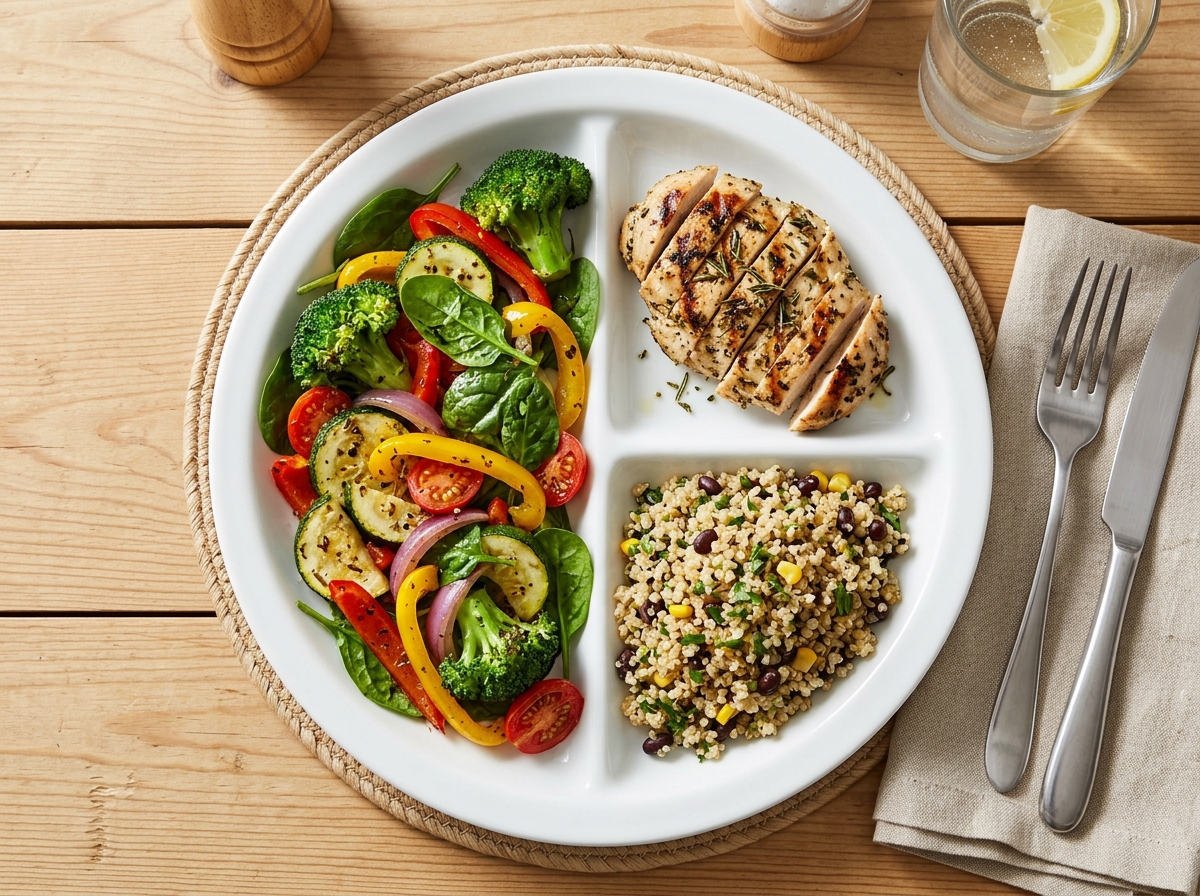
To create a balanced plate, follow this simple four-step blueprint:
- Fill 1/2 of your plate with non-starchy vegetables: Think broccoli, cauliflower, spinach, peppers, or zucchini. These provide “volume” (filling your stomach) and essential micronutrients for very few calories.
- Fill 1/4 of your plate with lean protein: This should be roughly the size and thickness of your palm.
- Fill 1/4 of your plate with fiber-rich carbs: This portion should be about the size of your clenched fist.
- Add a “thumb” of healthy fats: Since fats are calorie-dense, a small amount—like a tablespoon of olive oil, a quarter of an avocado, or a small handful of nuts—is usually plenty.
By using this structure, you ensure your meals have the fiber and protein needed to stabilize blood sugar and prevent energy dips. For more strategies on organizing your kitchen for this lifestyle, see our guide on meal planning for nutrition.
Calculating Your Personal Macro Targets for Different Goals
While the “plate method” is fantastic for general health, some of us have specific performance or physique goals that require a bit more precision. Your personal macro needs depend on your Basal Metabolic Rate (BMR)—the calories you burn at rest—and your daily activity levels.
- For Fat Loss: We typically aim for a slight calorie deficit while keeping protein high (around 30-35% of total calories). This protects muscle mass while the body burns fat.
- For Muscle Gain: A slight calorie surplus is needed, with a robust intake of carbohydrates to fuel heavy lifting and protein to repair the resulting muscle tears.
- For Maintenance: A balanced 40/30/30 ratio (40% carbs, 30% protein, 30% fat) is a gold-standard starting point for sustained energy and health.
Adjusting these ratios can significantly impact how you feel. For example, an endurance athlete might thrive on 50% carbs, while someone with insulin sensitivity might prefer a lower carb, higher fat approach. You can find a deeper dive into these calculations in our nutrition guide for weight management.
Practical Macronutrient Balanced Meal Ideas for Every Time of Day
The key to long-term success isn’t eating plain chicken and steamed broccoli every day. It’s about finding macronutrient balanced meal ideas that you actually look forward to eating. We love “batch cooking” staples like roasted sweet potatoes, grilled chicken, and boiled eggs so that assembly takes minutes.

Protein Source Comparison Table
| Source | Type | Protein per 100g (approx) | Best For |
|---|---|---|---|
| Chicken Breast | Animal | 31g | Lean muscle, versatility |
| Greek Yogurt (Non-fat) | Animal | 10g | Breakfasts, snacks, creamy sauces |
| Tempeh | Plant | 19g | Vegan protein, gut health (fermented) |
| Lentils | Plant | 9g | High fiber, soups, and stews |
| Cottage Cheese | Animal | 11g | High protein snacks, pancakes |
Breakfast and Lunch Macronutrient Balanced Meal Ideas
Mornings are often the time when people fail their macro goals by grabbing a carb-heavy bagel or muffin. Instead, try these:
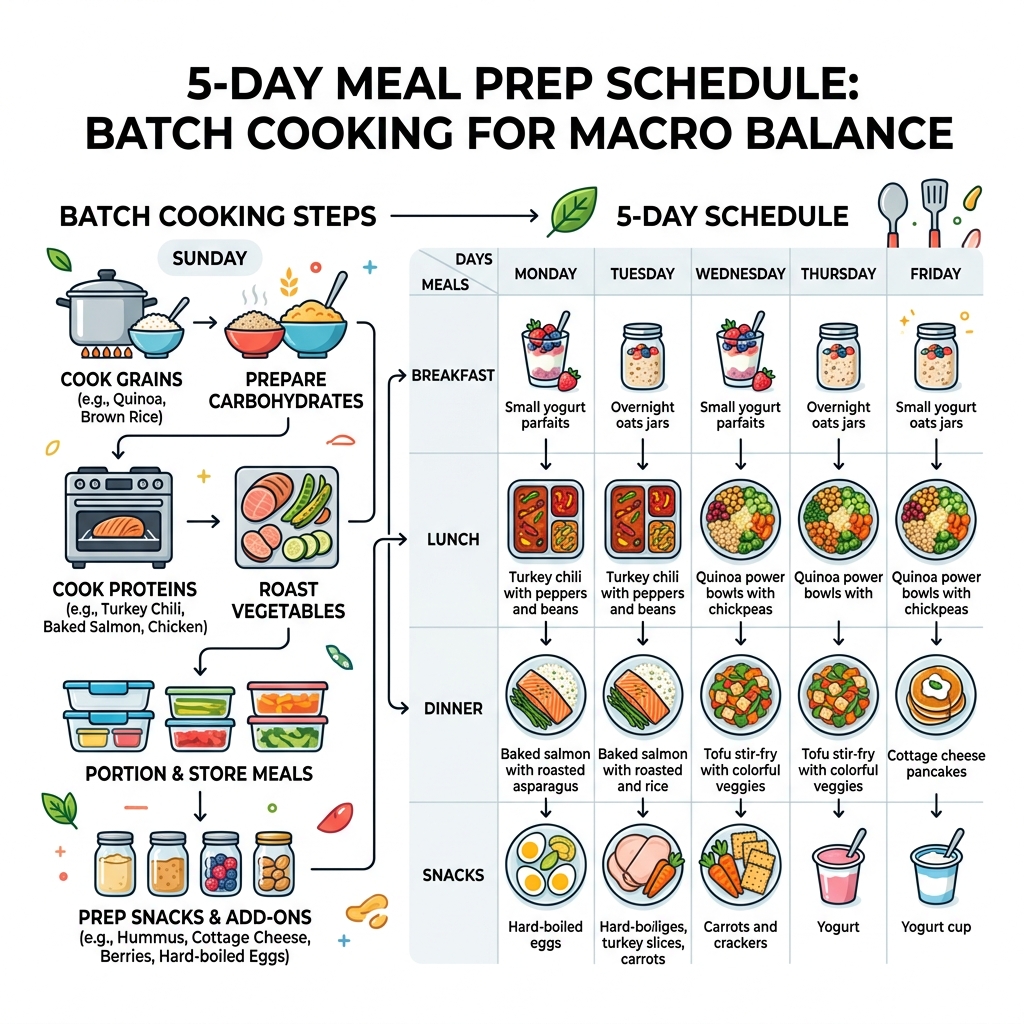
- The Power Parfait: Layer non-fat Greek yogurt with a handful of berries and a sprinkle of walnuts or low-sugar granola. The berries provide antioxidants that fight inflammation, while the yogurt delivers a massive protein punch.
- Overnight Oats: Mix old-fashioned oats with protein powder, chia seeds, and almond milk. Let it sit overnight, and top with almond butter in the morning.
- Turkey Chili: A perfect “cook once, eat four times” lunch. Use lean ground turkey, black beans (fiber-rich carbs), and plenty of peppers and onions.
- Quinoa Power Bowls: Combine cooked quinoa with chickpeas, cucumbers, feta cheese, and a lemon-tahini dressing. This is a great plant-based option that travels well.
For more inspiration on hitting those high protein numbers early in the day, check out our high protein diet tips.
Dinner and Snack Macronutrient Balanced Meal Ideas
Dinner is the time to focus on recovery and satiety so you don’t find yourself in the pantry at 10 PM.
- Baked Salmon and Greens: Salmon is rich in Omega-3 fatty acids, which are crucial for heart and brain health. Pair a 6oz fillet with roasted asparagus and a small side of brown rice or quinoa.
- Tofu Stir-Fry: Press extra-firm tofu to remove water, then sauté with ginger, garlic, and a mountain of colorful veggies like bok choy and snap peas. Serve over cauliflower rice mixed with a little jasmine rice for a “volume hack.”
- Cottage Cheese Pancakes: Blend cottage cheese, eggs, and oats for a high-protein (approx 25g per serving) dinner-for-breakfast option.
- Protein Snack Plates: If you’re too busy for a sit-down lunch, assemble a “grown-up Lunchable” with two hard-boiled eggs, a few slices of turkey deli meat, carrot sticks with hummus, and a small serving of whole-grain crackers.
If you are looking to keep things lighter in the evening, we have a great list of low carb meal prep options that still hit your protein targets.
Tips for Success: Tracking and Prepping Without Overwhelm
Starting a macro-based lifestyle can feel like “playing Tetris” with your food. To keep it simple, we recommend using a few digital tools. Apps like MyFitnessPal allow you to scan barcodes and see your daily totals instantly. A digital food scale can also be eye-opening for the first week or two, especially for calorie-dense items like peanut butter (where a “tablespoon” is often much larger than we think!).
Smart Substitutions for Macro-Friendly Cooking:
- Swap regular tortillas for low-carb, high-fiber wraps to save 15-20g of carbs per meal.
- Use egg whites in combination with whole eggs to increase protein without skyrocketing the fat content.
- Try cauliflower rice mixed 50/50 with real rice to increase volume and fiber.
- Substitute Greek yogurt for sour cream in tacos or chili.
Consistency is easier when you have a plan. We’ve found that spending just two hours on Sunday prepping your “anchors” (proteins and grains) makes the rest of the week a breeze. For a deeper dive into the logistics, see our guides on meal prep for weight loss or building muscle with meal prep.
Frequently Asked Questions about Macro Balancing
Do I need to track every gram to see results?
Absolutely not. While tracking can be a great educational tool for 2–4 weeks to help you understand portion sizes, many people see incredible results just by following the “Plate Method” and ensuring they have a protein source at every meal.
Can vegetarians eat a macro-balanced diet?
Yes! While it requires a bit more planning to get high protein without excessive carbs, it is entirely possible. Focus on “complete” plant proteins like soy (tofu/tempeh) or combinations like beans and rice. Seitan, Greek yogurt, eggs, and lentils are also vegetarian staples for hitting macro targets.
What are the most common macro-tracking mistakes?
The biggest mistake is “forgetting” the extras: the oil used for cooking, the creamer in your coffee, or the handful of nuts you grabbed while cooking dinner. These can add 300–500 hidden calories a day. Another mistake is ignoring fiber; hitting your carb target with candy is very different for your body than hitting it with sweet potatoes.
Conclusion
At Quintal Florido, we believe that nutrition should be a tool that empowers you, not a set of rules that restricts you. By focusing on macronutrient balanced meal ideas, you move away from the “all or nothing” mentality of traditional dieting and toward a sustainable, evidence-based way of fueling your life.
Whether your goal is to lose weight, gain muscle, or simply have enough energy to get through a long workday without a 3 PM crash, balancing your protein, carbs, and fats is the most effective way to get there. Start small—try balancing just one meal a day this week—and watch how your body responds.
Ready to take the next step? Explore more expert nutrition tips on our blog to keep your journey on track.
