
Why Balanced Snacks Ideas Matter More Than You Think
Balanced snacks ideas are one of the simplest upgrades you can make to your daily eating habits. Here are some of the best dietitian-approved pairings to get started right away:
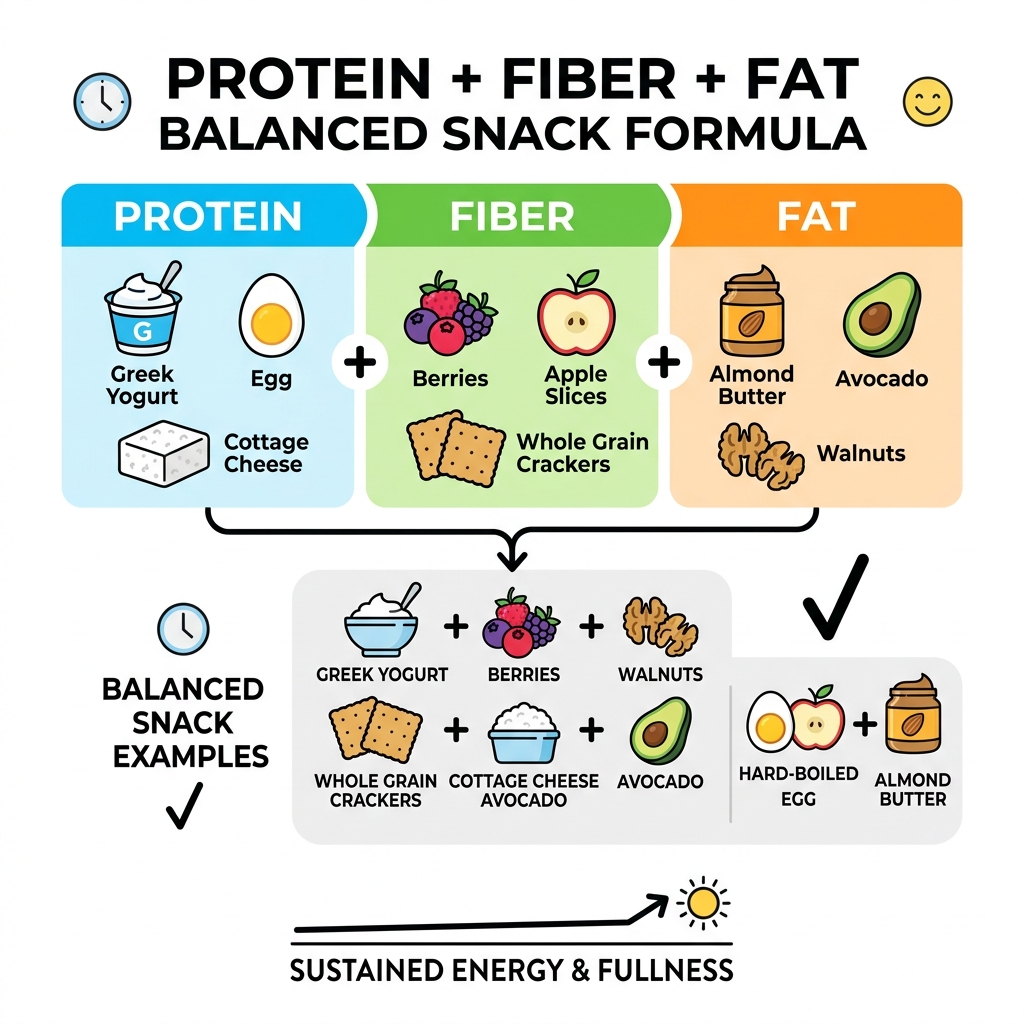
| Protein | Fiber/Carb | Healthy Fat |
|---|---|---|
| Greek yogurt | Berries | Walnuts |
| Cottage cheese | Whole grain crackers | Avocado |
| Hard-boiled egg | Apple slices | Almond butter |
| Hummus | Carrot sticks | Olive oil drizzle |
| Canned tuna | Whole grain pita | Olive tapenade |
The formula is simple: pair a protein source with a fiber-rich food, add a healthy fat, and you have a snack that keeps you full and energized.
Here’s something worth knowing: 75% of Americans snack every single day, and snacks make up roughly one-third of the average person’s daily calorie intake. That’s a huge chunk of your nutrition — and most people are filling it with chips, cookies, and vending machine staples.
The problem isn’t snacking. It’s what we’re snacking on.
A poorly chosen snack — low in protein, high in refined sugar — sends your blood sugar spiking, then crashing, leaving you tired, hungry, and reaching for more food an hour later. A balanced snack, on the other hand, stabilizes your blood sugar, delivers real nutrients, and keeps hunger at bay until your next meal.
For busy professionals and parents especially, this matters. When you don’t have time to cook a full meal, a smart snack can be the difference between a productive afternoon and a 3pm energy slump.
The Anatomy of a Balanced Snack

When we talk about the science of balanced snacks ideas, we aren’t just throwing random foods together. We are looking at how different macronutrients interact within our digestive system to influence our hormones and energy levels. A truly balanced snack acts like a “mini-meal,” providing a steady stream of fuel rather than a chaotic burst of sugar.
The secret lies in combining three specific components: protein, fiber-rich carbohydrates, and healthy fats.
- Protein: This is the “satiety superstar.” Protein signals the release of appetite-suppressing hormones and takes longer to break down than simple sugars.
- Fiber-Rich Carbs: Unlike refined white flour, fiber-rich carbohydrates (like vegetables, fruits, and whole grains) provide glucose for your brain but release it slowly into the bloodstream.
- Healthy Fats: Fats slow down gastric emptying, meaning the food stays in your stomach longer. This prevents the rapid blood sugar spikes that lead to “hangry” episodes.
According to research on macronutrient combinations, snacks high in protein and low in refined carbs have been shown to improve blood sugar levels significantly. This is essential for appetite regulation. When your blood sugar is stable, you are less likely to overeat at your next meal.
For most of us, the ideal calorie range for a balanced snack is between 150 and 250 calories. If you are highly active or an athlete, you might bump this up to 300-350 calories to support your energy needs.
The Power of Protein in Balanced Snacks Ideas
If we had to pick one non-negotiable for your snack plate, it would be protein. Protein is the anchor. Without it, a snack is often just a temporary fix.
Let’s look at some of the most efficient protein sources we recommend:
- Greek Yogurt: This is a powerhouse. A standard 156g container of Greek yogurt contains 16g of protein, which is nearly double the protein found in regular yogurt.
- Cottage Cheese: Often overlooked, cottage cheese is incredibly filling. Just a half-cup (113g) provides 14g of protein, making it about 69% of the total calorie content.
- Hard-Boiled Eggs: One egg provides roughly 4g of protein and is rich in vitamins. Satiety research suggests that the fullness-promoting properties of eggs can actually reduce the total calories you consume later in the day.
- Plant-Based Options: For those avoiding dairy, edamame (8g of protein per half-cup) or baked tofu (9g per 3-oz serving) are excellent alternatives.
If you’re on the move, liquid options can also work well. You can find some fantastic inspiration in our guide on high-protein snack smoothie ideas for fitness lovers.
Fiber and Fats for Sustained Energy
While protein builds the foundation, fiber and fats provide the staying power. Fiber is a type of carbohydrate that your body can’t digest, so it moves through your system slowly, keeping your digestive tract healthy and your hunger at bay.
Take the humble apple, for example. Research indicates that the fiber and antioxidants in apples may improve gut health and even reduce the risk of heart disease. But if you eat an apple alone, you might feel hungry again in 30 minutes. The magic happens when you pair that apple with a healthy fat like peanut butter.
Healthy fats, such as those found in nuts and seeds, are vital for absorbing fat-soluble vitamins (A, D, E, and K). Consuming peanuts and nut butters has been linked to better cardiovascular risk factors, including improved cholesterol levels.
- Chia Seeds: Adding just one tablespoon of chia seeds to your yogurt adds 5g of fiber.
- Avocado: Provides monounsaturated fats that are excellent for heart health and keep you feeling “luxuriously” full.
- Whole Grains: Opt for whole-grain crackers or sprouted bread to ensure you’re getting the bran and germ of the grain, which contain the most fiber.
For those looking to keep things light, we have a collection of low-calorie snack recipes that still prioritize these essential nutrients.
30 Dietitian-Approved Balanced Snacks Ideas
Now that we understand the “why,” let’s get into the “what.” We’ve curated a list of 30 balanced snacks ideas that cover every situation — whether you’re at your desk, in the car, or relaxing at home.
- Turkey Roll-Ups: Wrap a slice of cheese, a pickle, and a tomato slice inside two slices of deli turkey. This provides roughly 6.5g of protein and negligible carbs.
- Apple and Peanut Butter: A classic pairing where the fiber from the apple meets the 7g of protein in 2 tablespoons of peanut butter.
- Greek Yogurt Parfait: 1/2 cup non-fat Greek yogurt with a handful of berries and a sprinkle of walnuts.
- Cottage Cheese and Cantaloupe: The sweetness of the melon pairs perfectly with the salty, high-protein cottage cheese.
- Hummus and Veggie Jars: Place 2 tablespoons of hummus at the bottom of a jar and stick in carrot and cucumber sticks for a portable dip.
- Hard-Boiled Eggs and Grapes: Two eggs and a small bunch of grapes offer a mix of protein and quick-releasing natural sugars.
- Tuna on Whole Grain Crackers: One can of tuna is a protein giant, providing up to 50g of protein. Split it into two snacks!
- Edamame with Sea Salt: Half a cup of steamed edamame provides 8g of protein and 4g of fiber.
- Cheese and Whole Grain Crackers: One slice of cheddar provides about 4g of protein. Pair with three crackers for balance.
- Roasted Chickpeas: Crunchy, salty, and packed with 7g of protein per half-cup.
- Almonds and Dried Apricots: 14 almonds provide healthy fats and fiber to balance the natural sugars in the apricots.
- Chia Pudding: Made with soy milk for extra protein (7g per cup) and topped with strawberries.
- Pear and Ricotta: Sliced pear topped with a dollop of part-skim ricotta and a dash of cinnamon.
- Beef Jerky and an Orange: Look for low-sodium jerky, which provides about 9g of protein per ounce.
- Pumpkin Seeds: One ounce contains 8.5g of protein and significant magnesium.
- Celery with Almond Butter and Raisins: The nostalgic “ants on a log” is actually a very well-balanced snack.
- Smoked Salmon and Cream Cheese on Cucumber: A low-carb, high-protein snack that feels like a treat.
- Mini Salad Jars: Chickpeas, feta, and cucumbers in a small mason jar.
- Overnight Oats: A smaller portion of oats soaked in milk with a spoonful of protein powder.
- Popcorn with Nutritional Yeast: Air-popped popcorn is high in fiber, and 2 tablespoons of nutritional yeast adds 3g of protein.
- Tofu Cubes with Soy Ginger Dip: Firm tofu is a great portable plant protein.
- Balanced Breaks: Store-bought packs containing cheese, nuts, and dried fruit are a convenient all-in-one option.
- Protein Bars: Look for bars with at least 10g of protein and less than 5g of added sugar.
- Lentil Salad: One cup of cooked lentils provides 18g of protein and feeds your good gut bacteria.
- Tomato Soup with a Cheese Stick: A warm, comforting snack that provides protein and antioxidants.
- Roasted Watermelon Seeds: Don’t throw them away! They are surprisingly high in protein and minerals.
- Banana with Peanut Butter: Simple, effective, and provides potassium for muscle function.
- Nut Butter Packs: Convenient for travel, paired with a piece of whole fruit.
- Quinoa Salad: A small scoop of quinoa mixed with black beans and lime juice.
- Smoothie: A quick blend of spinach, protein powder, and frozen berries. Check out our healthy work snack smoothies for more ideas.
Portable and Plant-Based Balanced Snacks Ideas
Eating a plant-based diet doesn’t mean you have to miss out on the benefits of balanced snacks ideas. In fact, many plant-based proteins come pre-packaged with fiber, which is a double win for your health.
The U.S. Department of Agriculture notes that many people would benefit from shifting their protein intake to include more seafood and plant sources. For instance, roasted chickpeas are a portable favorite, offering 7g of protein and 6g of fiber per half-cup.
Trail mix is another heavy hitter, though we recommend making your own to control the sugar. Use almonds or pistachios for a higher protein count compared to walnuts or cashews.
If you have kids, finding snacks that they will actually eat is half the battle. We have put together a list of easy snack ideas for kids that focus on whole foods rather than processed “fruit” snacks.
Strategic Snacking for Health Goals
Snacking isn’t just about stopping a stomach growl; it can be a strategic tool to help you reach specific health milestones.
- Weight Management: By choosing high-protein, high-fiber snacks, you keep your metabolism active and prevent the “starvation mode” that leads to binging at dinner.
- Muscle Gain: For those hitting the gym, snacks provide the necessary amino acids to repair muscle tissue throughout the day. A protein-rich snack within 30-60 minutes of a workout is ideal.
- Cancer Prevention: The American Institute for Cancer Research (AICR) emphasizes the “New American Plate,” where at least 2/3 of your food comes from plants. Choosing snacks like berries, nuts, and cruciferous vegetables aligns with cancer-preventative eating patterns.
- Blood Sugar Control: For those with pre-diabetes or diabetes, balanced snacks are non-negotiable. Pairing a carb with a protein or fat prevents the dangerous glucose spikes that can damage blood vessels over time.
For parents, snacks are often the best time to sneak in extra nutrients. Our kid-friendly smoothie snacks are designed to be “stealthily” healthy, packing in greens and seeds without compromising on flavor.
Practical Tips to Avoid Snacking Pitfalls
Even with the best balanced snacks ideas, it’s easy to fall into common traps. Here is how we stay on track:
- Portion Control: It is very easy to eat 500 calories of almonds if you eat them straight from the bag. Pre-portion your nuts and seeds into small containers or bags (about 1-2 oz).
- Mindful Eating: Avoid snacking while staring at a screen. When we are distracted, our brains don’t register the “fullness” signals as effectively, leading us to eat more than we need.
- Beware of “Empty” Calories: Many products marketed as “100-calorie packs” are just smaller portions of refined flour and sugar. They won’t keep you full. Always check the label for at least 3-5g of protein or fiber.
- Batch Prepping: Spend 20 minutes on Sunday boiling eggs, slicing peppers, and portioning yogurt. If the healthy choice is the easiest choice, you’ll actually make it.
- Stay Hydrated: Often, our bodies confuse thirst for hunger. Try drinking a glass of water before reaching for a snack to see if you are truly hungry.
For more detailed advice on keeping your kitchen stocked, explore our category on healthy snacks.
Frequently Asked Questions about Balanced Snacking
How many snacks should I eat per day?
There is no one-size-fits-all answer, but most people feel their best with three main meals and 1-2 balanced snacks. If you have a very long gap between lunch and dinner (say, 6 or 7 hours), a snack is essential to prevent overeating at night. Listen to your hunger cues rather than following a rigid clock.
What are the best snacks for weight loss?
The best snacks for weight loss are those that have a high “satiety-to-calorie” ratio. This means they are low in calories but high in volume or protein. Think of 6 cups of air-popped popcorn (only 100 calories but lots of fiber) or a cup of sliced cucumbers with 2 tablespoons of hummus. You can find more inspiration in our low-calorie recipes.
Is it okay to snack before bed?
Yes, but keep it small and protein-focused. A heavy, sugary snack before bed can disrupt your sleep and cause blood sugar fluctuations. However, a small portion of Greek yogurt or a few walnuts can actually help stabilize blood sugar overnight and prevent you from waking up hungry.
Conclusion
Mastering the art of balanced snacks ideas is a journey, not a destination. It’s about moving away from the “all or nothing” mentality and realizing that every small choice adds up. By focusing on the protein + fiber + fat formula, you are giving your body the stable energy it deserves.
At Quintal Florido, we believe that wholesome living should be accessible and evidence-based. Whether you are prepping for a busy work week or looking for ways to improve your family’s health, these snacking strategies provide a solid foundation for long-term wellness.
For more ways to upgrade your diet, don’t miss our latest nutrition tips and guides. Happy snacking!
