
Why Balanced Meals Are the Key to Lasting Weight Loss
Balanced meal ideas for weight loss don’t have to be complicated, expensive, or time-consuming. Here’s a quick overview of what works:
Top balanced meal ideas for weight loss:
- Spicy salmon rice bowl – ~327 kcal, 20g protein, ready in 15 minutes
- Overnight oats with peanut butter and strawberries – ~18g protein, great for meal prep
- Sheet-pan chicken and broccoli – high protein, low calorie, one pan
- Chickpea and tuna lettuce wraps – fiber-rich, portable, no cooking needed
- White bean and kale soup – budget-friendly, filling, packed with fiber
- Greek yogurt parfait with berries – quick breakfast, gut-friendly, high protein
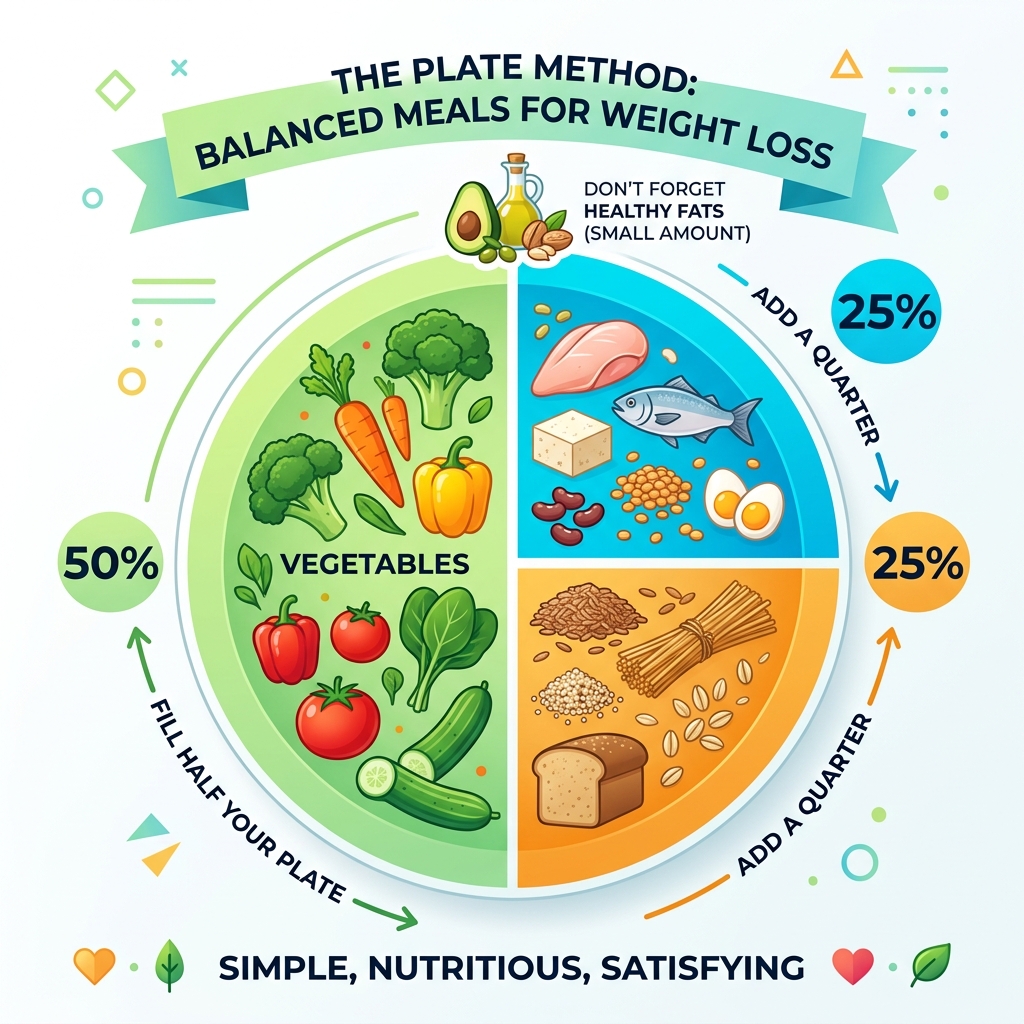
The simple formula: Fill half your plate with vegetables, a quarter with lean protein, and a quarter with whole grains. Add a small amount of healthy fat.
Most people trying to lose weight focus on eating less. But the real game-changer is eating smarter.
When your meals are balanced – meaning they include the right mix of protein, fiber, healthy carbs, and fats – your body stays full longer, your energy stays steady, and cravings shrink. That makes it far easier to stick to your goals without feeling deprived.
The problem? Most of us are busy. Between work, family, and everything else, spending hours in the kitchen isn’t realistic. The good news is that balanced, weight-loss-friendly meals can be ready in 15 to 40 minutes, using affordable ingredients you probably already have.
This guide breaks it all down – from what a balanced plate actually looks like, to specific meal ideas for every time of day, to practical tips for making it work in a real, busy life.
The Science of balanced meal ideas for weight loss
To understand why balanced meal ideas for weight loss work, we have to look at how our bodies process different nutrients. When we eat a meal consisting only of simple carbohydrates, our blood sugar spikes and then crashes, leaving us hungry again within an hour. By balancing our macros—protein, healthy fats, and complex carbohydrates—we create a steady release of energy.
Macronutrient Ratios for Success
While every individual is different, a solid starting point for weight loss often involves a ratio of approximately 25-30% protein, 40-45% complex carbohydrates, and 25-30% healthy fats. Protein is the superstar here; it has a high thermic effect, meaning your body burns more calories digesting it than it does for fats or carbs. Furthermore, protein triggers satiety hormones that tell your brain you are full.
The Role of Fiber and Visceral Fat
Fiber is the “secret weapon” for weight management. It adds bulk to your meals without adding calories, slowing down digestion and keeping your gut microbiome happy. Research shows that high-fiber diets are particularly effective at reducing visceral fat—the dangerous fat that sits deep in your abdomen around your organs.
Excess visceral fat is linked to chronic conditions like heart disease and type 2 diabetes. According to The pathophysiology of visceral adipose tissues in cardiometabolic diseases, this type of fat is metabolically active and can release inflammatory compounds. By choosing the Best Foods for Healthy Weight Loss, such as lentils, beans, and leafy greens, we can actively target this stubborn fat.
Why 1,500 Calories Trumps 1,200
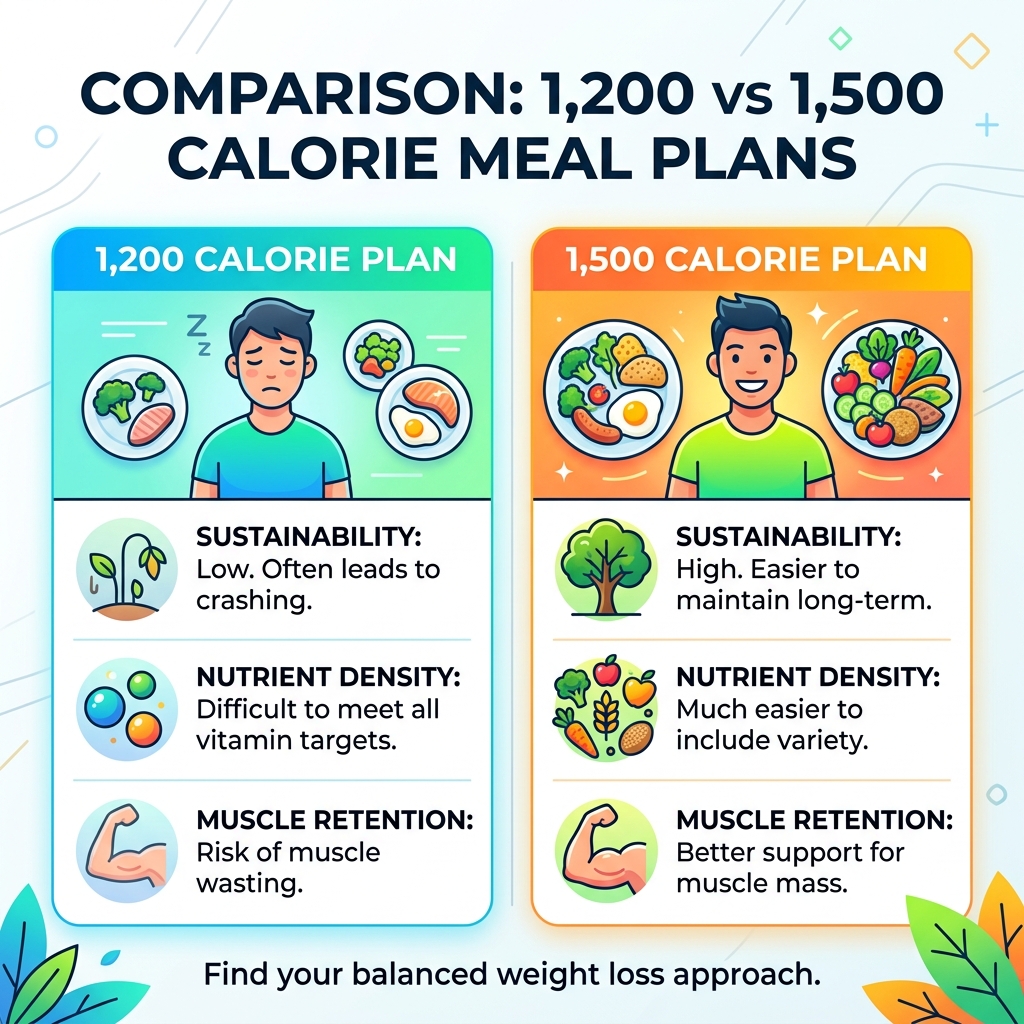
Many people instinctively drop to 1,200 calories when trying to lose weight. However, the 2020-2025 Dietary Guidelines suggest that 1,200 calories is often too low for most adults to meet their nutritional needs. It can lead to muscle loss and a slowed metabolism, making weight regain almost inevitable.
| Feature | 1,200-Calorie Plan | 1,500-Calorie Plan |
|---|---|---|
| Sustainability | Low (often leads to “crashing”) | High (easier to maintain long-term) |
| Nutrient Density | Difficult to hit all vitamin targets | Much easier to include variety |
| Muscle Retention | Risk of muscle wasting | Better support for muscle mass |
| Satiety | Frequent hunger/cravings | Generally satisfied throughout the day |
Essential Components of a Balanced Plate
Creating balanced meal ideas for weight loss starts with the “Plate Method.” This visual tool ensures you get the nutrients you need without having to weigh every gram of food. We recommend following the Dietary Guidelines for Americans, 2020-2025 to ensure your plate is diverse and nutrient-dense.
- Lean Proteins (1/4 of the plate): Think chicken breast, turkey, fish, tofu, or legumes.
- Whole Grains or Starchy Veggies (1/4 of the plate): Quinoa, brown rice, sweet potatoes, or whole-wheat pasta.
- Non-Starchy Vegetables (1/2 of the plate): Spinach, broccoli, peppers, kale, or cauliflower. This provides volume and fiber for very few calories.
- Healthy Fats (the “thumb” rule): A small serving of avocado, nuts, seeds, or olive oil.
For more detail, check out our Nutrition Guide for Weight Management.
High-Protein balanced meal ideas for weight loss
Protein is essential for preserving muscle mass while you lose fat. If we don’t eat enough protein, our bodies may break down muscle tissue for energy, which lowers our resting metabolic rate.
Excellent high-protein options include:
- Greek Yogurt: High in protein and probiotics for gut health.
- Legumes: Beans and lentils provide a double-whammy of protein and fiber.
- Cottage Cheese: An underrated, low-calorie protein source that works for breakfast or snacks.
If you are on the go, try one of our Protein-Packed Smoothie Recipes for Weight Loss.
Nutrient-Dense Carbohydrates and Fats
Don’t fear carbs! The key is choosing “slow” carbs that are high in fiber. Quinoa and whole-wheat pasta provide sustained energy. Similarly, healthy fats are vital for hormone production and the absorption of fat-soluble vitamins like Vitamin A.
If you’re looking to reduce your carb intake slightly while keeping things balanced, explore our Low-Carb Meal Prep Recipes for a Healthier Week.
Affordable and Fast Meal Preparation
One of the biggest myths is that healthy eating is expensive. In reality, some of the best balanced meal ideas for weight loss come from the most affordable ingredients.
- Bulk Buying: Grains like brown rice and oats, and legumes like dried lentils, are incredibly cheap when bought in bulk.
- Frozen Produce: Frozen vegetables and fruits are picked at peak ripeness and frozen immediately, preserving their nutrients. They are often cheaper than fresh and won’t spoil in your fridge.
- Canned Staples: Canned tuna, chickpeas, and black beans are pantry lifesavers. Just remember to rinse them to reduce sodium content.
- Repurposing Leftovers: Turn last night’s roasted vegetables into a morning omelet or a lunch wrap.
Regular movement also plays a role in how our body uses these nutrients. You can learn more about this connection through the CDC’s guide on Physical Activity and Your Weight and Health.
Quick 15-40 Minute balanced meal ideas for weight loss
You don’t need to be a chef to eat well. Many nutritious meals can be made in under 40 minutes using simple methods:
- Sheet-Pan Dinners: Toss salmon and shaved Brussels sprouts with a little olive oil and lemon. Bake at 400°F (200°C) for 15-20 minutes.
- One-Skillet Meals: A turkey and veggie stir-fry uses only one pan and is ready in minutes.
- Air Fryer Recipes: Air-fryer salmon or chicken thighs stay juicy without the need for excess oil.
- 15-Minute Bowls: Use pre-cooked quinoa, canned black beans, fresh salsa, and avocado for a “burrito bowl” that beats any fast-food option.
For more inspiration, see our list of Simple and Delicious Low-Calorie Dinners.
Low-Budget Snacks and Sides
Snacking can often derail weight loss goals, but balanced snacks can actually help by preventing overeating at mealtime. Aim for snacks under 200 calories that combine protein and fiber:
- Apple slices with a tablespoon of peanut butter (loaded with fiber and Vitamin C)
- Two hard-boiled eggs (prepped in advance)
- String cheese and a handful of almonds
- Hummus with raw carrot sticks
Explore our Low Calorie Snack Recipes for more ideas.
Practical Strategies for Long-Term Success
Sustainability is the name of the game. If a diet feels like a chore, we won’t stick to it. Here is how we make balanced meal ideas for weight loss a permanent part of our lifestyle.
Meal Prep and Batch Cooking
You don’t have to spend your entire Sunday in the kitchen. “Component prepping” is often more effective. Cook a large batch of grains, roast two trays of vegetables, and grill several chicken breasts. During the week, you can mix and match these components to create different meals in seconds.
For a deep dive into this strategy, read The Ultimate Guide to Meal Prep for Weight Loss and our Meal Planning Tips for Weight Loss.
Beyond the Fork: Sleep and Stress
We can’t talk about weight loss without mentioning sleep. Research shows that sleep deprivation increases ghrelin (the hunger hormone) and decreases leptin (the fullness hormone). Aim for 7-9 hours of quality sleep. Stress management is equally important; high cortisol levels can lead to increased abdominal fat storage. Simple walks, meditation, or spending time with loved ones can make a significant difference in your weight loss journey.
Frequently Asked Questions about Balanced Weight Loss
Why is a 1,200-calorie diet often discouraged for weight loss?
While it might produce fast results initially, a 1,200-calorie diet is extremely difficult to sustain. Most people find themselves feeling fatigued, irritable, and constantly hungry. Furthermore, it’s very hard to get all the necessary vitamins and minerals on such a low budget of calories. The 2020-2025 Dietary Guidelines suggest that a more moderate reduction—usually around 1,500 to 1,800 calories depending on your size and activity level—is safer and more effective for long-term health.
Can I eat the same balanced meals every day?
Yes! If you find a breakfast or lunch you love, there is nothing wrong with eating it every day. This is actually a great strategy for many people because it reduces “decision fatigue.” Just ensure that the meal is truly balanced with protein, fiber, and healthy fats. To prevent nutritional gaps, try to vary your dinner or your choice of fruits and vegetables throughout the week.
How do I customize balanced meals for a vegetarian diet?
Vegetarians can easily achieve balance by swapping animal proteins for plant-based ones. Lentils, chickpeas, black beans, tofu, tempeh, and edamame are excellent choices. To ensure you’re getting enough protein, you can also incorporate Greek yogurt, eggs, or cottage cheese if you are a lacto-ovo vegetarian. Focus on “complete” proteins or combine different plant sources (like beans and rice) to get all your essential amino acids.
Conclusion
At Quintal Florido, we believe that weight loss shouldn’t be about punishment; it should be about nourishment. By focusing on balanced meal ideas for weight loss, you are giving your body the fuel it needs to thrive while moving toward your goals.
Sustainable weight loss is built on wholesome habits and evidence-based choices. Whether you are starting with a simple spicy salmon bowl or prepping a week’s worth of overnight oats, every small step counts toward a healthier, more vibrant you.
Ready to take the next step? Check out our Balanced Diet Plan for Beginners or explore More nutrition tips to keep your journey exciting and delicious. Together, we can make healthy living a lifestyle you actually enjoy.
