
Why a Balanced Lunch Box Makes or Breaks Your Day
A balanced lunch box is one of the simplest, most effective tools you have for staying energized, focused, and healthy — whether you’re packing for your kids or yourself.
Here’s the quick answer on what makes a lunch box truly balanced:
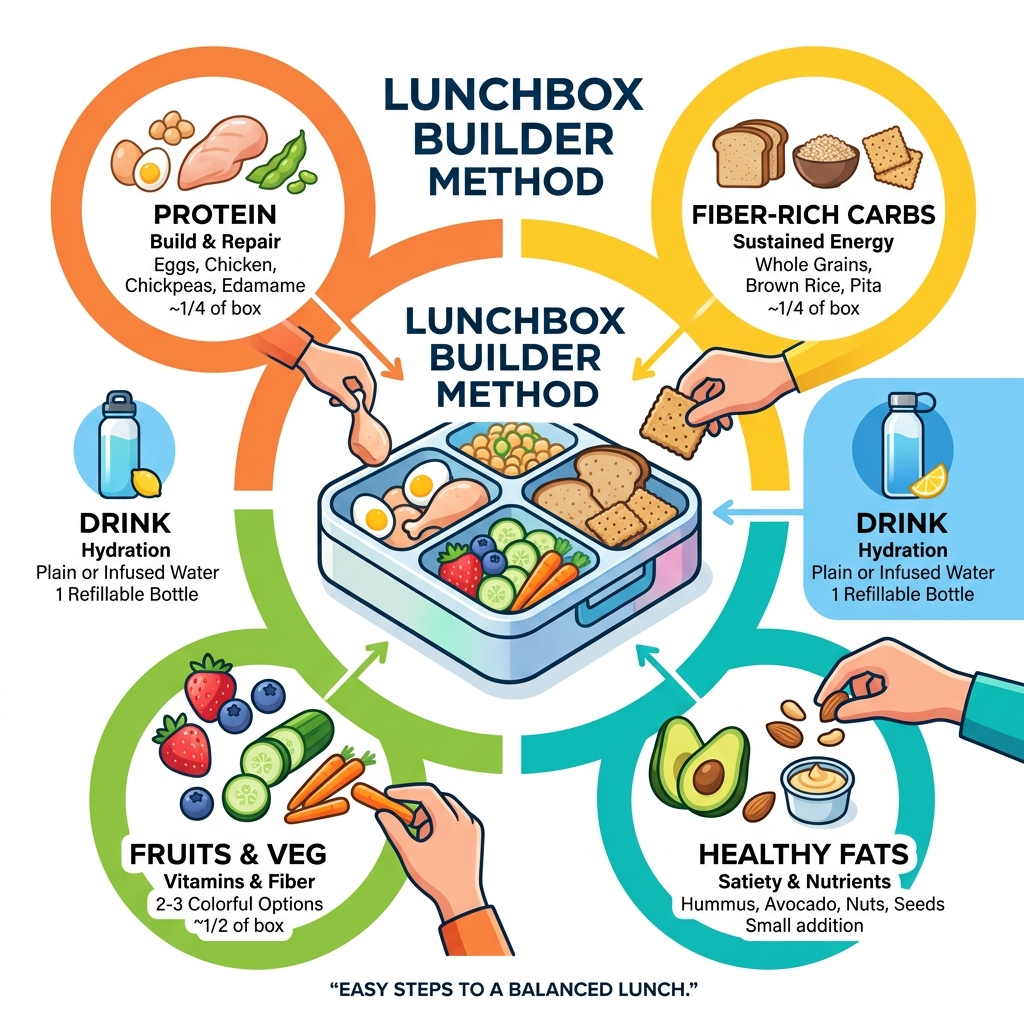
| Component | What to Include | Rough Portion |
|---|---|---|
| Protein | Eggs, cheese, tuna, chicken, chickpeas, edamame | 1/4 of the box |
| Fiber-rich carbs | Whole grain bread, brown rice, pita, crackers | 1/4 of the box |
| Fruits & vegetables | 2-3 colorful options like berries, cucumber, carrot | 1/2 of the box |
| Healthy fats | Hummus, avocado, nuts, seeds | Small addition |
| Drink | Water (infused or plain) | 1 refillable bottle |
Most people either skip lunch, grab something fast, or pack a box that’s heavy on carbs and light on everything else. The result? A 3pm energy crash, brain fog, and reaching for sugary snacks.
It doesn’t have to be that way.
A well-packed lunch takes less than 10 minutes with the right approach — and the payoff is real. Stable blood sugar. Steady energy. Better focus all afternoon.
This guide walks you through exactly how to build one, no matter how busy you are.
The Anatomy of a Balanced Lunch Box
To master the balanced lunch box, we first need to understand that “balance” looks a little different depending on who is eating. A toddler has different caloric and textural needs than a teenage boy or a sedentary office worker. However, the core pillars of nutrition remain the same: sustaining energy and providing the building blocks for health.
Tailoring Nutrition by Age
While the formula is consistent, the portions and specific nutrients shift as we grow.
| Age Group | Primary Focus | Key Nutritional Need |
|---|---|---|
| Kids (3-12) | Growth & Brain Power | Calcium for bones, iron for energy, and variety to avoid picky eating. |
| Teens (13-18) | Hormonal Balance & Fuel | High-quality protein and complex carbs to fuel growth spurts and sports. |
| Adults | Satiety & Mental Focus | Fiber and lean protein to prevent the “afternoon slump” and maintain weight. |
The Core Pillars
- Lean Protein: This is the “anchor” of your meal. Protein is essential for muscle maintenance and keeps us feeling full (satiety). Think beyond just deli meats; boiled eggs, Greek yogurt, or even edamame (which provides 15g of protein per cup) are fantastic options. For a seafood twist, sesame-crusted smoked ahi tuna can offer up to 13g of protein per serving.
- Fiber-Rich Carbohydrates: Carbs are not the enemy; they are our brain’s preferred fuel. The trick is choosing “slow-release” versions like whole-grain pita, brown rice, or quinoa. These prevent the blood sugar spikes that lead to irritability. You can find more info about balanced diet plans to see how these fit into your overall day.
- Healthy Fats: Fats like avocado, sunflower seeds (which boast 9g of protein per 1/4 cup), or olive oil dressings help our bodies absorb vitamins A, D, E, and K.
- Micronutrients: This is where the “color” comes in. Fruits and vegetables provide the vitamins and minerals that protect our cells.
Health and Obesity Prevention
Packing a balanced lunch box is a powerful proactive step against long-term health issues. According to the American Heart Association, children and teens should consume less than 25 grams (about 6 teaspoons) of added sugar per day. By packing a lunch at home, we control the hidden sugars often found in pre-packaged “convenience” meals. This helps in preventing childhood obesity and type 2 diabetes while ensuring everyone stays hydrated. Speaking of hydration, the National Academy of Sciences recommends between 7 to 14 cups of water per day for children, depending on their age and activity level.
A Simple Formula for Building Your Meal
We like to use the 50-25-25 rule: fill half your box with produce, one-quarter with protein, and one-quarter with whole grains. It’s a visual guide that makes assembly a breeze.
Themes Make it Fun
If you’re staring at an empty container wondering where to start, try a theme. Themes help narrow down your choices and make the meal feel like a cohesive experience rather than a random collection of leftovers.
- Mexican Theme: Black beans or seasoned chicken, brown rice, corn, and a side of mild salsa or guacamole with a few baked tortilla chips.
- Eat a Rainbow: Challenge yourself (or your kids) to include at least four different colors. Purple grapes, orange carrots, green snap peas, and red bell pepper strips make a stunning presentation.
- The “Adult Lunchable”: High-quality cheese cubes, whole-grain crackers, lean ham or turkey, berries, and a handful of nuts.

Real-Life Balanced Examples
Sometimes you just need a list of ideas to get the gears turning. Here are some healthy lunch box examples to inspire your next grocery trip:
- The Classic Upgrade: A wholemeal wrap with tuna, cucumber, and a little mayo, paired with air-popped popcorn and an apple.
- The Mediterranean: Falafel, hummus, cherry tomatoes, and whole-grain pita bread, with a side of Greek yogurt.
- The Protein Punch: Hard-boiled eggs, cheese slices, corn thins, and cucumber rounds with a banana on the side.
The Power of Presentation
We eat with our eyes first. This is especially true for children. Using silicone muffin liners to separate different foods not only keeps things from getting soggy but also adds a pop of color. Small touches, like cutting sandwiches into triangles or using fun-shaped vegetable cutters, can turn a “boring” lunch into something exciting.
Smart Strategies for Packing and Prep
The biggest barrier to a balanced lunch box is usually time. We’ve all been there—it’s 7:00 AM, the coffee hasn’t kicked in, and you’re frantically throwing a granola bar into a bag. The secret to success is strategy.
Batch Cooking and Pre-Prep
Don’t start from scratch every morning. When you make dinner, think about “planned-overs.” If you’re roasting broccoli or boiling pasta, make double.
- Veggies: Chop carrots, celery, and peppers on Sunday. Store them in airtight containers so they are ready to grab.
- Proteins: Boil a half-dozen eggs at the start of the week. They stay fresh in their shells for up to a week.
- Grains: Cook a big batch of quinoa or brown rice to use as a base for different bowls throughout the week.
Choosing the Right Gear
Your tools matter. A leak-proof seal is the difference between a delicious lunch and a backpack soaked in balsamic vinaigrette.
- Stainless Steel Bento Boxes: These are durable, eco-friendly, and often dishwasher-safe. They naturally encourage portion control with their built-in compartments.
- Thermal Jars: Essential for “hot” days. They can keep mac and cheese, soups, or even meatballs warm until noon.
- Insulated Bags: Always use an insulated bag with a gel cooler pack to keep perishables at a safe temperature.
Time-Saving Hacks
- Night-Before Assembly: This is a game-changer. Pack the “dry” and “cold” components the night before. All you have to do in the morning is grab the box and a water bottle.
- Preventing Browning: To keep apples looking fresh, try soaking slices in a bit of salt water or lemon water for a few minutes before packing.
- The “Wet” Barrier: To avoid soggy sandwiches, put a layer of cheese or a large lettuce leaf between the bread and the “wet” ingredients like tomatoes or pickles.
For more detailed workflows, check out our guide on how to pack a healthier lunch: meal prep ideas.
Creative Ideas for Every Dietary Need
We believe everyone deserves a delicious, balanced lunch box, regardless of dietary restrictions. In fact, restrictions can often spark more creativity!
Vegetarian and Vegan Options
Plant-based lunches don’t have to be just “salad.”
- Vegetarian Bento: Edamame salad (15g protein), feta cheese cubes, whole-grain pita, and hummus.
- Vegan Power: Chickpea “tuna” salad (mashed chickpeas with vegan mayo and celery), cucumber slices, berries, and a handful of sunflower seeds.
- The No-Cook Vegan: A “ploughman’s” style box with nuts, dried apricots, vegan cheese, and whole-grain crackers.
Gluten-Free and Nut-Free
- Gluten-Free: Swap bread for corn thins, rice cakes, or large lettuce wraps. Quinoa and brown rice are naturally gluten-free bases for “grain bowls.”
- Nut-Free Schools: Many schools are now nut-free zones. Swap peanut butter for sunflower seed butter or roasted soy nuts. Roasted fava beans or chickpeas provide that same satisfying crunch without the allergens.
High-Protein Specials
For those with high activity levels, focus on “dense” proteins.
- Smoked Tuna: As mentioned, a 13g protein serving of ahi tuna is a sophisticated and filling choice.
- Quiche or Frittata: Make these in muffin tins for easy, high-protein “grab and go” items.
- Greek Yogurt: A small tub of plain Greek yogurt can be topped with seeds and berries for a massive protein boost.
Frequently Asked Questions
How do I ensure proper hydration in a balanced lunch box?
Hydration is just as important as the food itself. The National Academy of Sciences suggests a range of 7 to 14 cups of water per day for children. The best way to meet this is by packing a refillable water bottle. If plain water feels boring, try “infusing” it. Add a few slices of cucumber, a sprig of mint, or a couple of frozen strawberries. Avoid sugary sodas and juices, which can contribute to energy crashes and dental issues.
What are common mistakes to avoid when packing a balanced lunch box?
The most common mistake is a lack of protein, which leads to hunger shortly after eating. Another is “carb-loading” with white bread and sugary snacks. To avoid the dreaded “soggy sandwich,” keep sauces in a separate small container or use a bento box with leak-proof seals. Finally, don’t ignore temperature control—food left in a warm locker or car can become unsafe to eat. Always use an ice pack!
How can I use a thermos for hot lunches?
A thermos is a lifesaver for leftovers like stews, meatballs, or quiche. To get the best results, “prime” the thermos: fill it with boiling water and let it sit for 5 minutes. Dump the water out, then immediately add your piping-hot food. This ensures the food stays at a safe, enjoyable temperature until lunchtime.
Conclusion
Sustaining Health with Quintal Florido
Mastering the balanced lunch box isn’t about perfection; it’s about progress. By focusing on the 50-25-25 rule and prepping ahead of time, you’re setting yourself and your family up for long-term wellness. These small, daily habits build a foundation for a wholesome life, preventing chronic issues and keeping energy levels high.
At Quintal Florido, we are dedicated to providing evidence-based guides to help you navigate your health journey. Whether you’re looking for a quick recipe or a deep dive into nutrition, we’re here to help. Start your nutrition journey today and discover how simple shifts in your diet can lead to a more vibrant, energized you. Happy packing!
