
Why Most Families Overspend on Food (And How to Stop)
Budget friendly family meal plans are one of the fastest ways to cut your monthly expenses without sacrificing good food. Here’s a quick snapshot of what’s actually possible:
Quick Answer: Budget-Friendly Family Meal Plans at a Glance
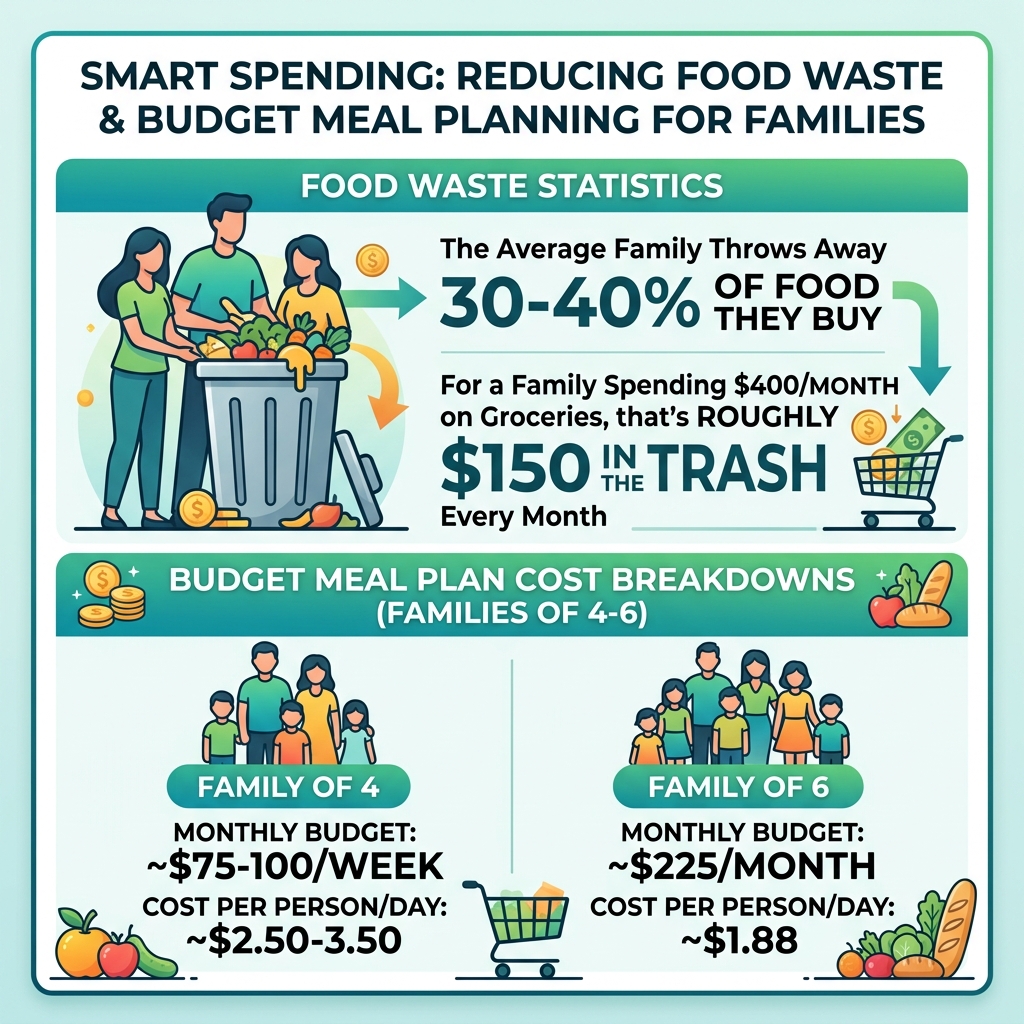
| Family Size | Monthly Budget | Cost Per Person/Day |
|---|---|---|
| Family of 4 | ~$75-100/week | ~$2.50-3.50 |
| Family of 6 | ~$225/month | ~$1.88 |
| Dinners only (any size) | ~$45/month | ~$1.60 |
The core strategies that make it work:
- Plan meals around pantry staples (rice, beans, eggs, potatoes)
- Cook from scratch instead of buying pre-packaged foods
- Stockpile non-perishables when prices are low
- Repurpose leftovers into new meals
- Use slow cookers and sheet pans to save time
Here’s an uncomfortable truth: the average family throws away 30-40% of the food they buy, according to USDA estimates. For a family spending $400/month on groceries, that’s roughly $150 straight into the trash every single month.
That’s more than most Netflix plans, Spotify subscriptions, and gym memberships combined.
The good news? You don’t need to be a chef or a couponing fanatic to fix this. Real families are feeding six people on $225 a month — not by eating poorly, but by planning smarter.
This guide will show you exactly how to do it.
The Foundation of Budget Friendly Family Meal Plans
When we think about saving money on food, we often picture sad bowls of plain oats or unseasoned beans. In reality, the most successful budget friendly family meal plans are built on a solid foundation of culinary “building blocks.” By mastering a few core strategies, we can eat like royalty on a pauper’s budget.
The secret lies in shifting our mindset from “buying meals” to “buying ingredients.” When we shop for pre-packaged taco kits or frozen lasagna, we aren’t just paying for the food; we’re paying for the factory labor, the colorful cardboard, and the marketing. By embracing scratch cooking—making our own sauces, breads, and spice blends—we reclaim that “convenience tax” for our own bank accounts.
Another pillar of success is the “Stockpile Strategy.” This doesn’t mean turning your guest bedroom into a canned goods warehouse. It means that when you see flour for $0.50 a bag or pasta for free with a coupon, you buy enough to last a few months. When we shop our own pantries first, our weekly grocery bill becomes a supplement rather than a total rebuild. For a deeper dive into these methods, check out Quintal Florido’s budget meal plan guide or read our tips for eating healthy on a budget.

Essential Low-Cost Staples
Every frugal kitchen needs a “hall of fame” list of ingredients. These are the items that are high in nutrition, low in cost, and infinitely versatile.
- Rice and Beans: The undisputed kings of budget cooking. A 20lb bag of rice and dried beans can form the base of hundreds of meals, from Gallo Pinto to Mediterranean rice bowls.
- Potatoes: Whether mashed, roasted, or baked, potatoes are incredibly filling and cost pennies per serving.
- Lentils: These “miracle legumes” cook faster than beans and are packed with protein and fiber.
- Oats: A massive canister of old-fashioned oats provides weeks of hearty breakfasts for less than the price of one box of sugary cereal.
- Frozen Vegetables: Often more nutritious than “fresh” produce that has sat on a truck for a week, frozen peas, spinach, and broccoli are budget lifesavers.
- Eggs: Even with price fluctuations, eggs remain one of the cheapest high-quality protein sources available.
- Canned Tomatoes: The base for soups, stews, and pasta sauces.
Realistic Grocery Budgets for Families
What does “budget” actually look like in the real world? It varies by family size, but the numbers might surprise you. Some families have successfully managed a $225 monthly budget for a family of six. That breaks down to roughly $1.88 per person, per day.
While that requires extreme discipline and heavy scratch cooking, a more moderate goal for many is the “$45 Dinner Challenge.” This involves spending $45 on a specific list of ingredients (usually from discount retailers like Walmart or Aldi) to create 16 different dinner recipes that yield over 110 servings.
| Meal Type | Homemade Cost (Est.) | Fast Food Cost (Family of 4) | Savings Per Meal |
|---|---|---|---|
| Burgers & Fries | $8.50 | $35.00 | $26.50 |
| Bean & Cheese Burritos | $4.00 | $28.00 | $24.00 |
| Pasta & Garlic Bread | $6.00 | $40.00 | $34.00 |
| Total Savings | $84.50 |
Step-by-Step: Building Your Weekly Menu
The difference between a successful week and a “let’s just order pizza” week is exactly 15 minutes of planning. We recommend a “Pantry-First” approach. Before you even look at a grocery circular, look in your freezer. If you have a bag of frozen shrimp and half a box of pasta, you’re already halfway to a meal.
Once you know what you have, check the sales. If chicken drumsticks are on sale for $0.99/lb, that’s your protein for the week. By letting the sales dictate the menu rather than our cravings, we save 20-30% instantly. You can find more tips for budget-friendly meal prep on our site to help streamline this process.
Sample Budget Friendly Family Meal Plans for Large Families
For a family of 6 to 8, volume and satiety are key. You want meals that “stick to the ribs” so the kids aren’t asking for snacks ten minutes after dinner.
- Breakfast: Move away from individual yogurt cups or cereal boxes. Instead, opt for a “boring but reliable” routine. Large batches of baked oatmeal or homemade granola are satisfying and cost a fraction of store-bought alternatives.
- Lunch: Use leftovers or “assembly” lunches. Bean and cheese burritos can be made in bulk for about $0.25 each and frozen for quick reheating.
- Dinner: Focus on “stretchers.” Pasta nights with homemade marinara or “Breakfast for Dinner” (sausage and egg casserole) are crowd-pleasers that keep costs down. For more inspiration, see Quintal Florido’s weekly budget dinner ideas.
Repurposing Leftovers to Eliminate Waste
Leftovers are not an afterthought; they are a strategic asset. If we roast two chickens on Sunday, we aren’t just eating roast chicken. We are setting ourselves up for:
- Monday: Chicken quesadillas using the breast meat.
- Tuesday: Chicken and vegetable stir-fry using the smaller bits.
- Wednesday: A giant pot of soup made from the boiled carcasses (bone broth).
We also love “Clean the Fridge” nights. Every Thursday or Friday, we take the random half-onion, the wilted spinach, and the three leftover sausages and turn them into a giant frittata or a “kitchen sink” fried rice. This simple habit can save a family over $1,000 a year by eliminating food waste.
Quick Recipes and Tools for Busy Weeknights
Time is money, and when we are tired, we are more likely to spend. This is where the “Holy Trinity” of budget kitchen tools comes in: the Slow Cooker, the Instant Pot, and the Sheet Pan. These tools allow for “hands-off” cooking, meaning you can start dinner at 8:00 AM or 5:00 PM and spend almost zero time standing over a stove. Explore our quick meal ideas for busy families for more inspiration.
Affordable Protein Swaps and Stretching
Meat is usually the most expensive part of the grocery bill. To stay under budget, we use two main tactics: Swapping and Stretching.
Swapping means choosing the budget-friendly version of a protein. Instead of beef, try ground turkey or chicken. Instead of salmon, try canned tuna or frozen shrimp on sale. Chicken drumsticks and thighs are often half the price of breasts and have more flavor.
Stretching is the art of making 1lb of meat feed 6 people. We do this by adding “fillers” that absorb the flavor of the meat. If you’re making taco meat, add a can of black beans or a cup of cooked lentils to the beef. You double the volume and the fiber for pennies. Check out Quintal Florido’s easy budget family dinners for recipes that use these techniques.
Time-Saving Kitchen Hacks
- Batch Cooking: If you’re browning 1lb of ground beef for tonight’s spaghetti, brown 3lbs instead. Freeze the other 2lbs in portions for future tacos or chili. You’ve just saved yourself 20 minutes of prep on a future busy night.
- Sheet Pan Roasting: Toss sausages, chopped potatoes, and frozen broccoli in oil and spices. Roast at 400°F for 25 minutes. One pan to wash, and a complete meal for the whole family.
- Freezer Meals: Dedicate one Saturday a month to “assembly.” You can prep 10-15 slow cooker dump meals (where you just put raw ingredients in a bag) in about two hours. For more ideas, read about healthy family meals that save time.
Overcoming Common Challenges and Picky Eaters
The biggest threat to budget friendly family meal plans isn’t the price of eggs—it’s a toddler who refuses to eat anything green. When we are on a budget, we can’t afford to be “short-order cooks” making three different meals.
The solution is the “Build-Your-Own” (BYO) method. Instead of serving a finished salad or stir-fry, put the components in bowls on the table. A Taco Bar or a Grain Bowl night allows the picky eater to choose “safe” elements (like plain rice and cheese) while the adults enjoy the spicy salsa and sautéed kale. This reduces stress and ensures nothing ends up in the trash. For more on this, see our guide on healthy eating for families.
Adapting Budget Friendly Family Meal Plans for Picky Eaters
- Deconstructed Meals: If you’re making pasta with meat sauce, keep a portion of the pasta plain for the child who “hates red sauce.”
- Repeated Exposure: Research shows kids may need 10-15 exposures to a new food before they accept it. Don’t give up on broccoli; just keep serving a small “learning portion” alongside their favorites.
- Hidden Vegetables: Blend spinach into fruit smoothies or grate zucchini into muffin batter. It adds nutrition without changing the flavor profile. Our kid-friendly meal prep recipes are designed with these challenges in mind.
Balancing Nutrition and Variety on a Dime
Eating cheaply doesn’t have to mean eating poorly. In fact, many of the world’s healthiest diets (like the Mediterranean or Blue Zones diets) are based on inexpensive beans, grains, and seasonal vegetables.
Focus on Nutrient Density. Cabbage is one of the cheapest vegetables in the world, but it’s a nutritional powerhouse. Frozen spinach can be added to almost any soup or pasta dish for a massive iron and vitamin boost. By rotating through different spices—smoked paprika, cumin, curry powder—you can make the same base of rice and beans taste like a completely different cuisine every night. Check out Quintal Florido’s cheap dinner recipes for more variety.
Frequently Asked Questions about Budget Meal Planning
What are the best apps for saving money on groceries?
Technology is a huge ally for the modern frugal family. We recommend using a combination of:
- Ibotta: For cash-back rebates on specific grocery items.
- Fetch Rewards: Simply scan any receipt to earn points that can be traded for gift cards.
- Store-Specific Apps: Apps for stores like Walmart or Aldi allow you to see “hidden” clearances and digital coupons that aren’t in the Sunday paper.
How do I avoid common meal planning mistakes?
The most common mistake is “aspirational shopping”—buying a bunch of kale and exotic produce because you want to be healthy, only to have it rot in the crisper drawer.
- Shop your pantry first.
- Never shop hungry. (This can save you $20-30 per trip in impulse buys!)
- Be flexible. If you planned for asparagus but green beans are $2 cheaper, make the swap.
Can I feed a family of 6 on $225 a month?
Yes, it is possible, though it requires a high level of organization. This budget relies heavily on stockpiling deals (buying 10 boxes of cereal when they are $0.50 each), minimal snacking (focusing on three filling meals), and scratch cooking. For example, buying a 25lb bag of flour and making your own bread, pizza dough, and tortillas can save a large family over $100 a month alone. For a real-world look at this, see Quintal Florido’s $225/month menu plan example.
Conclusion
At Quintal Florido, we believe that healthy, wholesome eating shouldn’t be a luxury reserved for the wealthy. By implementing budget friendly family meal plans, you aren’t just saving money; you are building sustainable habits that improve your family’s long-term health.
Feeding a family on a budget is a skill, and like any skill, it takes practice. Start small—try one “meatless Monday” or one “pantry-only” week—and watch how quickly the savings add up. You have the power to feed your family better for less than the cost of your favorite streaming service. Start your journey toward healthy family eating with us today!
