
Why Eating Well Doesn’t Have to Cost a Fortune
Healthy cheap snack ideas are easier to find than most people think. Here’s a quick list to get you started right away:
- Apple slices + peanut butter – fiber, protein, and healthy fat for under $0.50
- Hard-boiled eggs – portable protein that lasts up to a week in the fridge
- Carrots + hummus – crunchy, filling, and under $1 per serving
- Microwave popcorn – about $0.15 per serving with less than 100 calories in a 3-cup serving
- Greek yogurt + berries – 25g of protein per cup, naturally sweet
- Celery + cream cheese – as low as $0.10 per serving
- Trail mix – make your own with nuts and dried fruit for pennies per handful
- Roasted chickpeas – high in fiber and protein, costs under $0.30 per serving
Here’s the reality: more than 70% of Americans eat something extra at least once a day. The question isn’t whether you snack — it’s what you’re grabbing when hunger hits.
For busy parents and professionals, that moment of hunger usually ends with whatever is closest. And closest usually means processed, expensive, and not very filling.
The good news? With a little planning, you can have snacks ready that are actually good for you — and cost less than the vending machine.
This guide walks you through everything: smart shopping, simple recipes, what to make at home, and what to skip at the store.
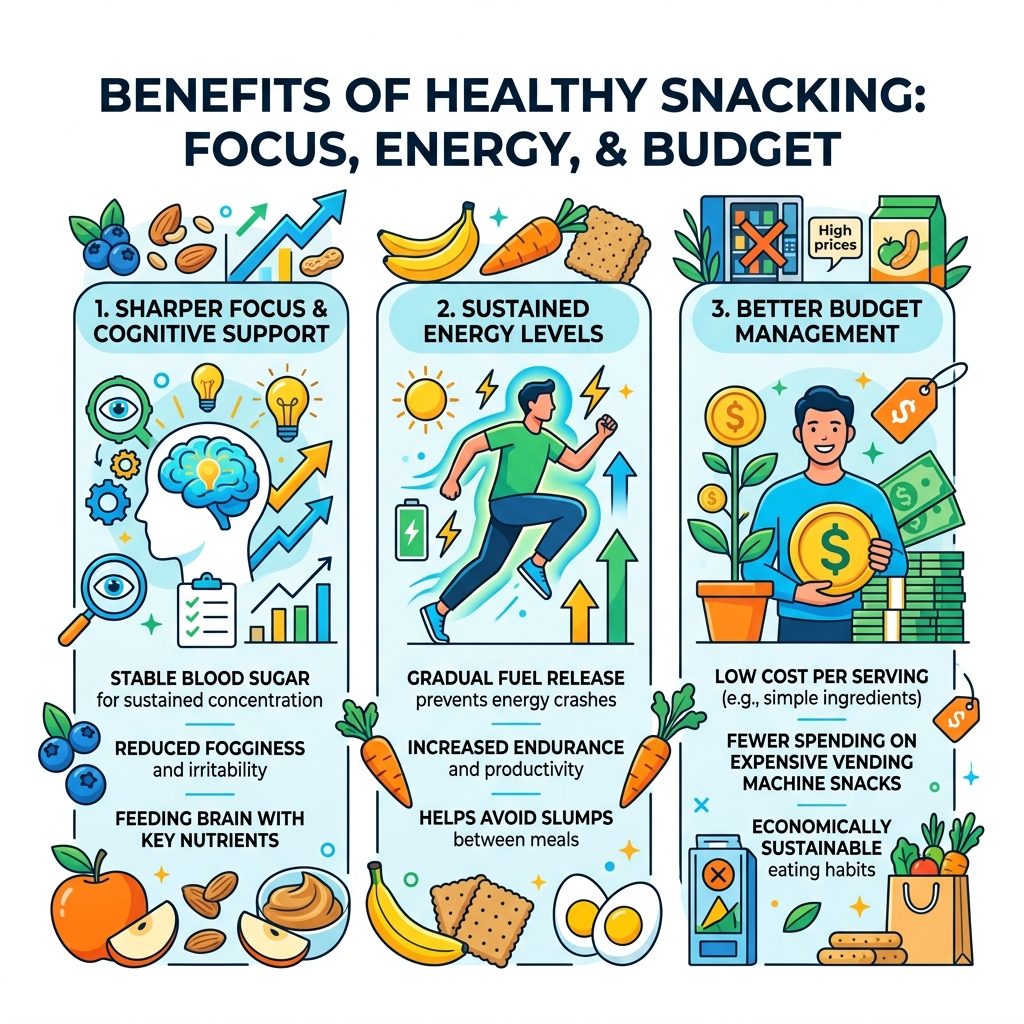
Why Healthy Snacking Matters for Your Body and Budget
We often think of snacking as a “guilty pleasure” or a distraction, but when done correctly, it is a strategic tool for maintaining your health. The primary goal of a snack is to bridge the gap between meals, keeping your blood sugar stable and preventing the “hanger” that leads to overeating at dinner.
When our blood sugar crashes, our focus and academic or work performance suffer. We become irritable, tired, and prone to reaching for high-sugar “emergency” foods. By choosing nutrient-dense options, we provide our brains with steady fuel. Statistics show that more than 70% of Americans grab a snack at least once a day; making that choice a healthy one can drastically improve your long-term wellness.
A balanced snack provides satiety—the feeling of being full and satisfied. This isn’t just about volume; it’s about chemistry. To truly turn off hunger signals, we need to understand the science of building balanced snacks ideas. By combining fiber, protein, and healthy fats, we tell our bodies that we are well-fed, which prevents mindless grazing later in the evening.
Smart Shopping Strategies for Healthy Cheap Snack Ideas

The secret to finding healthy cheap snack ideas isn’t a secret at all—it’s a strategy. Most of us overspend on food because we shop impulsively or when we are already hungry. At Quintal Florido, we believe that a little preparation in the kitchen starts with a lot of preparation in the aisles.
First, never underestimate the power of a grocery list. A list acts as a shield against the “eye-level” marketing tactics stores use to sell high-priced junk food. When you stick to your list, you manage your budget and ensure you have the components for healthy eating.
Second, embrace store brands. In most cases, the ingredients in store-brand nuts, oats, or frozen veggies are identical to name brands, but the price tag is significantly lower. We also recommend buying in bulk for staples like brown rice, dried beans, and large tubs of yogurt rather than individual cups. For more detailed advice, check out our tips for eating healthy on a budget.
Finally, timing is everything. Seasonal produce is often much cheaper because it is abundant and doesn’t require expensive long-distance shipping. If you can’t find a good deal on fresh fruit, head to the freezer section. Frozen fruits and vegetables are picked at peak ripeness and frozen immediately, locking in nutrients at a fraction of the cost. To make this work for the whole family, explore our budget-friendly meal prep ideas for the family.
Avoiding the Convenience Food Trap
We pay a high premium for “convenience.” While pre-cut melon or individual bags of crackers seem like time-savers, they can double or triple your snack budget.
- Pre-cut produce: A whole watermelon might cost $5, while a small bowl of pre-cut cubes costs $6. Cutting it yourself takes five minutes and yields four times the food.
- Single-serve packaging: You are paying for the plastic, not the food. Buy the large bag and portion it into reusable containers yourself.
- Unit pricing: Always look at the “price per ounce” on the shelf tag. This is the only way to truly know if that “sale” item is actually a bargain.
Sourcing Affordable Superfoods
You don’t need exotic berries or expensive powders to eat “super” foods. Some of the most nutritionally dense foods on the planet are also the cheapest:
- Frozen Fruit: Perfect for smoothies or topping oatmeal.
- Canned Beans: Chickpeas and black beans are protein powerhouses.
- Oats: A massive canister of oats costs very little and provides endless fiber.
- Sardines: These are a true “superfood.” Three ounces of sardines contain more calcium than a glass of milk and are packed with heart-healthy Omega-3s.
- Popcorn Kernels: A bag of kernels lasts for months. Air-popped popcorn is a whole grain that is incredibly filling for just pennies.
Nutritional Guidelines: Building a Balanced Snack
A snack shouldn’t just be “empty calories.” To keep your energy levels consistent, aim for a combination of macronutrients.
| Snack Idea | Primary Benefit | Approx. Cost |
|---|---|---|
| Hard-boiled Egg | Lean Protein | $0.20 |
| Apple & Peanut Butter | Fiber + Healthy Fat | $0.45 |
| Greek Yogurt | High Protein | $0.80 |
| Air-popped Popcorn | Complex Carb + Fiber | $0.15 |
To build a snack that lasts, follow this formula: Protein + Fiber + Healthy Fat.
- Complex Carbohydrates: Provide steady energy (think whole grains or fruit).
- Lean Protein: Builds muscle and keeps you full (eggs, beans, Greek yogurt).
- Healthy Fats: Stabilize blood sugar and promote brain health (nuts, avocado, seeds).
- Fiber: Slows digestion so you don’t feel hungry 30 minutes later.
Practicing mindful eating is also key. Instead of eating out of the bag while watching TV, portion your snack into a bowl. Listen to your body’s hunger cues—feeling comfortably full is the best sign that snack time is over.
High-Protein Healthy Cheap Snack Ideas
Protein is the “satiety king.” If you find yourself constantly hungry, you likely need more protein in your snacks. Here are some of our favorite high-protein, low-cost options:
- Hard-boiled eggs: We love these because they are a “complete” protein. They stay fresh in the fridge for up to a week.
- Greek yogurt: This can have up to 25 grams of protein per cup. Buy the plain version to avoid added sugars and sweeten it yourself with a little fruit or honey.
- Edamame: You can buy these frozen and steam them in minutes. They are high in both protein and fiber.
- Cottage cheese: A half-cup serving is a protein bomb that pairs perfectly with savory black pepper or sweet pineapple.
- Tuna pouches: These are shelf-stable and perfect for a quick hit of lean protein on the go.
For more inspiration on keeping things light but filling, see our low-calorie snack recipes.
No-Cook Healthy Cheap Snack Ideas for Students
Students often deal with limited space, no stove, and a tight schedule. These healthy cheap snack ideas require zero cooking and are perfectly portable for long library sessions:
- Apple slices and peanut butter: The classic combo of fiber and healthy fats.
- Celery sticks with cream cheese: A crunchy, low-calorie snack that costs next to nothing.
- DIY Trail Mix: Mix bulk-bought peanuts, raisins, and maybe a few dark chocolate chips. It’s much cheaper than the pre-packaged versions.
- Rice cakes: Top them with peanut butter and banana slices for a “sandwich” feel without the bread.
- Hummus and Carrots: Buy a large tub of hummus and portion it out with baby carrots for a satisfying crunch.
These are also great for parents looking for easy snack ideas for kids.
The Benefits of Homemade vs. Store-Bought Snacks
While the convenience of a packaged granola bar is tempting, making your own snacks offers two massive advantages: ingredient control and cost savings.
Store-bought snacks are often “health halos”—they look healthy on the outside but are loaded with hidden sugars, sodium, and preservatives. When you make snacks at home, you decide exactly what goes in. For example, packaged roasted chickpeas can cost $4 for a small bag, but you can make a massive batch at home using a $0.80 can of chickpeas and some spices from your pantry.
Homemade snacks also allow for customization. If you have a sweet tooth, you can make healthy and delicious work or school snack smoothies using frozen fruit and spinach, providing more nutrients than any bottled “juice” drink.
Frequently Asked Questions about Healthy Cheap Snack Ideas
What are the cheapest healthy snacks I can buy?
The absolute winners for the budget-conscious are popcorn kernels, bananas, carrots, peanut butter, and dried beans. These items cost pennies per serving and provide high-quality nutrition. A large bag of carrots can provide snacks for an entire week for less than the price of one coffee.
How can I eat healthy on a budget with no time to prep?
We recommend the “3×3 method.” Keep three proteins (like string cheese, hard-boiled eggs, or canned tuna), three fruits/veggies (apples, bananas, carrots), and three healthy carbs (rice cakes, whole-grain crackers, popcorn) on hand. You can grab one from each category in under 60 seconds for a perfectly balanced snack. If you have kids, easy and nutritious smoothie snacks for kids can be whipped up in a blender in two minutes flat.
Are frozen fruits and vegetables as healthy as fresh?
Yes! In many cases, they are even healthier. Fresh produce often spends days or weeks in transport, losing nutrients along the way. Frozen produce is flash-frozen at its nutritional peak. They are also much cheaper and have a longer shelf life, meaning less money wasted on food that goes bad in the crisper drawer.
Conclusion
At Quintal Florido, our mission is to provide evidence-based nutrition advice that fits your real life. We know that maintaining a wholesome diet isn’t about expensive “superfoods” or complicated recipes—it’s about making smart, consistent choices that support your long-term health.
By focusing on whole foods, buying strategically, and preparing simple snacks at home, you can fuel your body and your brain without emptying your wallet. Healthy eating is a journey, and every small swap you make adds up to a big difference in how you feel every day.
Ready to find your next favorite bite? Explore more healthy snacks in our full archive and start your journey toward a more balanced, affordable diet today!
