
Is Meal Prep Safe? Here’s What You Need to Know First
Is meal prep safe — and the short answer is yes, as long as you follow a few key food safety rules.
Here’s a quick summary:
- Safe fridge storage: Most cooked meals last 3-4 days in the refrigerator at 40°F or below
- Safe freezer storage: Cooked meals can last 2-3 months in the freezer at 0°F or below
- Reheat to: 165°F internal temperature before eating
- Danger zone: Never leave food between 40°F and 140°F for more than 2 hours
- Signs of spoilage: Off smells, slimy texture, color changes, or visible mold — when in doubt, throw it out
Meal prepping is one of the smartest ways a busy person can eat healthier without spending hours in the kitchen every day. Americans spend an average of 37 minutes a day just preparing, serving, and cleaning up food. Batch cooking can cut that time dramatically.
But here’s the thing: when food sits in your fridge for several days, the rules change.
Unlike cooking fresh every night, meal prep means your food needs to stay safe across multiple days and reheats. Done right, it’s completely fine. Done carelessly, it can lead to foodborne illness from bacteria like Salmonella, E. coli, or Listeria — which multiply fast when food isn’t stored or handled properly.
The good news? Staying safe is straightforward once you understand the basics.
Is Meal Prep Safe? Understanding the Science of Food Spoilage
To answer the question is meal prep safe, we have to look at the invisible world of microbiology. Bacteria are everywhere, and while many are harmless, others are “pathogens” that cause food poisoning. The most common culprits in meal prep gone wrong are Salmonella, E. coli, and Listeria. These microscopic hitchhikers don’t always change the smell or look of your food, which is why following a healthy meal prep guide for weight loss must include safety protocols.
The most critical concept in food science is the Temperature Danger Zone. This is the range between 40°F and 140°F. In this window, bacteria can double in number every 20 minutes. If you leave your freshly cooked quinoa or chicken on the counter to cool for three hours, you aren’t just letting it reach room temperature; you’re hosting a bacterial block party.
According to the Food Safe Meal Prep Tips – FDA, the “2-hour rule” is non-negotiable. Perishable foods should never be in the danger zone for more than two hours. If the ambient temperature is above 90°F (like a summer kitchen), that window shrinks to just one hour. Understanding this science helps us realize that safety starts the moment the heat is turned off, not just when the lid goes on the container.
The Golden Rules of Storage: Fridge vs. Freezer
Proper storage is the difference between a delicious Thursday lunch and a miserable Friday morning. Your refrigerator isn’t just a cold box; it’s a preservation tool that must be calibrated.
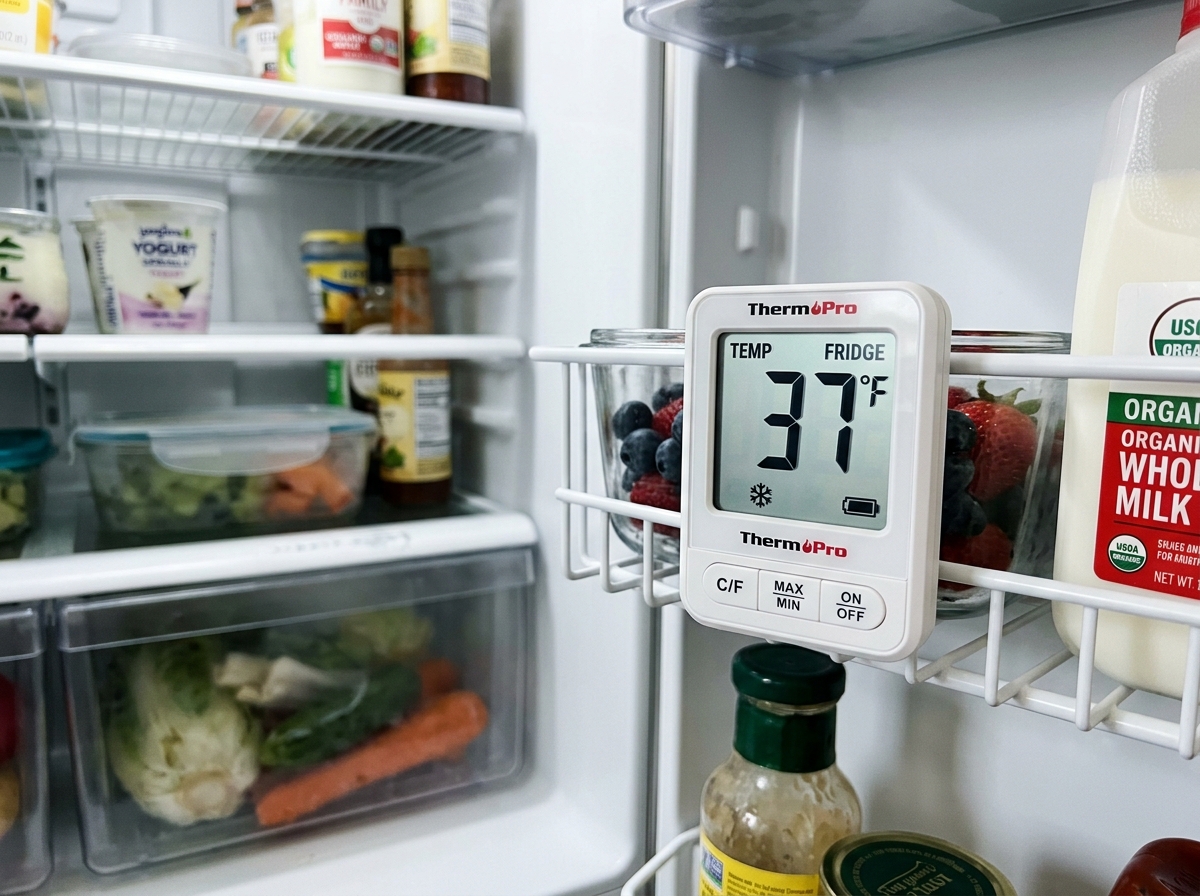
We recommend using a digital refrigerator thermometer. Your fridge must stay at or below 40°F (4°C) to slow bacterial growth effectively. For the freezer, the goal is 0°F (-18°C), which stops bacterial growth entirely, though it doesn’t kill existing bacteria—it simply puts them on “pause.”
When packing your meals, airtight seals are your best friend. They prevent “cross-contamination” from other items in the fridge and keep your food from drying out. If you’re struggling with organization, checking out maximizing space meal prep container ideas can help you find the right gear for the job.
Refrigerator vs. Freezer Shelf Life
| Food Type | Refrigerator (40°F) | Freezer (0°F) |
|---|---|---|
| Cooked Poultry (Chicken/Turkey) | 3-4 Days | 2-6 Months |
| Cooked Ground Meats | 3-4 Days | 2-3 Months |
| Cooked Fish/Seafood | 1-2 Days | 1-3 Months |
| Grains (Rice/Quinoa) | 4-6 Days | 6 Months |
| Beans/Legumes | 5-7 Days | 6-12 Months |
| Soups & Stews | 3-4 Days | 2-3 Months |
For more detailed timelines, you can refer to this guide on How Long Is Meal Prep Good for?.
Is meal prep safe for 5 to 7 days?
This is the most common question we hear. Is it safe to prep on Sunday for a full Friday or Saturday? The standard USDA and FDA advice for cooked meat is 3 to 4 days. However, plant-based proteins like beans and lentils can often last up to 5 days.
If you want to prep for a full week, we suggest two strategies:
- The Staggered Session: Prep half your meals on Sunday and the other half on Wednesday.
- The Freeze-Thaw Method: Prep everything on Sunday. Keep meals for Monday through Wednesday in the fridge. Put Thursday and Friday’s meals in the freezer immediately, then move them to the fridge the night before you plan to eat them.
For those focusing on longevity, a delicious vegan meal prep for the week often stays fresher longer than meat-heavy options, as plant proteins are generally more stable in the fridge.
Preparation and Reheating: Killing Pathogens Effectively
Safety doesn’t end once the food is cooked; it continues through the reheating process. Many people assume that if the food is steaming, it’s safe. Unfortunately, microwaves are notorious for creating “cold spots” where bacteria can survive.
To ensure your meals are safe, use a food thermometer. When reheating, the internal temperature must reach 165°F (74°C). This is the “kill zone” for most common pathogens. For ground meats during initial cooking, aim for 160°F.
When using a microwave, stir your food halfway through the heating cycle. This breaks up those cold spots and ensures even heat distribution. You can find more tips on efficient prep in our guide for simple and quick meal prep for busy individuals. Proper reheating is a cornerstone of the advice found in Food Safety – Keep Your Weekly Prepped Meals Fresh and Safe.
Best practices to ensure your meal prep is safe and fresh
Beyond temperatures, how you handle the food during the “prep” phase matters immensely. We follow these four pillars:
- Rapid Cooling: Don’t put a giant, deep pot of hot chili directly into the fridge. The center will stay warm for hours, creating a breeding ground for bacteria. Instead, divide large batches into shallow containers (no more than two inches deep) so they cool quickly.
- Separate Cutting Boards: Never use the same board for raw chicken and then for the veggies that will go into your salad. Use color-coded boards—red for meat, green for produce.
- Clean Hands and Surfaces: Wash your hands for at least 20 seconds with warm soapy water before and after handling raw ingredients.
- The Bottom Shelf Rule: Store raw meats on the bottom shelf of your refrigerator. This prevents any accidental drips from contaminating your ready-to-eat prepped meals below.
If you are just starting out, our beginners guide to easy meal prep recipes offers a great entry point into these habits.
How to Spot Spoiled Food Before You Eat It
Even if you follow all the rules, sometimes things go wrong. Maybe your fridge door didn’t close all the way, or an ingredient was slightly past its prime when you bought it. Learning how to trust your senses is vital.
- The Smell Test: This is your first line of defense. If it smells sour, ammonia-like, or just “off,” don’t risk it.
- The Texture Check: Sliminess is a major red flag, especially on meats and cooked grains. If your pasta or chicken feels slippery or tacky, throw it out.
- Color Changes: While some oxidation is normal (like apples turning slightly brown), gray meat or fuzzy green/white spots (mold) are clear indicators of spoilage.
- The “When in Doubt” Rule: We cannot stress this enough—if you are questioning whether a meal is safe, your body is telling you something. It is much cheaper to lose a $5 meal than to spend two days in bed with food poisoning.
Following the ultimate guide to meal prep for weight loss works best when you are healthy enough to actually enjoy the food!
Frequently Asked Questions about Meal Prep Safety
Is meal prep safe if I use plastic containers?
Yes, but with caveats. Ensure your containers are labeled BPA-free and microwave-safe. Over time, plastic can become porous and scratched, which can trap bacteria and odors. For the best safety and longevity, we recommend glass containers. They don’t leach chemicals, they handle high heat better, and they are easier to sanitize. Check out some innovative meal prep container recipes that work perfectly in glass.
Can I freeze meals on the last day of their fridge life?
Technically, you can, but it’s not ideal. Freezing doesn’t “reset” the clock; it just pauses it. If you freeze a meal on day four, it still has “four days of age” when you thaw it. It’s much safer to freeze meals immediately after they have cooled down on your prep day to maintain the highest quality and safety.
Is it safe to reheat meals more than once?
We recommend the “single reheat” rule. Every time you heat and cool food, it passes through the danger zone. Additionally, multiple reheats significantly degrade the texture and nutritional value of the food. If you have a large batch of something like soup, only reheat the portion you intend to eat right then.
Conclusion
At Quintal Florido, we believe that a balanced, wholesome diet is the foundation of long-term health. Mastering the art of meal prep is a powerful tool in that journey, but it must be built on a foundation of safety. By respecting the temperature danger zone, using the right containers, and knowing when to say goodbye to leftovers, you can enjoy all the convenience of batch cooking without any of the risks.
Is meal prep safe? With these evidence-based habits, the answer is a resounding yes. Start your journey toward better health today by visiting Quintal Florido for more nutritious guides and tips!
