
The Quickest Way to a Healthier Morning Starts Here
Healthy fruit granola bars are one of the easiest grab-and-go breakfasts you can make at home — with real ingredients, no preservatives, and way less sugar than most store-bought options.
Here’s a quick overview of how to make them:
- Toast rolled oats and nuts at 350°F for 10-15 minutes
- Blend a sticky base using dates, honey, or nut butter
- Mix in your dried or fresh fruit of choice
- Press the mixture firmly into a parchment-lined pan
- Chill for at least 20-30 minutes before slicing into bars
Most recipes take under 30 minutes of active prep time and keep well in the fridge for up to two weeks.
Mornings are rushed. Breakfast often gets skipped — or replaced with something sugary and forgettable. Sound familiar?
The good news: a batch of homemade fruit granola bars, made once over the weekend, can fuel your whole week. They’re portable, filling, and built from ingredients you can actually pronounce.
Each bar typically delivers around 200-260 calories, with a solid mix of fiber, protein, and healthy fats to keep you going until lunch. That’s a real breakfast — not a sugar crash waiting to happen.
In this guide, you’ll learn exactly how to make them, which fruits work best, how to keep them from falling apart, and how to store them so they stay fresh all week.
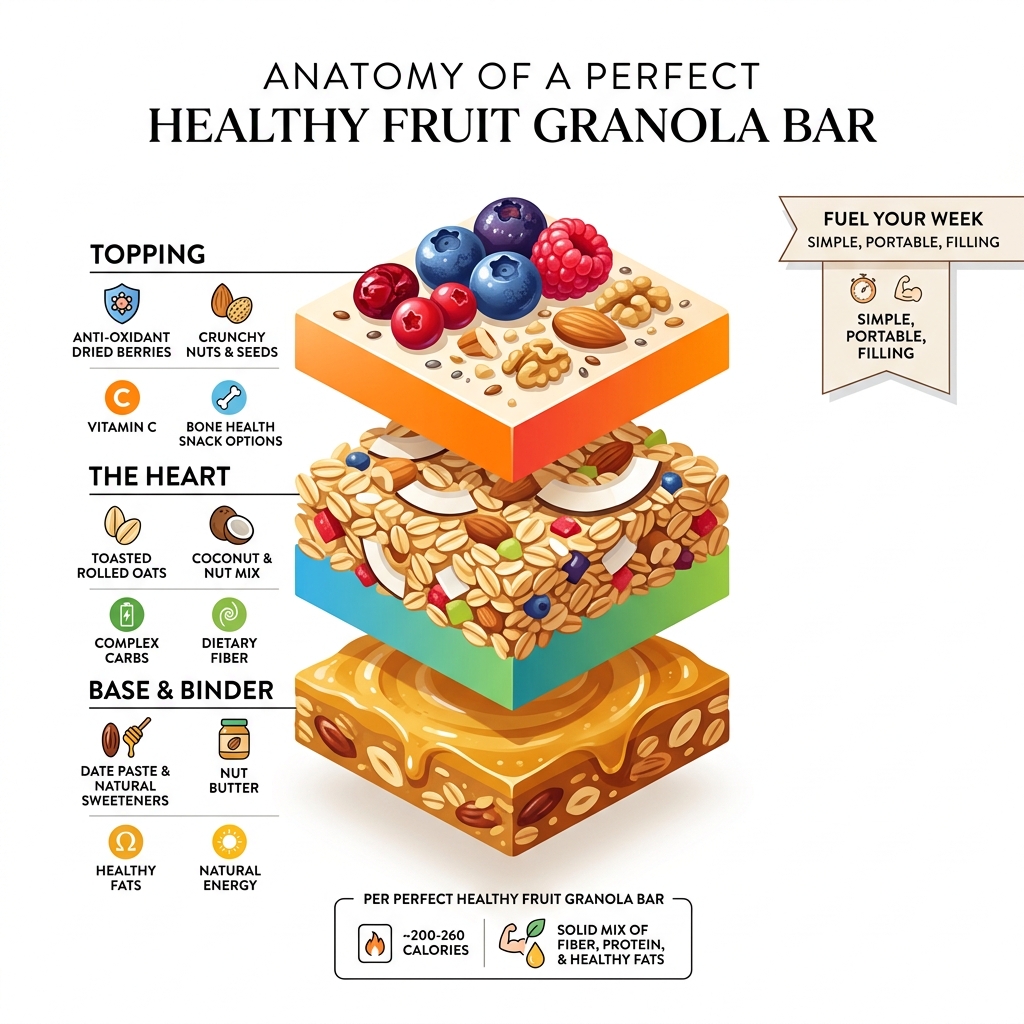
Healthy fruit granola bars vocabulary:
Why Homemade Healthy Fruit Granola Bars Beat Store-Bought Options

When we walk down the snack aisle at the grocery store, the packaging for granola bars is filled with images of sun-drenched fields and glistening berries. However, a quick look at the ingredient label often reveals a different story. Many commercial bars are loaded with what some call the “high fructose corn devil” and other refined sugars that lead to energy crashes. According to the Mayo Clinic, excessive added sugar of any kind can contribute to unwanted calories and health issues.
By making healthy fruit granola bars at home, we take back control. Here is why we believe homemade is the gold standard:
- Nutrient Control: We decide exactly how much sugar goes in. While store-bought bars can contain upwards of 25g of sugar, our homemade versions can stay under 10-15g, often relying on natural sweetness from fruit.
- Preservative-Free: Homemade bars don’t need to sit on a shelf for eighteen months. We skip the stabilizers and artificial dyes found in “fruit-filled” cereal bars.
- Fiber and Protein: According to our research, a well-made homemade bar can provide up to 6.4 grams of fiber and 6 grams of protein. This combination is essential for satiety and digestive health. You can learn more about incorporating whole foods in The Best Fruits for Your Health Daily Alternatives to Junk Food.
- Heart-Healthy Fats: We use ingredients like flaxseed, chia seeds, and walnuts, which provide omega-3 fatty acids. Commercial bars often use cheaper, highly processed vegetable oils.
- Cost-Effectiveness: Buying oats, nuts, and dried fruit in bulk is significantly cheaper per serving than purchasing individual name-brand bars.
Essential Ingredients for Nutritious Fruit-Based Bars
To create a bar that is both “scrumptious” and “sturdy,” we need a balance of dry texture and sticky binders. We recommend starting with a foundation of old-fashioned oats. Unlike quick oats, which can become gummy, old-fashioned oats provide a hearty, chewy texture that stands up to being pressed into bars.
For those looking to expand their pantry, The Ultimate Guide to Nutritious and Easy Healthy Snack Options offers a deeper dive into these superfoods.
The Power Players:
- Medjool Dates: These are the “glue” of the no-bake world. When processed, they form a thick, caramel-like paste that holds everything together without the need for refined syrups.
- Natural Nut Butters: Almond, peanut, or cashew butter adds creaminess and healthy fats. Look for “runny” nut butters (where the only ingredient is nuts) to ensure they mix easily.
- Flaxseed and Chia Seeds: These add a nutritional boost and help absorb excess moisture, acting as a secondary binder.
- Raw Honey or Maple Syrup: While dates provide sweetness, a touch of liquid sweetener helps create a “sticky base” that hardens when chilled.
Fruit Selection Guide
Different fruits bring different moisture levels to your healthy fruit granola bars. Use this table to plan your mix-ins:
| Fruit Type | Texture Impact | Best Use Case |
|---|---|---|
| Dried Berries (Cranberries, Blueberries) | Chewy and tart | Standard bars; very stable at room temp. |
| Dried Cherries | Soft and sweet | Pairs perfectly with almonds and dark chocolate. |
| Mashed Bananas | Soft and cake-like | Great for baked bars; acts as a natural sweetener. |
| Fresh Strawberries | High moisture | Best for bars that will be eaten quickly or frozen. |
| Dried Apricots | Very chewy | Chop small to ensure even distribution. |
Customizing Your Healthy Fruit Granola Bars
One of the best parts about making your own snacks is that you can cater to every dietary need in your household. If you have little ones, check out Easy Snack Ideas for Kids for more inspiration.
- Gluten-Free: Ensure your oats are certified gluten-free. You can also swap some oats for almond flour or puffed rice cereal to change the texture.
- Vegan: Use maple syrup or agave nectar instead of honey. Flax “eggs” (ground flax mixed with water) can also help bind baked versions.
- Nut-Free: Swap nut butters for sunflower seed butter (sunbutter) or tahini. Replace almonds with pumpkin seeds (pepitas) or hemp hearts for that signature crunch.
- The “Fun” Mix-ins: Don’t be afraid to add a tablespoon of dark chocolate chips, shredded coconut, or even a pinch of cinnamon and sea salt to elevate the flavor profile.
How to Make Healthy Fruit Granola Bars: A Step-by-Step Guide
The secret to a bar that doesn’t crumble isn’t just the ingredients; it’s the technique. We have found that the most successful bars follow a specific workflow.
The “Pro” Techniques:
- Toasting is Mandatory: Even for no-bake bars, toasting your oats and nuts at 350°F for about 10 minutes removes the “raw” flour taste and adds a deep, nutty aroma.
- The Food Processor Trick: If your bars keep falling apart, try processing about half a cup of your oats and nuts into a fine meal before mixing. This creates more surface area for the “glue” to stick to.
- Parchment Overhang: Always line your pan with parchment paper, leaving an inch or two hanging over the sides. This allows you to lift the entire block out of the pan for clean slicing.
- The “Big Press”: Once the mixture is in the pan, don’t just smooth it over. Use the back of a heavy glass or a flat spatula to press down with all your weight for at least one full minute. One recipe creator even suggests “smacking” the mixture into the pan to ensure it’s compact!
Step-by-Step Instructions for Healthy Fruit Granola Bars
Follow these steps for a foolproof batch of healthy fruit granola bars. These are perfect for pairing with Easy and Nutritious Smoothie Snacks for Kids during a busy school week.
- Preheat and Toast: Set your oven to 350°F. Spread 2 cups of oats and 1 cup of chopped nuts on a sheet. Toast for 10-12 minutes until golden.
- Prepare the Binder: In a small saucepan, warm 1/2 cup of honey (or maple syrup) and 1/2 cup of nut butter over low heat until they are pourable. If using dates, process 1 cup of pitted dates in a food processor until a sticky ball forms.
- The Great Mix: In a large bowl, combine your toasted oats, nuts, 1 cup of dried fruit, and any seeds. Pour the warm binder over the top.
- Incorporate the Fruit: If using fresh fruit like diced strawberries or mashed banana, fold them in gently at the end to prevent the oats from getting too soggy.
- Press and Pack: Transfer the mix to an 8×8 inch lined pan. Press firmly (remember the “one-minute rule”).
- The Chill Factor: Place the pan in the refrigerator for at least 2 hours, or the freezer for 30 minutes. This allows the fats (like coconut oil or nut butter) to solidify, locking the bars in place.
- Slice with Precision: Lift the parchment out and use a sharp chef’s knife to slice into 10-12 bars. For a bit of fun, use cookie cutters to make stars or hearts for holiday snacks!
Mastering Texture: No-Bake vs. Baked Healthy Fruit Granola Bars
Depending on your preference, you might lean toward a soft, chewy bar or a crisp, crunchy one. Both have their place in a balanced diet, much like the variety found in The Basic Guide to Juice and Whole Fruit Smoothies.
No-Bake Bars (The Chewy Choice)
No-bake bars rely on temperature-sensitive binders like coconut oil, honey, and date paste.
- Texture: Soft, fudgy, and chewy.
- Stability: They must be kept cool. If left in a hot car, they will likely return to a “granola crumble” state.
- Key Tip: Use puffed rice cereal or crispy rice to add a “crunch” without needing the oven.
Baked Bars (The Golden Crunch)
Baked bars use heat to caramelize sugars and set binders like egg whites or flax eggs.
- Texture: Crispy edges with a firm, sturdy center.
- Stability: These are much more shelf-stable and great for long hikes or road trips.
- Key Tip: Don’t overbake! They will continue to firm up as they cool. Take them out when the edges are just starting to brown.
Storage Tips and Nutritional Benefits
Once you’ve mastered the art of the bar, you need to keep them fresh. Homemade snacks are a cornerstone of The Ultimate Guide to Cheap and Easy Healthy Snacks.
Nutritional Breakdown (Approximate per bar):
- Calories: 160 – 260 kcal
- Protein: 4g – 6g
- Fiber: 3g – 6g (providing up to 24% of your Daily Value as defined by the FDA)
- Vitamin C: If using berries or cherries, one bar can provide up to 51% of your recommended daily Vitamin C.
- Sugar: 10g – 20g (primarily from fruit and natural binders)
These bars offer complex carbohydrates from oats, which provide sustained energy compared to the “spike and dip” of processed flour snacks. For more on starting your day with these nutrients, see A Guide to Fruit Smoothie Recipes for Beginners.
Maximizing the Shelf Life of Healthy Fruit Granola Bars
Because we don’t use chemical preservatives, we have to be a bit more intentional with storage. If you find yourself using a lot of fruit, you might also find The Ultimate Guide to Buying Canned Fruit Online helpful for stocking your pantry with long-lasting ingredients.
- Individual Wrapping: Wrap bars individually in parchment paper or beeswax wrap. This prevents them from sticking together and makes them easy to grab on your way out the door.
- Parchment Separators: If storing in a single container, place a sheet of parchment between layers.
- Refrigeration: Most healthy fruit granola bars will last up to 2 weeks in an airtight container in the fridge.
- Freezing: This is our favorite method! They can be frozen for up to 3 months. In fact, many people prefer the texture of a “frozen” no-bake bar on a hot day.
- Moisture Control: If your bars contain fresh fruit, they are more prone to oxidation. Keep the container tightly sealed to prevent them from drying out or absorbing “fridge smells.”
Frequently Asked Questions about Fruit Granola Bars
Why are my homemade granola bars falling apart?
This is the most common frustration for home bakers. Usually, it comes down to one of three things:
- Insufficient Binder: You might need an extra tablespoon of honey or nut butter. The mixture should feel like wet sand that holds its shape when squeezed.
- Inadequate Pressing: You really have to “smack” it down. If there are air pockets between the oats, the bar will crumble.
- Cutting Too Soon: Patience is a virtue! If you cut the bars while they are still warm or room temperature, the binders haven’t had time to “set.” Chill them for at least 2 hours first.
Can I make these bars entirely sugar-free?
While the bars need something “sticky” to hold together, you can avoid added sugars by using:
- Mashed Bananas: Use the spottiest, brownest bananas you can find for maximum sweetness.
- Date Paste: Pureed dates provide fiber and minerals along with sweetness.
- Juice-Sweetened Dried Fruit: Look for cranberries or cherries that are sweetened with apple juice rather than cane sugar.
- Note on Stevia: We don’t recommend using powdered sweeteners like stevia as a primary binder, as they don’t provide the “stickiness” required to hold the oats together.
Are these granola bars suitable for a gluten-free diet?
Yes, absolutely! Oats are naturally gluten-free, but they are often processed in facilities that handle wheat. Always look for “Certified Gluten-Free” on the label. For more tips on making your diet both safe and delicious, visit Healthy but Tasty Snacks Because Your Taste Buds Deserve Better. You can also substitute some of the oats with almond flour or quinoa flakes for a different nutritional profile.
Conclusion
At Quintal Florido, we are committed to providing evidence-based nutrition guides that help you navigate wholesome eating without the stress. Making your own healthy fruit granola bars is a small but powerful step toward a more balanced lifestyle. By choosing whole ingredients and natural sweeteners, you’re not just making a snack — you’re fueling your body for long-term health.
Ready to explore more ways to upgrade your pantry? Explore more healthy snacks and join our community of health-conscious foodies today!
