
Why Healthy Eating Guidelines Are Worth Your Attention
Healthy eating guidelines give you a clear, research-backed framework for what to eat — so you don’t have to guess.
Here’s a quick summary of what the major guidelines agree on:
| Principle | What It Means |
|---|---|
| Eat mostly whole foods | Prioritize fruits, vegetables, whole grains, and lean proteins |
| Fill half your plate with produce | Aim for color and variety |
| Limit added sugars | Less than 10% of daily calories |
| Watch sodium | Under 2,300 mg per day for adults |
| Limit saturated fat | Less than 10% of daily calories |
| Choose water | Replace sugary drinks with water, tea, or coffee |
| Stay consistent | It’s your overall pattern that matters, not one meal |
So why do these guidelines actually work?
Because they’re not a fad diet. They’re built on decades of nutrition science — from the U.S. Dietary Guidelines (updated every five years since 1980) to the World Health Organization and Harvard’s Healthy Eating Plate.
And the results are hard to argue with. Men who closely followed evidence-based eating guidelines lowered their cardiovascular disease risk by nearly 40%. Women saw close to a 30% reduction. A long-term study of over 7,000 British civil servants found that those with the highest diet quality scores had a 25% lower risk of dying from any cause — and a 42% lower risk of dying from heart disease.
Yet today, more than half of adults have at least one diet-related chronic disease. The gap between what we know and what we actually eat is enormous.
The good news? You don’t need a perfect diet. You just need a better pattern — and that’s exactly what these guidelines help you build.
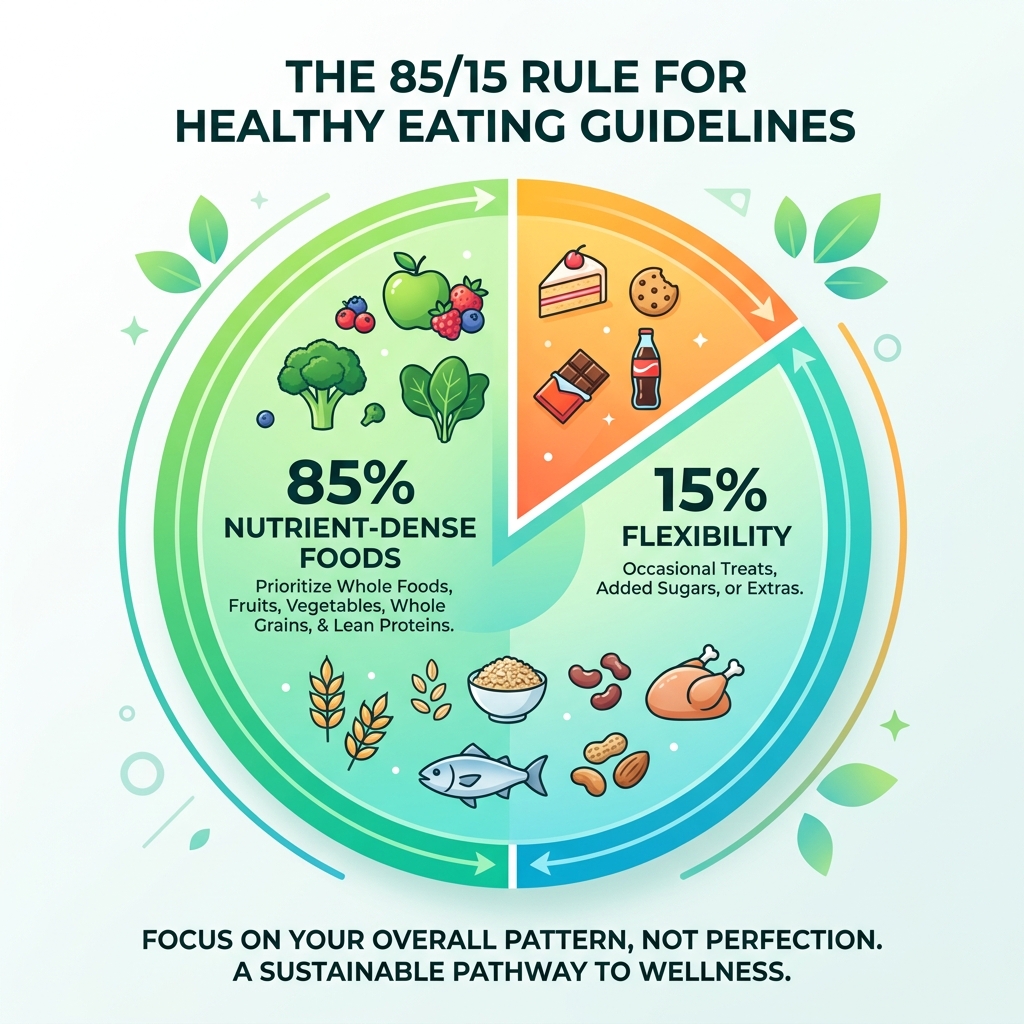
The Core Principles of Modern Healthy Eating Guidelines
When we look at the major global authorities, from the World Health Organization (WHO) to the latest Dietary Guidelines for Americans, we see a shift away from obsessing over single nutrients and toward looking at our “dietary pattern.” A dietary pattern is simply the combination of everything you eat and drink over time.
Modern healthy eating guidelines are built on four pillars:
- Adequacy: Getting enough of the essential nutrients your body needs to function.
- Balance: Ensuring you aren’t over-consuming one group (like fats) at the expense of another (like fiber).
- Moderation: Enjoying all foods but keeping “extras” like sugar and saturated fat within specific limits.
- Diversity: Eating a wide variety of foods to ensure a broad spectrum of vitamins and minerals.
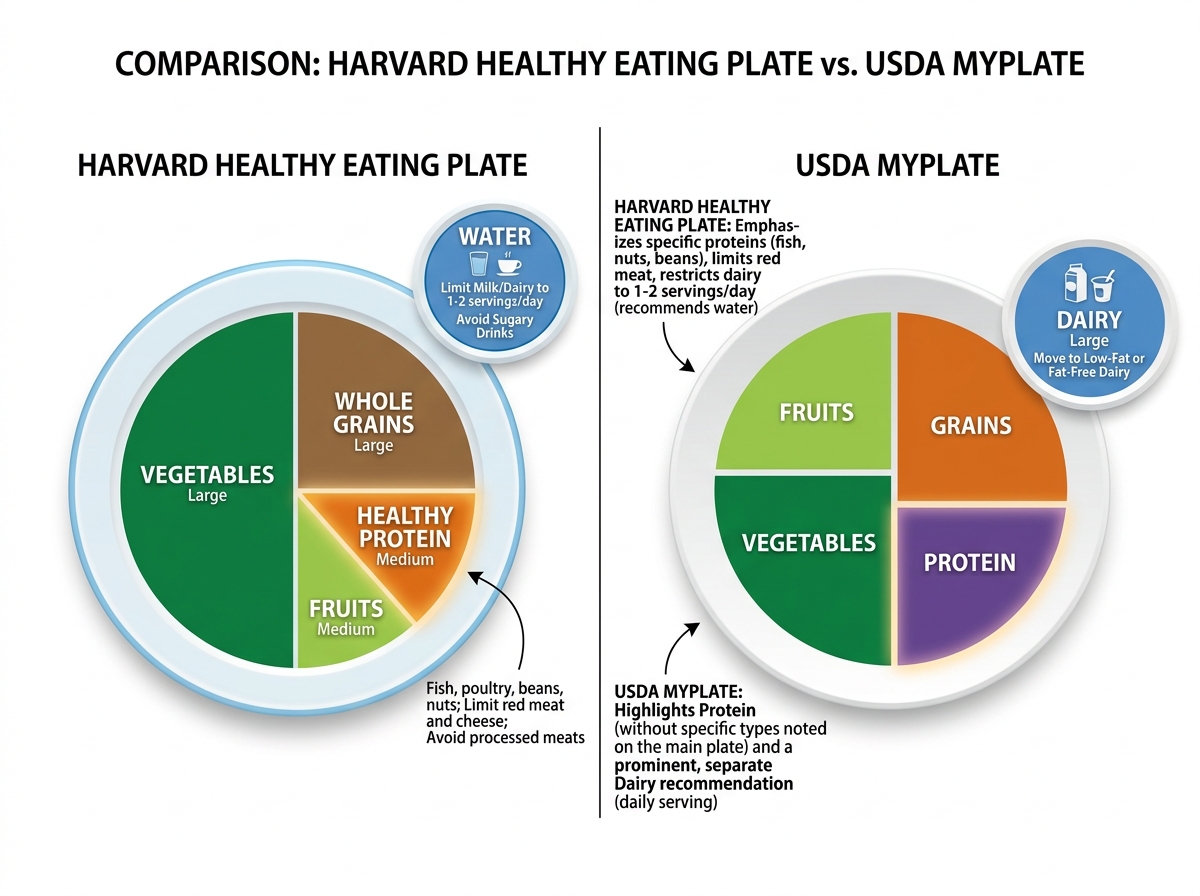
One of the most effective visual tools we use is the Healthy Eating Plate • The Nutrition Source. Created by experts at Harvard, it improves upon federal models by emphasizing high-quality proteins and healthy oils while specifically noting that “low-fat” doesn’t always mean healthy. If you are looking to dive deeper into how to balance your macros, check out The Macro Guide to Balanced Meal Ideas.
Evidence-Based Success Rates
We aren’t just suggesting these habits because they sound good; the data backs them up. Research shows that adhering to these patterns drastically reduces the risk of major killers. For example, men who align their diets with the Healthy Eating Pyramid have shown a 40% lower risk of cardiovascular disease.
The Dietary Guidelines for Americans are updated every five years to reflect the latest science. This isn’t just “government talk”—it’s a rigorous process involving systematic reviews of thousands of studies. The evidence consistently shows that a high-quality diet prevents premature death and keeps our hearts beating longer.
Customizing Healthy Eating Guidelines for Culture and Budget
A common myth is that healthy eating is only for people with large budgets or specific tastes. In reality, the best healthy eating guidelines are flexible. You can follow a healthy pattern whether you prefer a Mediterranean style, a vegetarian approach, or traditional cultural dishes.
To make this work on a budget, we recommend:
- Buying Frozen: Frozen vegetables are often just as nutritious as fresh and last much longer.
- Staple Grains: Brown rice, oats, and beans are incredibly affordable and form a perfect nutritional base.
- Seasonal Produce: Fruits and veggies are cheapest when they are in season.
For more practical ways to transition your current habits, see our guide on Simple Diet Changes for Better Health.
Building Your Foundation: The Essential Food Groups
To build a healthy pattern, we need to focus on nutrient density. A nutrient-dense food gives you a lot of vitamins and minerals for relatively few calories. Think of it as getting more “bang for your buck.”
| Nutrient-Dense Choice | Less Nutrient-Dense Choice |
|---|---|
| Plain, fat-free yogurt with berries | Fruit-flavored yogurt with added sugar |
| Baked salmon or skinless poultry | Fried chicken or breaded fish sticks |
| Quinoa or brown rice | White bread or refined pasta |
| Unsalted nuts and seeds | Potato chips or salty crackers |
| Fresh or frozen broccoli | Broccoli in a heavy cheese sauce |
Focusing on these foundations helps you stay within your calorie limits while feeling satisfied. For more inspiration on how to combine these, read The Nutritionists Guide to Balanced Diet Ideas.
The Role of Fruits and Vegetables
We should all aim for at least 400 grams (about five portions) of fruits and vegetables daily. Why? Because they are our primary source of fiber and potassium. Potassium is a superhero for blood pressure regulation, helping to blunt the effects of salt. According to the Healthy Eating Tips | Nutrition – CDC, incorporating a variety of colors—reds, oranges, dark greens—ensures you get a diverse range of phytonutrients.
How Healthy Eating Guidelines Reduce Chronic Disease Risk
The statistics are sobering: 60% of adults now live with at least one diet-related chronic disease, such as Type 2 diabetes or hypertension. However, most of these are preventable. By following a pattern rich in whole grains and lean proteins, you can manage your weight and keep your blood sugar stable. If weight management is your primary goal, our Nutrition Guide for Weight Management offers a deeper dive into the science of satiety.
Why We Limit Sugars, Sodium, and Saturated Fats
If whole foods are the “green lights” of nutrition, added sugars, sodium, and saturated fats are the “caution lights.”
- Added Sugars: These are “empty calories” that contribute to weight gain and heart disease. Guidelines recommend keeping them under 10% of total daily calories. For a 2,000-calorie diet, that’s about 12 teaspoons—roughly the amount in one single can of soda.
- Saturated Fats: Found in fatty meats and full-fat dairy, these should also be kept under 10% of calories to protect your heart.
- Trans Fats: These should be avoided entirely. They are often found in partially hydrogenated oils used in some fried and packaged snacks.
The Hidden Sodium Trap
Sodium is a tricky one. Most people think they’re fine because they don’t use the salt shaker much. However, over 70% of the sodium Americans consume comes from packaged and prepared foods, not the shaker! Breads, pizza, and deli meats are some of the biggest culprits. The goal is to stay under 2,300 mg per day. Transitioning to a cleaner diet can help you avoid these hidden traps—check out our Clean Eating Tips for Beginners for more.
Smart Beverage Swaps
What you drink is just as important as what you eat. Sugary beverages are the leading source of added sugars in many diets. We recommend making water your “drink of choice.” If plain water is too boring, try:
- Infusing water with slices of lemon, cucumber, or mint.
- Switching to unsweetened tea or coffee.
- Using sparkling water instead of soda.
Mastering your hydration is a key part of the “trio” of healthy dining. Learn more at How to Master the Trio of Healthy Daily Dining.
Adapting Healthy Eating Guidelines for Every Life Stage
Nutrition isn’t “one size fits all” across a lifetime. The 2020-2025 Dietary Guidelines were the first to provide specific advice for every life stage, from birth to old age.
The Healthy eating recommendations – Canada’s Food Guide also emphasizes that healthy eating is about how we eat—including eating with others and being mindful of our habits.
Infancy and Toddlerhood
The first 1,000 days of life are critical. For the first six months, exclusive breastfeeding is recommended where possible. When transitioning to solids around six months, the focus should be on iron- and zinc-rich foods, as these nutrients are vital for brain development. This is also the time to introduce potentially allergenic foods to help prevent future allergies. Crucially, infants and toddlers under age two should have zero added sugars in their diet.
Older Adulthood
As we age, our calorie needs often decrease, but our nutrient needs stay the same or even increase. This makes nutrient density more important than ever. Older adults need to focus on:
- Protein: To prevent muscle loss (sarcopenia).
- Vitamin B12: Absorption can decrease with age.
- Calcium and Vitamin D: To maintain bone health and prevent osteoporosis.
For those caring for older family members or looking ahead, Meal Planning for Nutrition can help simplify these requirements.
Practical Strategies to Master Your Daily Nutrition
Knowing the healthy eating guidelines is one thing; living them is another. Here are our top tips for making it stick:
- Read Labels: Don’t just look at the calories. Check the “Added Sugars” and “Sodium” lines.
- Cook at Home: When you cook, you are the “executive chef” in charge of how much salt and oil goes into the pot.
- Mindful Eating: Take time to eat. It takes about 20 minutes for your brain to realize your stomach is full.
- Start Simple: You don’t have to overhaul everything overnight. Swap your white bread for whole wheat this week. Next week, try a meatless Monday with beans or lentils.
For a step-by-step approach, see our Easy Diet Tips for Beginners.
Integrating Physical Activity
Diet and exercise are two sides of the same coin. While healthy eating provides the fuel, physical activity ensures your metabolism stays sharp and your heart stays strong. Most guidelines recommend at least 150 minutes of moderate-intensity aerobic activity per week, plus muscle-strengthening activities twice a week. Combining a solid Balanced Diet Plan for Beginners with regular movement is the most effective way to manage weight and improve long-term health.
Frequently Asked Questions about Healthy Eating Guidelines
What is the most important principle of a healthy diet?
Consistency over perfection. It is your “dietary pattern”—what you eat over weeks and months—that determines your health outcomes, not a single “bad” meal. Focus on variety and nutrient density as your baseline.
How do I follow these guidelines on a tight budget?
Focus on plant-based proteins like beans, lentils, and chickpeas, which are far cheaper than meat. Buy grains in bulk and choose frozen fruits and vegetables, which are picked at peak ripeness and frozen to lock in nutrients.
Are potatoes considered a vegetable in these guidelines?
While potatoes are technically a vegetable, models like the Harvard Healthy Eating Plate suggest limiting them because they are high in rapidly digested starch, which can cause blood sugar spikes similar to refined grains. It’s better to choose leafy greens, cruciferous veggies like broccoli, or colorful options like carrots.
Conclusion
At Quintal Florido, we believe that understanding healthy eating guidelines shouldn’t be a chore. These frameworks exist to protect us from the rising tide of chronic diseases and to help us feel our best every single day. By focusing on whole, nutrient-dense foods and making small, sustainable shifts, you can build a lifestyle that supports long-term wellness.
The evidence is clear: what you put on your plate today determines your health tomorrow. Whether you are starting with a single food swap or planning a full week of balanced meals, every choice counts.
Start your journey to better health today and explore our library of evidence-based guides to help you live your most wholesome life.
