
Why Low Glycemic Index Carbs Matter for Your Blood Sugar
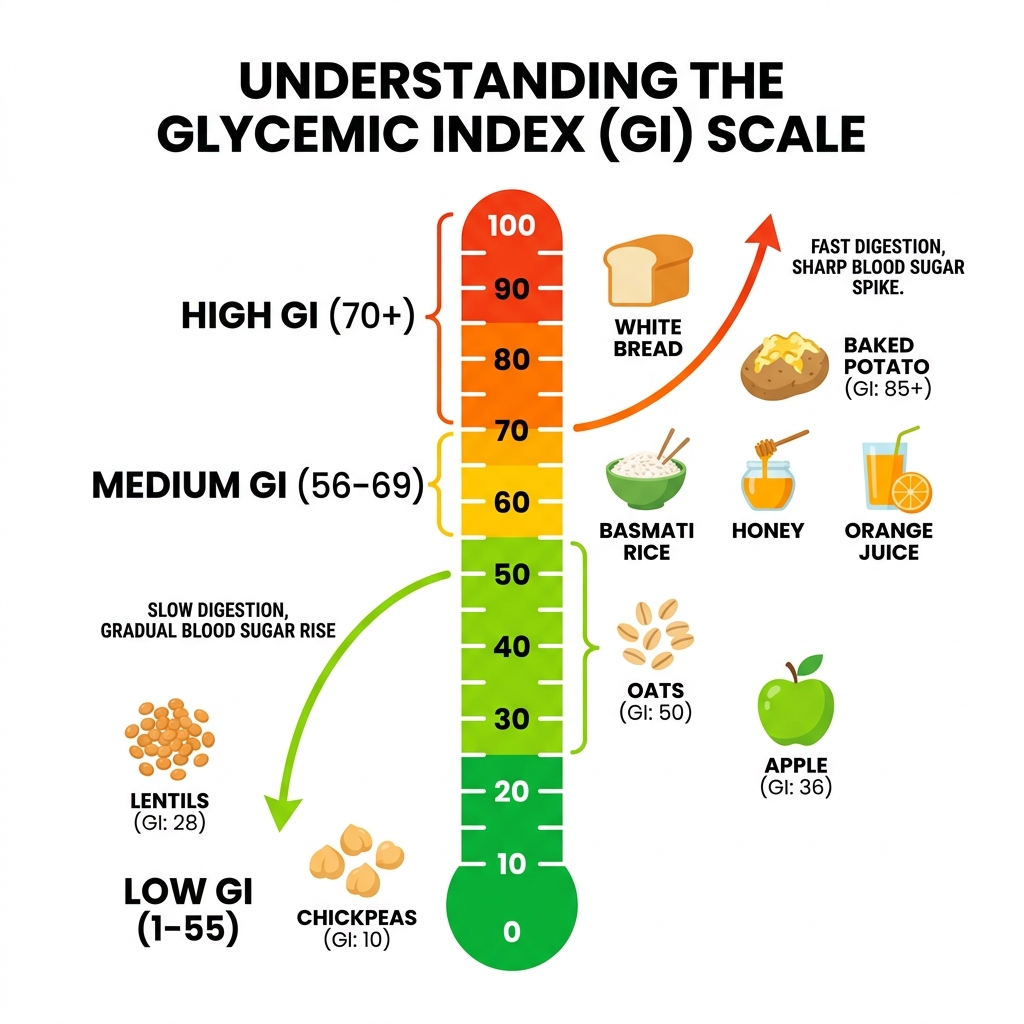
Low glycemic index carbs are carbohydrates that digest slowly, causing a gradual rise in blood sugar rather than a sharp spike. They rank 55 or below on the 0-100 Glycemic Index (GI) scale.
Quick answer — what are low-GI carbs?
| Category | GI Range | Examples |
|---|---|---|
| Low GI | 1–55 | Lentils (28), chickpeas (10), oats (50), apple (36) |
| Medium GI | 56–69 | Basmati rice, honey, orange juice |
| High GI | 70+ | White bread, baked potato (85+), cornflakes (81) |
Here is the core idea: when you eat a high-GI food like white rice or a bagel, your blood sugar shoots up fast. Your body floods the bloodstream with insulin to bring it back down. That crash leaves you tired, hungry, and reaching for the next snack.
Low-GI carbs break that cycle.
They digest slowly, keep blood sugar steady, and help you feel full longer — without adding extra calories. That is a big deal when you are juggling a packed schedule and trying to eat well without overthinking every meal.
The benefits go beyond just “not feeling sluggish.” Research links low-GI eating to better weight management, reduced risk of type 2 diabetes, and improved heart health.
But — and this matters — GI is one tool, not the whole answer. A Snickers bar has a GI of 50. That does not make it a health food.
This guide will walk you through what the science actually says, which foods to focus on, and how to make low-GI eating work in real life.
Understanding the Science of Low Glycemic Index Carbs
To understand why low glycemic index carbs are so beneficial, we have to look at what happens inside our bodies after we take a bite of food. Carbohydrates are our body’s preferred fuel source, but they aren’t all created equal. Some are like dry kindling that catches fire instantly (high GI), while others are like a thick log that burns steadily for hours (low GI).
The Glycemic Index is a ranking system that measures how quickly a carbohydrate-containing food raises your blood glucose levels. According to healthdirect, the scale goes from 0 to 100, with pure glucose or white bread usually serving as the reference point with a score of 100.
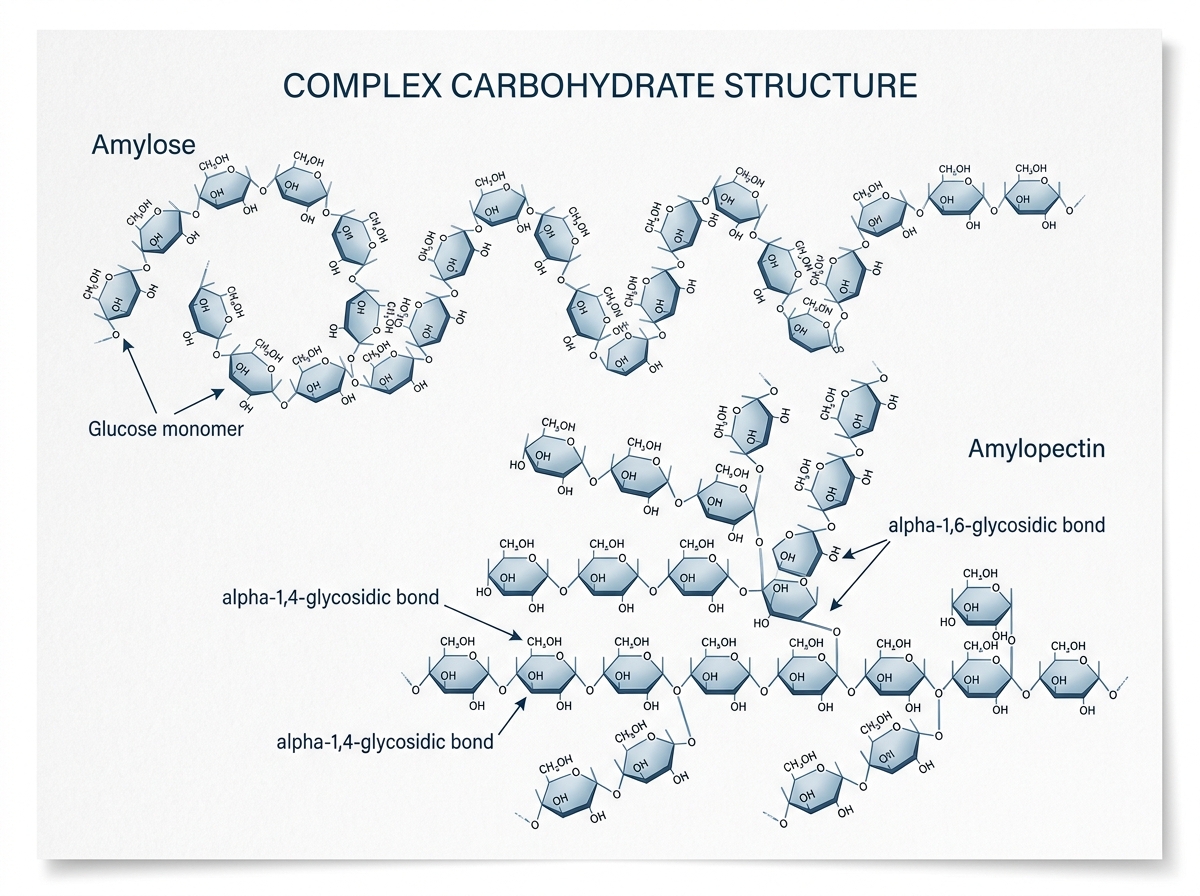
At a molecular level, the “speed” of a carb depends largely on its starch composition. Starch makes up about 70–80% of the carbs in a normal diet and is composed of two main molecules:
- Amylose: This makes up about 20–30% of starch. It has a straight, linear structure that is packed tightly together, making it harder for digestive enzymes to break down.
- Amylopectin: This makes up about 70% of starch. It has a highly branched structure, giving enzymes more “surface area” to attack, which leads to rapid digestion.
Foods high in amylose, like legumes and certain types of long-grain rice, typically function as low glycemic index carbs. As Harvard Health points out, choosing these “good carbs” helps avoid the “roller-coaster” effect of soaring and crashing blood sugar levels.
How Low Glycemic Index Carbs are Calculated
You might wonder how scientists actually come up with these numbers. It isn’t just a mathematical guess; it involves real human testing.
To determine a food’s GI, researchers feed a group of 10 or more healthy people a portion of a “test food” that contains exactly 50 grams of available carbohydrates. They then monitor the participants’ blood sugar levels over the next two hours to create a “blood sugar curve.” This curve is compared to the curve produced when the same people consume 50 grams of pure glucose or white bread.
The GI value is calculated by dividing the area under the test food’s curve by the area under the reference food’s curve. For example, if a food has a GI of 28, it means it raises blood sugar only 28% as much as pure glucose. Organizations like the Sydney University Glycemic Index Research Service maintain extensive databases of these values to help us make informed choices.
Glycemic Index vs. Glycemic Load
While the GI is a great starting point, it has one major flaw: it doesn’t account for how much of a food you actually eat. This is where Glycemic Load (GL) comes in.
GL is a more practical measure because it factors in the typical portion size. For instance, watermelon has a high GI (72), but because it is mostly water and has very few carbs per serving, its Glycemic Load is actually quite low.
The GL Formula: GL = (GI x Grams of Carbs per serving) / 100
| Food Item | Glycemic Index (GI) | Serving Size | Glycemic Load (GL) |
|---|---|---|---|
| Watermelon | 72 (High) | 120g | 4 (Low) |
| Apple | 36 (Low) | 120g | 6 (Low) |
| Baked Potato | 85 (High) | 150g | 26 (High) |
| Lentils | 28 (Low) | 150g | 7 (Low) |
Understanding both numbers helps us see that while some foods might have a high “speed” rating, their total impact on our blood sugar depends on the amount on our plate.
Health Benefits of a Low-GI Lifestyle
Adopting a diet rich in low glycemic index carbs isn’t just a trend; it’s a science-backed strategy for long-term wellness. One of the most immediate benefits we notice is better weight management. Because low-GI foods take longer to digest, they trigger satiety hormones that tell our brain we are full. This helps us naturally reduce our caloric intake without the “hangry” feelings associated with restrictive dieting.
Furthermore, a low-GI diet is a champion for heart health. Studies show that these dietary patterns can help lower total cholesterol and blood pressure, reducing the risk of cardiovascular disease. For those looking for inspiration, we have curated 28 blood sugar balancing recipes for better health that focus on these nutrient-dense ingredients.
According to the Abbott Newsroom, choosing slow-release carbohydrates is essential for maintaining steady glucose levels, which prevents the metabolic stress that leads to chronic inflammation.
Managing Diabetes with Low Glycemic Index Carbs
For the millions of people living with diabetes or prediabetes, the GI scale is a vital tool. Consistently choosing low glycemic index carbs can improve insulin sensitivity and help lower HbA1c levels—a measure of average blood sugar over two to three months.
The American Diabetes Association (ADA) emphasizes the importance of fiber in this process, recommending that patients consume 14g of fiber for every 1000 calories. High-fiber, low-GI foods like chickpeas (GI 10) and lentils (GI 28) are “star performers” in a diabetic meal plan. You can find more detailed food lists in this glycemic index food guide.
Sustained Energy and Physical Performance
Have you ever felt a “mid-afternoon slump”? That is often the result of a high-GI lunch causing a blood sugar crash. By switching to low-GI options, we provide our bodies with a steady stream of fuel.
This is particularly interesting for athletes. Eating a low-GI meal two hours before an endurance event can improve exercise capacity by providing sustained energy. Additionally, there is the “second meal effect”—consuming slowly digestible starches at breakfast can actually improve your glycemic response to lunch as well!
For those looking to balance their macros for better performance, check out the macro guide to balanced meal ideas to see how low-GI carbs fit into a complete nutritional strategy.
Factors That Change a Food’s Glycemic Impact
One of the most surprising things about the Glycemic Index is that a food’s score isn’t set in stone. It can change based on how the food is grown, stored, and prepared.
- Ripeness: As fruit ripens, its starches break down into sugars. For example, an unripe banana has a GI of about 30, while a very ripe one jumps to 51.
- Acidity: Acid slows down the rate at which your stomach empties, which in turn slows carbohydrate digestion. Adding vinegar or lemon juice to a meal can actually lower its overall GI.
- Processing: Generally, the more processed a food is, the higher its GI. Steel-cut oats have a lower GI than instant oatmeal because the physical structure of the grain is still intact, requiring more work from your digestive system.
As the Better Health Channel notes, even the size and texture of food particles matter—finely ground flours digest much faster than coarsely ground grains.
The Role of Resistant Starch and Cooking Methods
We can actually “hack” our food to lower its GI through specific cooking methods. This involves the creation of resistant starch—a type of starch that resists digestion in the small intestine and acts more like fiber.
- Retrogradation: When you cook starchy foods like potatoes, rice, or pasta and then let them cool, the starch molecules rearrange themselves into a more crystalline structure. This process, called retrogradation, significantly increases resistant starch. Even if you reheat the food later, much of that resistant starch remains!
- Al Dente: Cooking pasta “al dente” (firm to the bite) keeps the starch molecules encapsulated, making them harder for enzymes to reach. Overcooked, mushy pasta has a much higher GI.
For more on the physics of food, our guide on the science of building balanced snacks offers great tips on using these methods for better energy levels.
Food Pairing and Protein Synergy
We rarely eat plain white rice by itself. What we pair our carbs with makes a massive difference. Protein and healthy fats have no GI value because they don’t contain carbohydrates. When we eat them alongside carbs, they slow down “gastric emptying”—the speed at which food leaves the stomach.
By pairing a medium-GI food with a lean protein (like chicken or tofu) and a healthy fat (like avocado or olive oil), we can effectively lower the glycemic impact of the entire meal. This is a foundational principle we discuss in our balanced diet plan for beginners.
Practical Swaps and Limitations of the GI Scale
Making the switch to low glycemic index carbs doesn’t mean giving up the foods we love; it’s about making smarter substitutions.
Easy Low-GI Swaps:
- Instead of: White bread Try: Heavy grain or sourdough bread.
- Instead of: Instant oatmeal Try: Steel-cut or rolled oats.
- Instead of: White Russet potatoes Try: Sweet potatoes or yams.
- Instead of: Jasmine rice Try: Basmati rice, quinoa, or pearl barley.
- Instead of: Cornflakes Try: Bran-based cereals or muesli.
Adding legumes like lentils or chickpeas to soups and salads is another “pro move” to lower the GI of your day. For a deeper dive into structuring these changes, read the complete guide to balanced meals for sustainable weight loss.
When Low GI Isn’t Enough
While we love the GI as a tool, we must acknowledge its limitations. It is not a “panacea” or a magic bullet.
- The “Ice Cream Paradox”: Some foods have a low GI simply because they are high in fat. Premium ice cream and potato chips often have a lower GI than a slice of watermelon, but that doesn’t make them “healthier.” Fat slows digestion, but it also adds significant calories and saturated fat.
- Nutrient Density: The GI tells us nothing about vitamins, minerals, or antioxidants. A diet of only low-GI processed foods would still be nutritionally poor.
- Individual Variability: Everyone’s body is different. Factors like your gut microbiome, stress levels, and genetics can cause your blood sugar to react differently than the “average” person in a study.
We should use the GI as one part of a broader healthy dietary pattern, rather than the sole rulebook for eating.
Frequently Asked Questions about Low-GI Diets
Are all low-GI foods healthy?
Not necessarily. As mentioned, high-fat discretionary foods like chocolate or certain biscuits can have a low GI because the fat slows sugar absorption. Always look at the “big picture”—check for saturated fat, sodium, and total calories alongside the GI value.
Can I eat high-GI foods after exercise?
Yes! In fact, high-GI foods can be beneficial immediately after intense exercise. This is the one time your body wants an insulin spike to help drive glucose into your depleted muscle cells to replenish glycogen stores quickly.
How does fiber affect the glycemic index?
Fiber, especially soluble fiber, is a major GI-lowerer. It creates a “gel” in your digestive tract that slows down the absorption of sugar. This is why a whole apple (with skin and fiber) has a much lower GI than apple juice.
Conclusion
At Quintal Florido, we believe that understanding low glycemic index carbs is a superpower for your health. By choosing foods that nourish your body without sending your blood sugar on a wild ride, you are investing in long-term energy, a stable mood, and disease prevention.
You don’t have to be perfect. Start with one or two swaps—maybe trade your morning toast for porridge or try your pasta al dente. Over time, these small shifts create a sustainable, nutrient-rich lifestyle that your blood sugar will truly love.
If you are ready to take the next step in your wellness journey, learn how to map out balanced meal plan ideas like a pro or visit our homepage for more info about balanced nutrition services.
